Diffusion models generate tens of thousands of plausible weather events where historical data doesn't exist. Insurers are hoping for more precise risk assessments. Researchers warn about hallucinations.
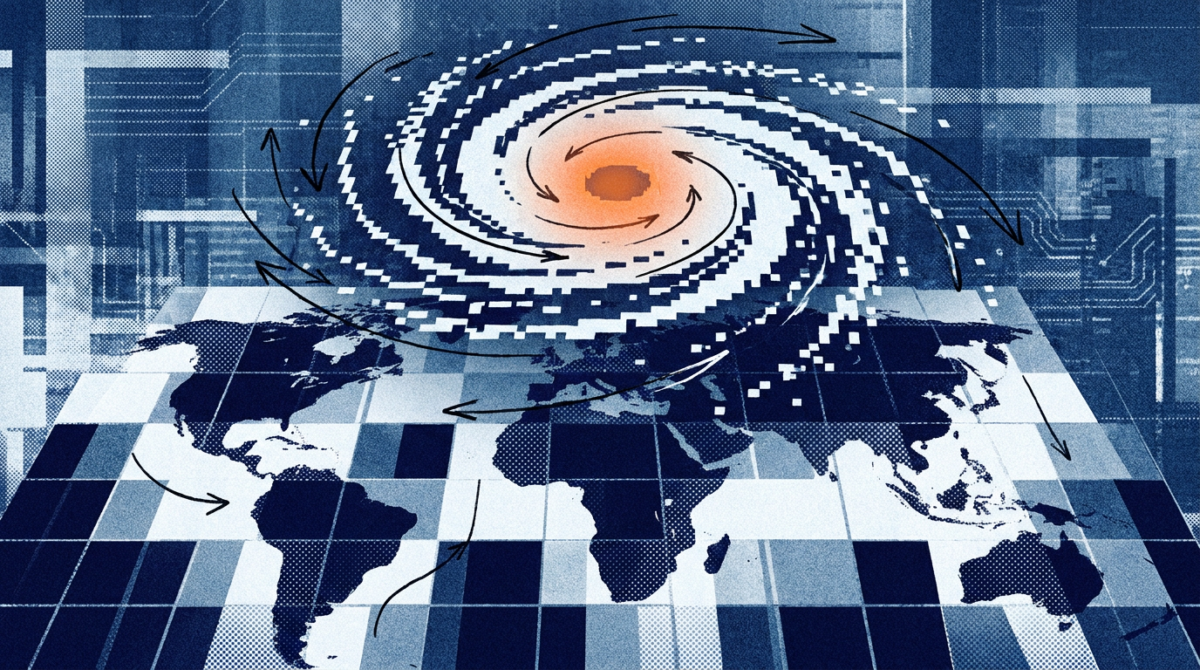
Insurers, banks, and energy companies have relied on so-called cat models since the 1980s to estimate their exposure to earthquakes, hurricanes, and floods. These physics-based models divide the world into grid cells and solve equations for gravity, friction, and flow. The finer the resolution, the more expensive the computation. A tradeoff between detail and geographic coverage is unavoidable.
A Financial Times report shows how generative AI is pushing that boundary. Modelers like Fathom, a subsidiary of reinsurer Swiss Re, use diffusion models to synthetically generate tens of thousands of years' worth of weather events for a projected 2030 climate. Fathom first trained its diffusion tool on roughly 1,000 years of existing climate simulations, then had it produce far more scenarios than the original climate model could. A second, image-sharpening model refines the initially coarse 100 × 100 kilometer resolution down to 10 × 10 kilometers, which is good enough to capture precipitation patterns. "AI has completely reframed what is possible," says Fathom's scientific director Oliver Wing.