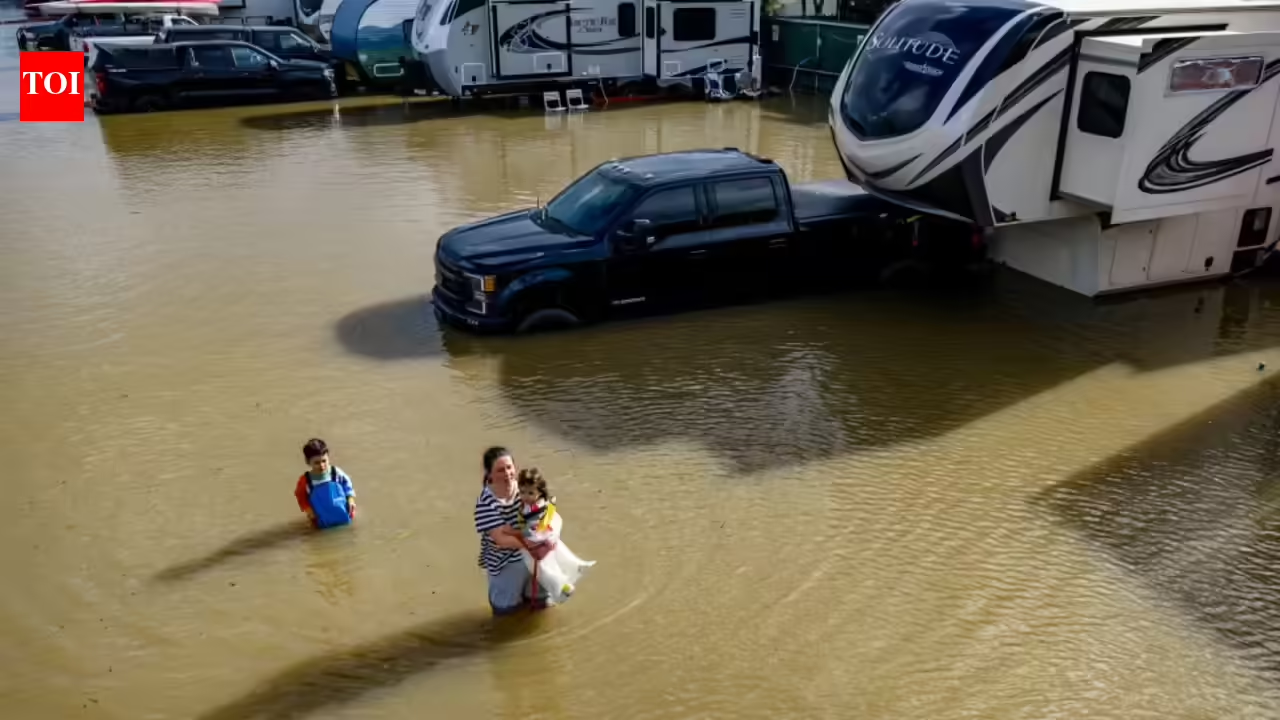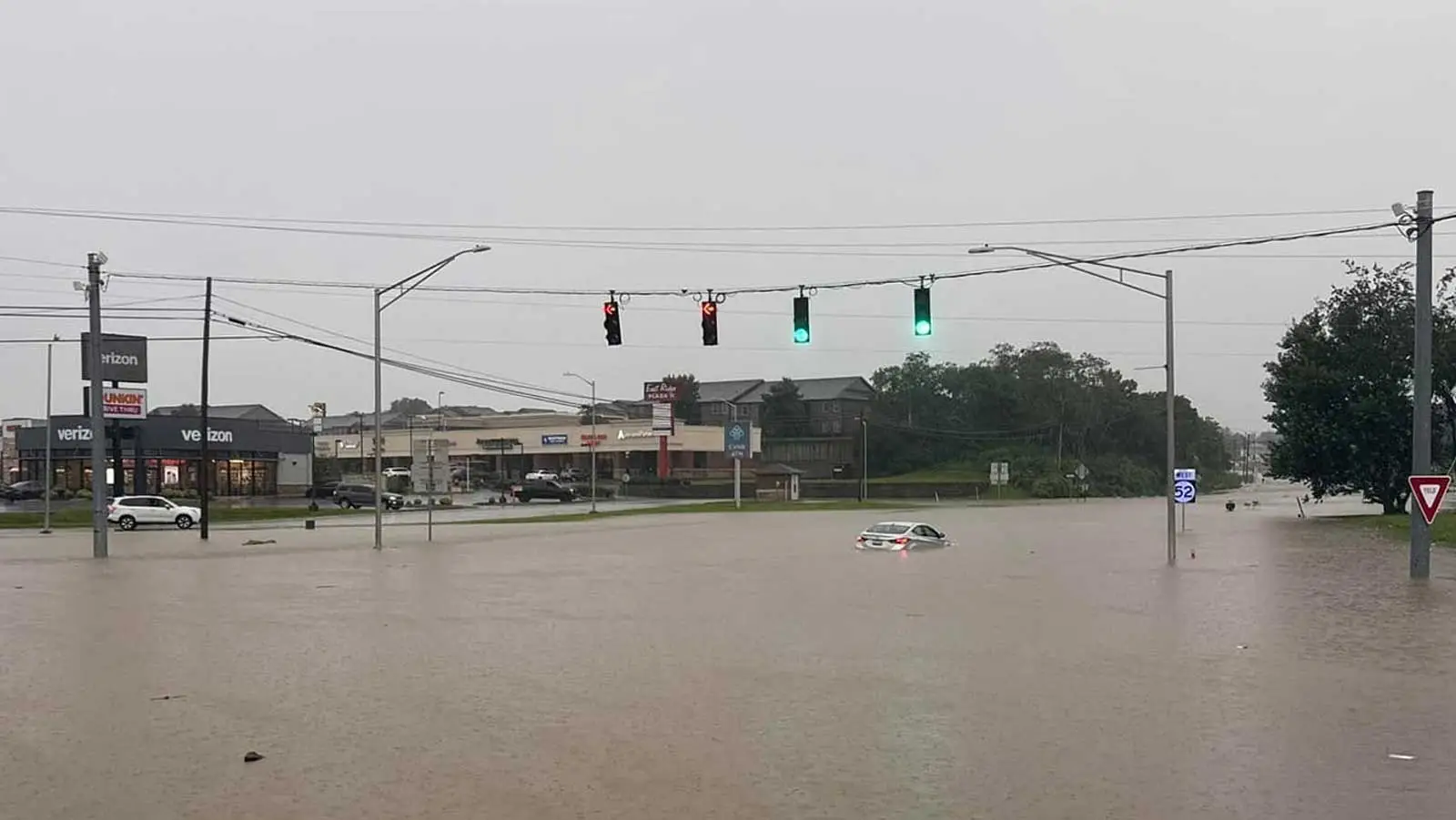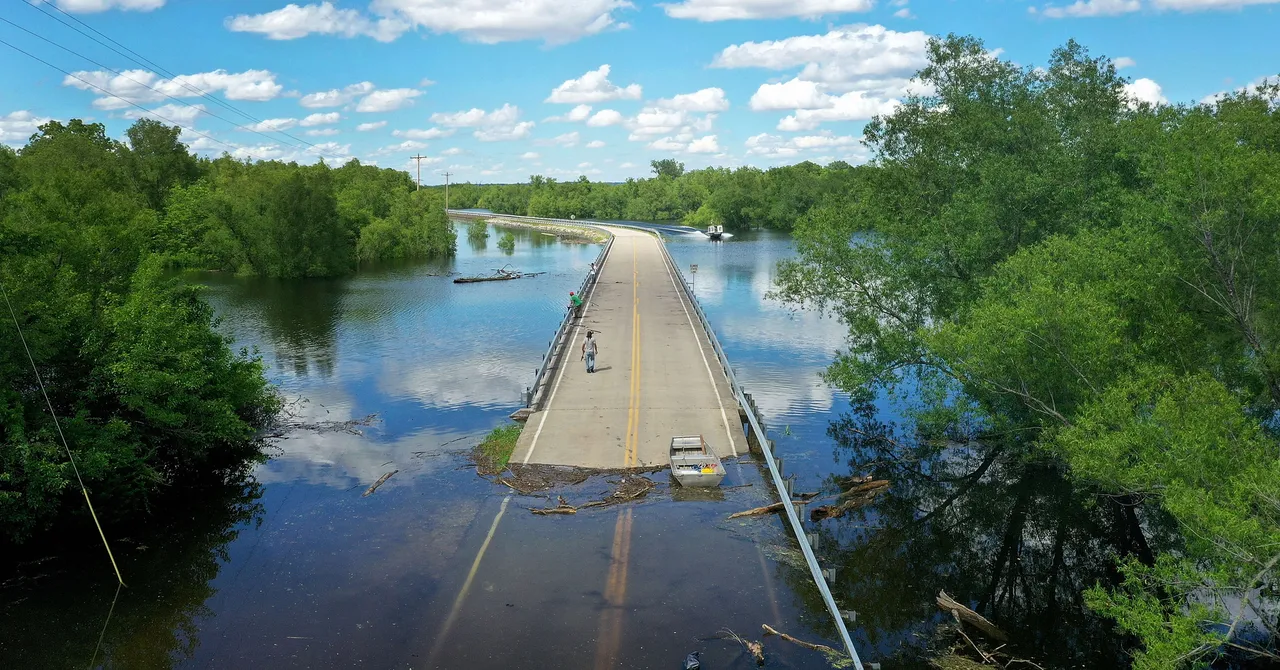
Jun 16, 2026 10:00 AMA new, AI-assisted model of insurance is quietly exploding in disaster-prone areas—and may be coming for FEMA too. Is it the answer to climate change, or a trap?High water along the Mississippi River in Saint Mary, Missouri, during the historic 2019 floods.Photograph: Scott Olson/Getty ImagesIn 2019, when the worst flooding in recorded history spread across the entire Mississippi River basin, Colin Wellenkamp’s phone rang for weeks. Wellenkamp runs a nonprofit called the Mississippi River Cities & Towns Initiative, which coordinates between mayors’ offices in more than 100 river communities from northern Minnesota to southern Louisiana. As he describes it, his headquarters served as “one big virtual situation room” for relief agencies and municipalities up and down the central US.The damage reports were gut-wrenching: Underneath historic downtowns, sewer systems filled, swelled, and popped; roads above them buckled and collapsed. Not too far from Wellenkamp’s office in St. Louis, stranded residents had to be rescued by boats as rushing waters rose and coursed through their living rooms, and a young couple drowned in a submerged vehicle. In one town—Davenport, Iowa—the sewage treatment plant became an island, and the city had to boat its employees to the site. Workers stayed there for nine solid days, sleeping on cots, to keep wastewater from backing up into homes and businesses.Colin Wellenkamp with Mike Morrow, the mayor of Grafton, Illinois, in a selfie taken during a Mississippi River flood.
Traditional Home Insurance Is Collapsing. Here’s What Could Fill the Gap
A new, AI-assisted model of insurance is quietly exploding in disaster-prone areas—and may be coming for FEMA too. Is it the answer to climate change, or a trap?
2,875 words~13 min read