view more
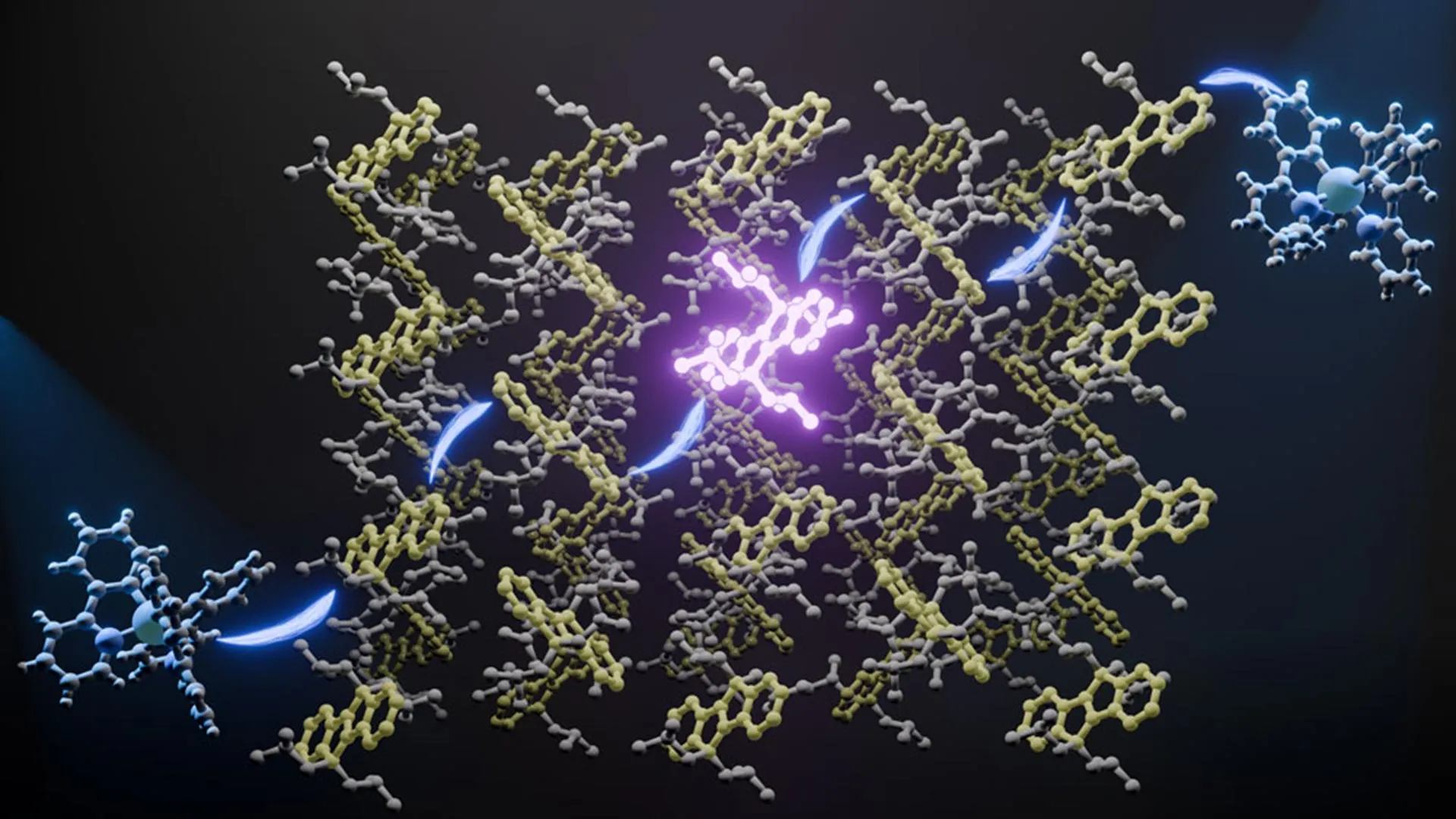
Fukuoka, Japan—Two cups of warm water don’t make one cup of boiling water. But in the quantum world, multiple low-energy photons can combine to produce a single, higher-energy photon.
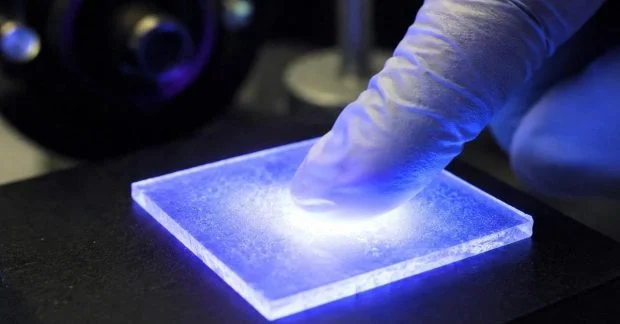
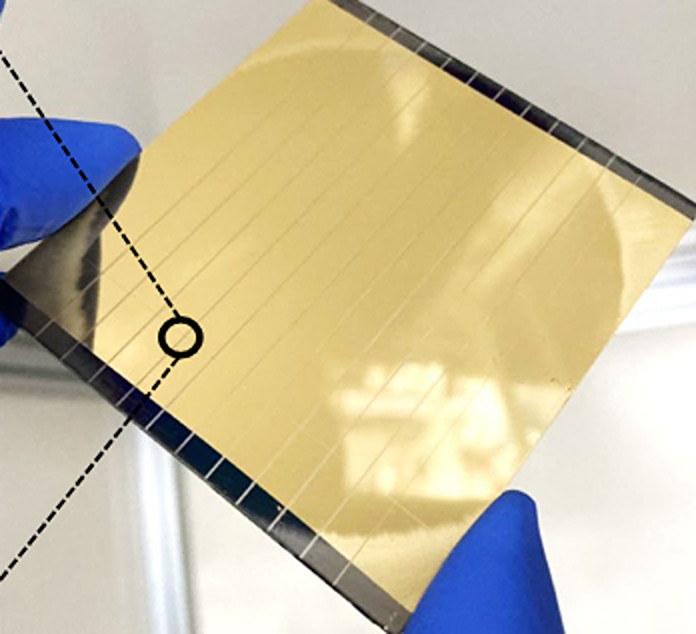
A research team at Kyushu University has developed a solid-state molecular material that “upgrades” visible light into ultraviolet (UV) light under ordinary outdoor sunlight, achieving a conversion efficiency of 1.9%. The study was published in Nature Communications on June 23.
Harsh UV light is something most people try to avoid in summer, yet it is indispensable across fields ranging from air purification and resin curing in 3D printing to gel hardening in dental fillings and nail art. Despite its importance, UV accounts for only about 6% of the sunlight reaching Earth’s surface, with only a fraction of that being practically usable.
“What we do here is ‘add together’ the energy from two visible light photons to make one ultraviolet photon. It’s a fascinating process called photo upconversion,” explains Yoichi Sasaki, Associate Professor at Kyushu University’s Faculty of Engineering and the study’s corresponding author.