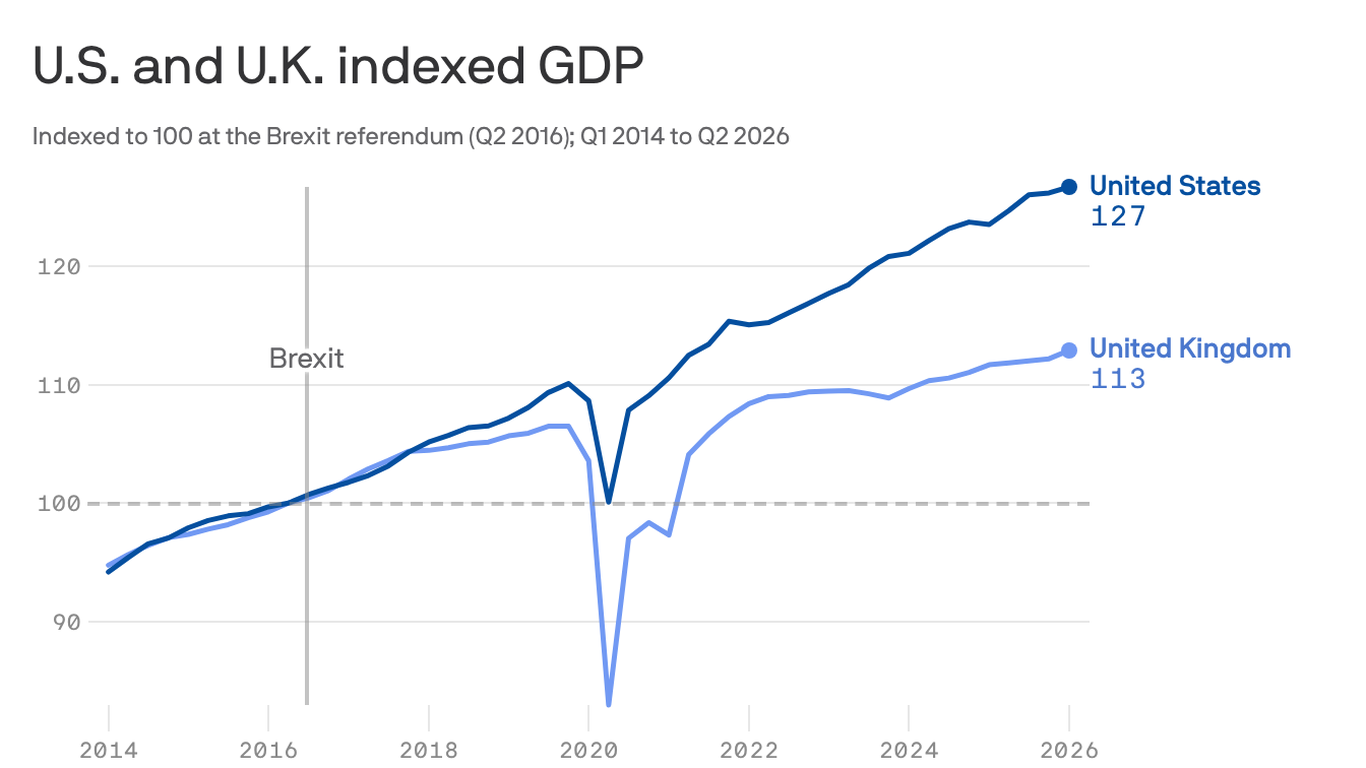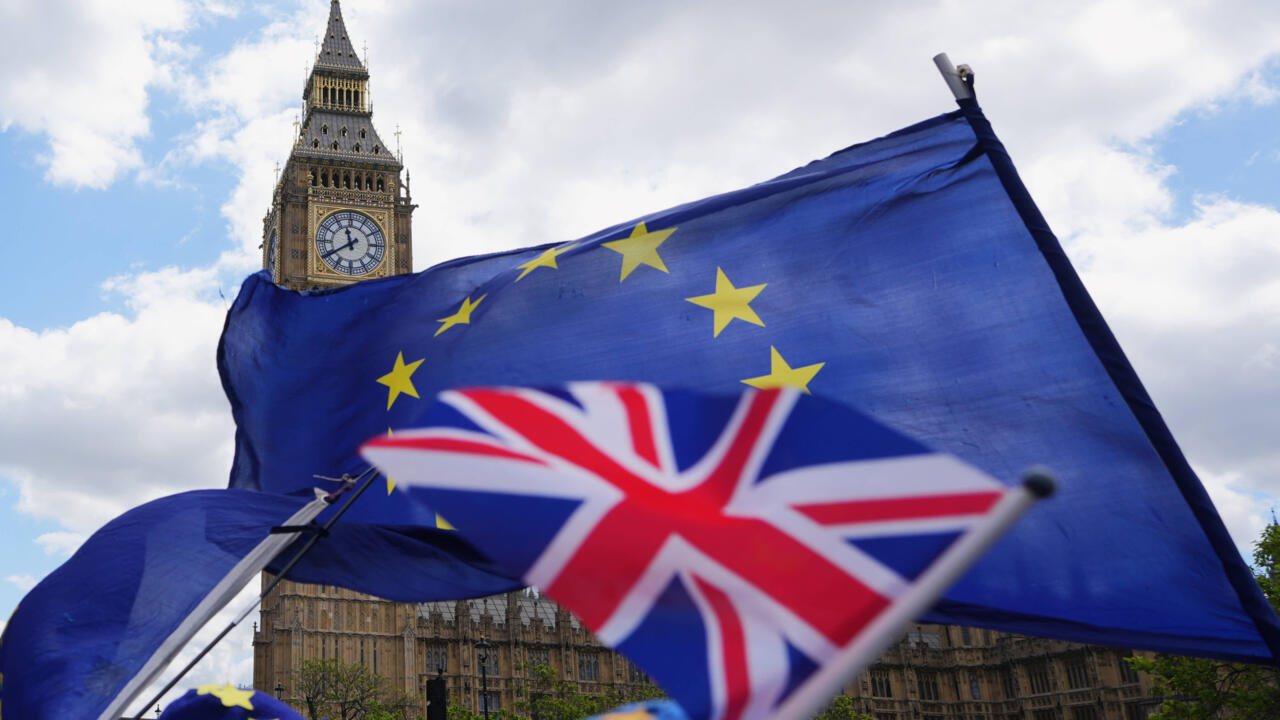
When the UK voted to leave the European Union on June 23, 2016, the close-run result dumbfounded many and kickstarted a climate of political tension in the UK that has become arguably worse ever since. With polls finding that 23% of leave voters now regret their choice – either because they’ve changed their mind on Europe, or feel that politicians bungled the exit process – it seems many agree that Brexit has not been a success. Watch moreBrexit: 10 years of regret? But there is one area where 10 years of data shows the true scale of its failure – economists now estimate that Brexit has reduced the UK's gross domestic product by as much as 8 percent. This means average the Briton is up to 8 percent poorer than if Brexit had never happened, while at the national level there is an equivalent "loss in tax revenue that the government is getting which it spends on public services”, said Jonathan Portes, professor of economics and public policy at King's College, London. Among economists, “there's a clear consensus that Brexit has done significant damage”, Portes added. ‘Pure hell’ To analyse the Brexit data, economists at Stanford’s Institute for Economic Policy Research used two models. The first compared the UK’s rate of growth over 10 years to other countries, factoring in global economic shocks such as Covid-19 and the impact of wars in Ukraine and the Middle East. “Before the Brexit referendum, the UK was doing okay, and we've fallen behind relative to our peers since then,” said Gregory Thwaites, one of the authors of the Stanford study and associate professor of economics at the University of Nottingham. “Our economy is about 8 percent smaller than it would be if we had not left the European Union, based on a comparison with other countries,” he added. The second method assessed firms within the UK to see how well those that have frequently interacted with the EU since Brexit performed compared with those that have not. It found that those still in high contact with the EU were performing significantly less well. “When you run those numbers, it looks like the UK is about 6 percent poorer than it would have been without having left the European Union,” Thwaites said. The UK's goods trade – especially cars and agri-food produce – has been hit particularly hard, as Brexit ramped up paperwork demands, making everyday procedures more time-consuming and costly for businesses.
'Significant damage': How Brexit is still draining the UK economy 10 years later
Ten years after Brexit, data shows that the decision to leave the European Union has made people in Britain up to 8 percent poorer. Experts predict the economic damage is set to continue, and YouGov…
TL;DRAI
Brexit reduced UK GDP by 8% in 10 years, shrinking wealth and food exports by 25%. Tech leaders should expect constrained R&D budgets, weaker UK-EU talent flow, and delayed infrastructure—diminishing investment in innovation and cross-border partnerships.
979 words~4 min read