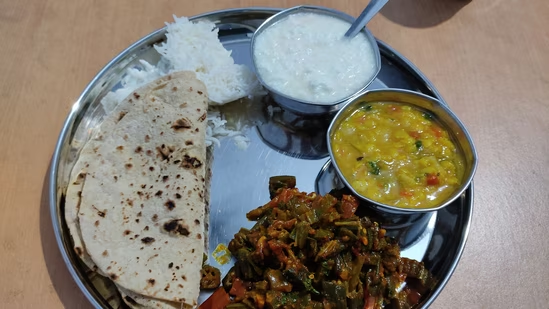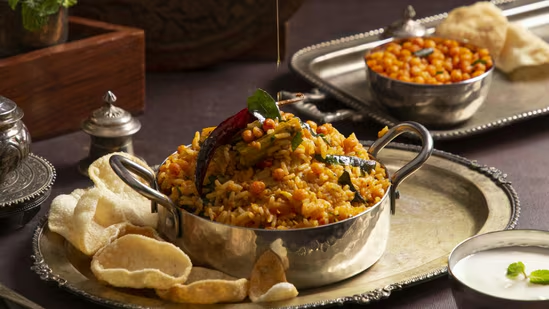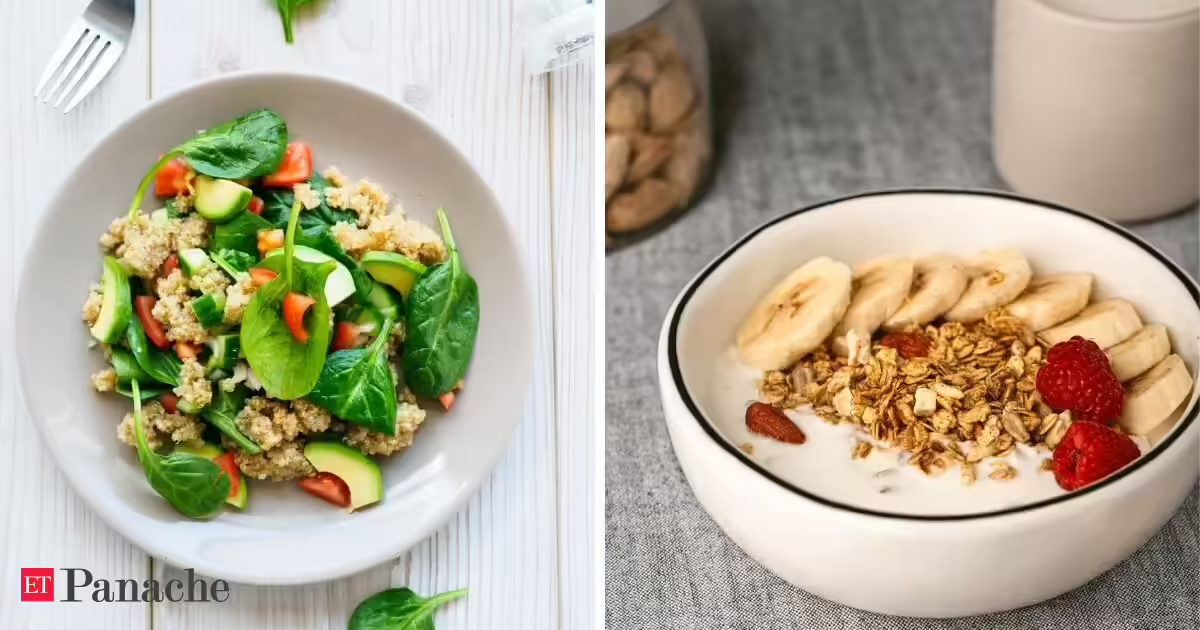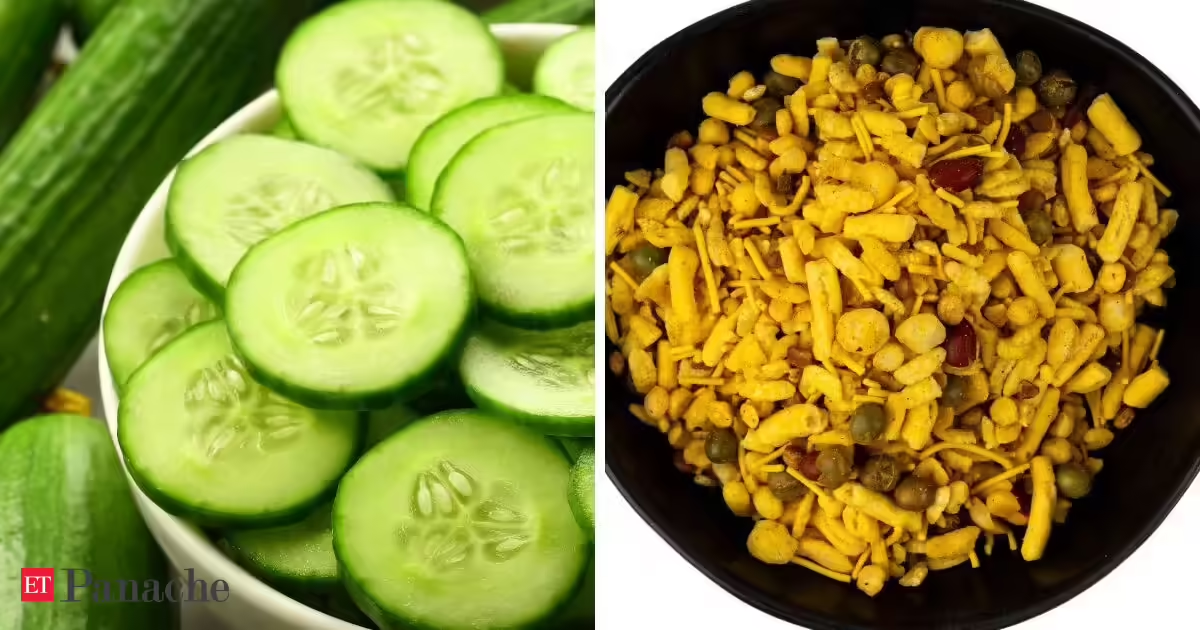
Have you ever wondered why some foods leave you feeling full after just a few bites while others seem to disappear from your plate in seconds? When it comes to weight loss, calorie counting is often considered the golden rule. But there’s another factor that deserves equal attention: food volume. Surprisingly, 100 calories of one food can look dramatically different from 100 calories of another, influencing satiety, portion sizes and overall eating habits. Delhi-based nutritionist Lovneet Batra, in her latest Instagram post, has highlighted this fascinating concept, showing how the same calorie count can translate into vastly different quantities of food.Cucumber vs namkeenA whopping 650 grams of cucumber contains roughly 100 calories, whereas the same calorie count is packed into just 20 grams of namkeen. This stark contrast comes down to water content and energy density. According to the United States Department of Agriculture (USDA), a cucumber is made up of nearly 95 per cent water, making it low in calories but high in volume. Namkeen, on the other hand, is typically rich in oil and refined ingredients, making it calorie-dense despite its small serving size.Muskmelon vs soan papdiAnother eye-opening comparison is between muskmelon and soan papdi. While 295 grams of muskmelon provide around 100 calories, only 26 grams of soan papdi contain the same amount. Muskmelon is naturally rich in water, vitamins and fibre, helping increase fullness. Soan papdi, meanwhile, is made using sugar, ghee and flour, ingredients that significantly raise its calorie density. Research published by the Harvard T.H. Chan School of Public Health suggests that foods high in fibre and water generally promote greater satiety than calorie-dense sweets.Murmura vs peanutsSeven cups of puffed rice (murmura) roughly equal 100 calories, while just 17 grams of peanuts deliver the same energy. This comparison highlights the difference between volume and nutrient density. Murmura is light and airy because of its low fat content, allowing larger portions for fewer calories. Peanuts, however, are packed with healthy fats, protein and micronutrients. According to the USDA, fats provide more than double the calories per gram compared to carbohydrates, which explains why a small handful of peanuts can match several cups of puffed rice.Strawberries vs milk chocolateFor those with a sweet tooth, this comparison may come as a surprise. Around 310 grams of strawberries contain approximately 100 calories, while only 18 grams of milk chocolate offer the same amount. Strawberries are loaded with water, fibre and vitamin C, making them a filling, nutrient-rich snack. Milk chocolate, although enjoyable in moderation, is calorie-dense because of its sugar and fat content. The comparison underscores how choosing high-volume foods can help manage hunger while keeping calorie intake in check.The takeaway is simple: not all 100-calorie portions look the same. Understanding calorie density can help people make more informed dietary choices, improve satiety and support healthy weight-management goals without feeling deprived.
650g cucumber, 20g namkeen: Top nutritionist reveals how different 100 calories can look
Discover how food volume significantly impacts fullness, even with the same calorie count. Nutritionist Lovneet Batra highlights that 100 calories of cucumber offer a much larger portion than namkeen, and similar contrasts exist between muskmelon and soan papdi, or puffed rice and peanuts. Understanding calorie density empowers healthier eating choices and effective weight management without feeling deprived.
TL;DRAI
Nutritionist compares calorie density: 650g cucumber = 100 calories vs 20g namkeen = 100 calories, showing how water content drives food volume. Understanding food density supports weight management and satiety—relevant for personal health strategy and corporate wellness program design.
473 words~2 min read