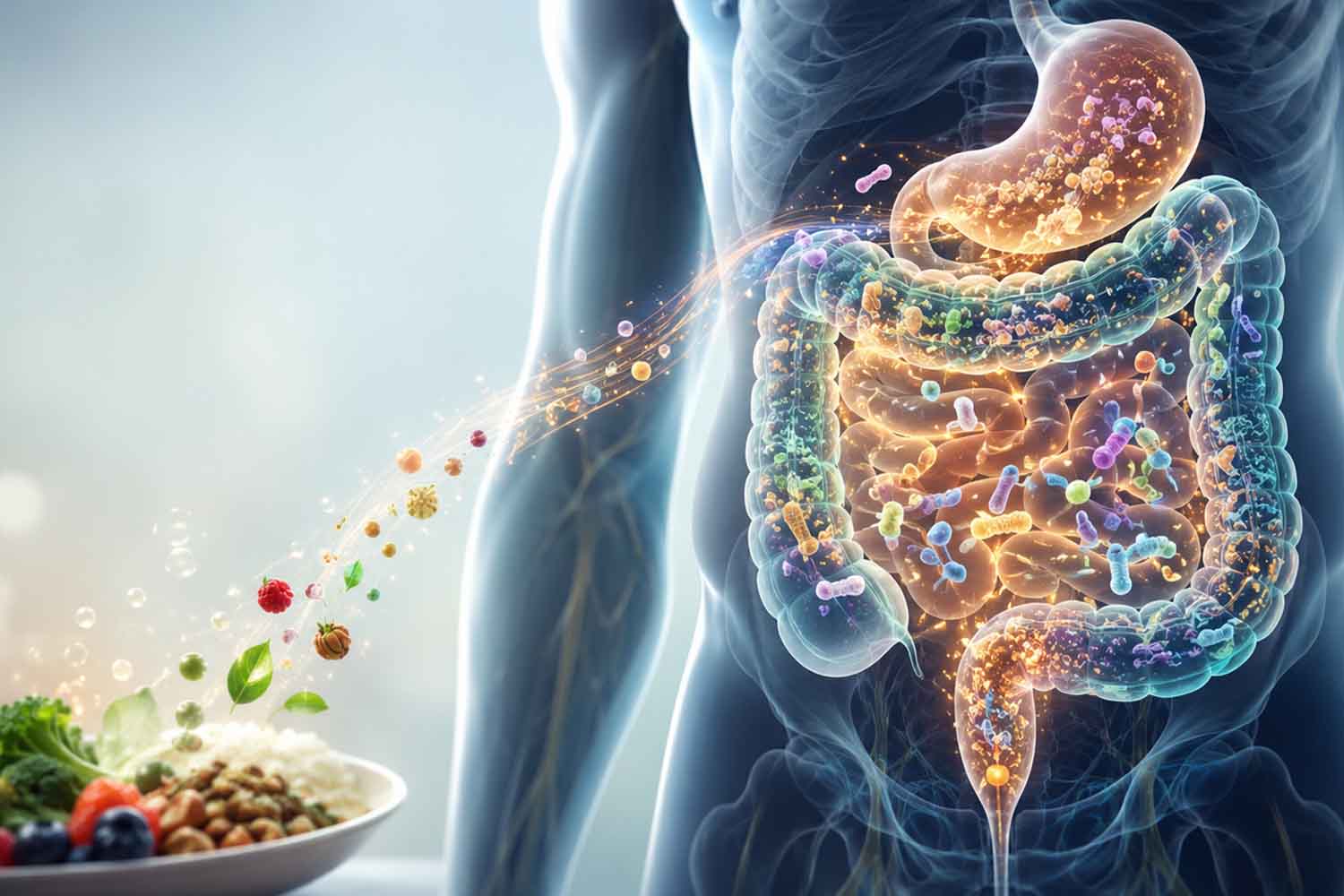
Food labels make calories seem simple. They show the number of calories per serving, which is calculated based on how much fat, carbohydrates and protein the food contains. But inside the body, digestion is far more complicated. Food passes through a living microbial ecosystem that can influence how many of those calories people actually absorb.
A new mathematical model developed by Arizona State University researchers takes a closer look at that hidden part of digestion. The model, called DAMM—for digestion, absorption and microbial metabolism—follows food through the digestive tract, estimating what the body absorbs directly, what reaches the colon and how gut microbes help process the remaining material into products that are either absorbed or excreted. The paper is published in the journal PLOS One.
The model could eventually help researchers better understand obesity, diabetes and other metabolic disorders by showing how different diets affect both the human body and the microbial community inside the colon.
With more research, it could become a tool to help health care providers design more personalized diets for their patients.
"Digestion is not just a human process—it is a collaboration between our bodies and trillions of microbes living in the gut," said Professor Rosa Krajmalnik-Brown. "DAMM gives us a powerful new way to quantify how those microbial partners contribute to human health and energy balance, and also point at the importance of properly feeding our gut microbes."