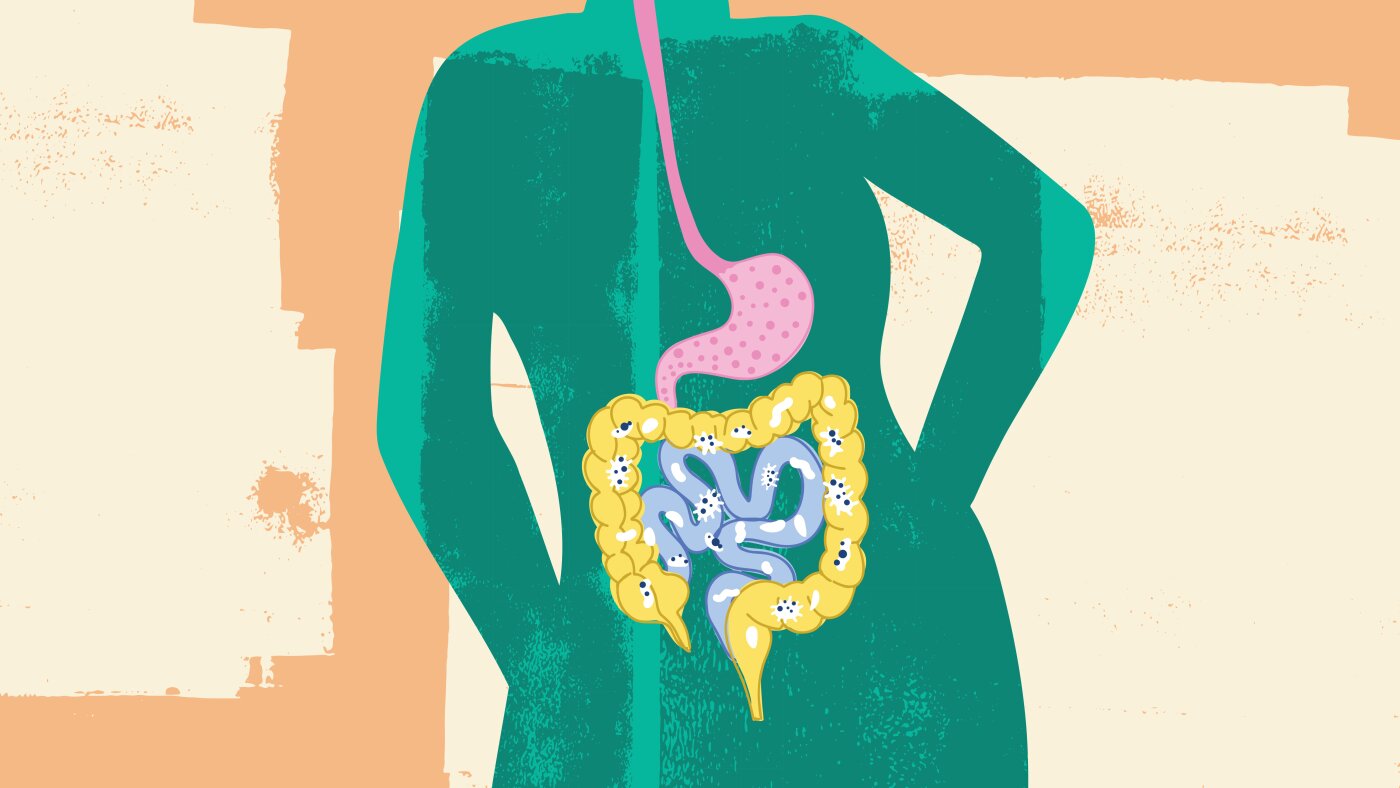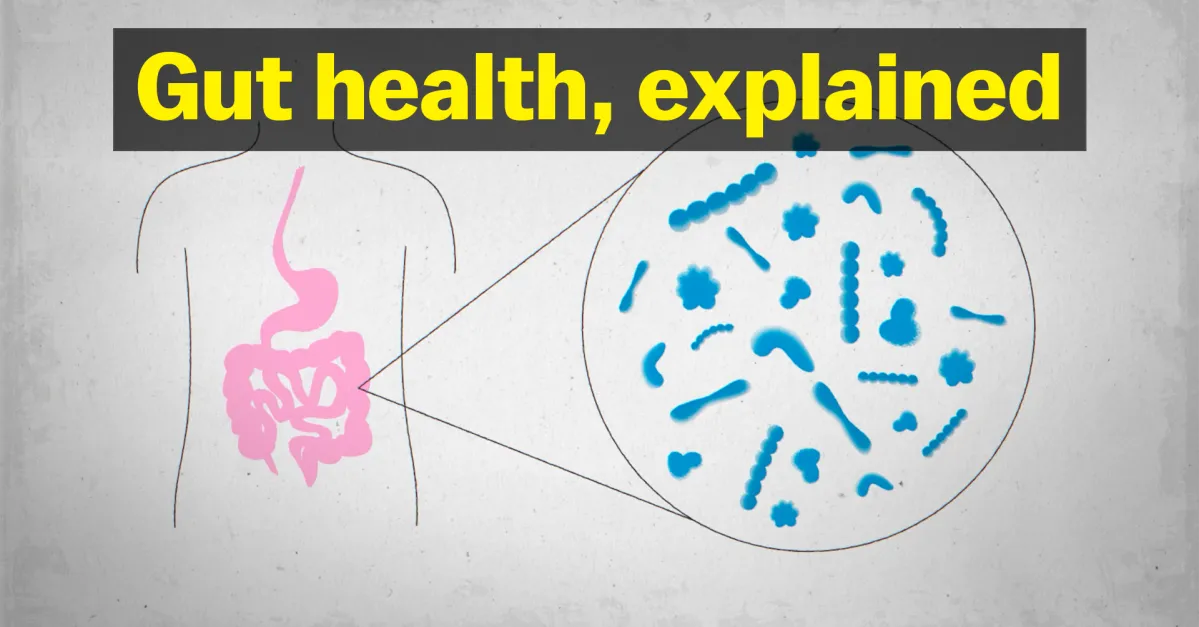
Daily Mail journalists select and curate the products that feature on our site. If you make a purchase via links on this page we will earn commission - learn moreThere's roughly eight billion people on our planet; multiply that by one hundred thousand and you get one hundred trillion - and that's the estimated number of microbes living in your gut. We have more microbes than human cells in our body - yet altogether, they only weigh about as much as a mango.This Milky Way of microorganisms is known collectively as the gut microbiome or gut microbiota. Think of it like this: the gut microbiome is a house, and the gut microbiota is the community of people that live in it. The microbiota is mostly made up of bacteria but also includes fungi (different types of yeast, like those used to make bread and beer), viruses and parasites. Everyone's gut microbiome is totally different - even the healthiest people have completely unique microbiomes. For that reason, we don't exactly know what the ideal microbiome is. So far, science has shown that a more diverse gut microbiome is probably healthiest, since it is linked to better markers of heart, metabolic and immune health.Diversity simply means different types of microbes. Your gut is like a rainforest, and the healthiest rainforests are those that are more biodiverse. It's not just about how many different microbes you have (diversity), but also how well-balanced they are - just as no single plant or animal defines a rainforest, no single microbe defines your gut. It's the balance and diversity that keep the whole system thriving. A happy gut microbiome is the key to better all round health Meet your microbesSome microbes help us, some can harm us, and others mostly mind their own business but could cause trouble under certain conditions. To describe these relationships, scientists often use three terms:Commensals - the quiet neighbours. They live in your gut without causing harm or providing obvious benefits. They're mostly just along for the ride, picked up from foods, our environment and even intimate contact - a single smooch transfers millions of bacteria. Our relationship with them is usually neutral. However, if circumstances change, such as after antibiotics or illness, they can become a nuisance by causing disease. These are what are referred to as opportunistic microbes.Symbionts - the helpful locals. Also known as beneficial microbes, these are the guys you want around. They help digest fibre, produce vitamins and train your immune system. Think of them as friendly neighbours who share resources, keep the neighbourhood running smoothly, and support your overall health.Pathogens - the troublemakers. These microbes can invade, multiply and cause disease, from food poisoning to gut infections. Most of us carry small numbers of them and a healthy community of other microbes usually keeps them in check.What we are looking for is a well-balanced microbiome. When the gut microbiome shifts and certain species dominate or disappear, we enter a state called dysbiosis. This disturbed state is strongly linked to health complications, from mood disorders to obesity. Some common things that cause an imbalance, or dysbiosis, include antibiotics, gut infections, restrictive diets and stress.As everyone is at different stages of their gut-health journey, it is useful to find out where you are now - and my fun quiz, below, can help. Before you dive in, remember this quiz isn’t about being ‘good’ or ‘bad’ at gut health - it’s simply a snapshot of where you’re at currently. Think of it as checking your car dashboard before a road trip. It helps you understand which areas are running smoothly and which might need a little tune up! Your gut is influenced by everything, from stress and sleep to what you eat, so this quiz gives you a big-picture view of how your daily habits may be supporting (or sabotaging) your gut health. Just answer honestly because this works best when you don’t overthink it. No one is marking it, and there’s no score that means your gut is broken. It simply shows you where the quick wins and biggest improvements are hiding. How healthy is your gut right now? 1. How often do you have a bowel movement?A. More than three times a dayB. One to three times a dayC. Every other dayD. Fewer than three times a week2. What does your poo usually look like?A. Smooth and sausage-shapedB. Hard or lumpyC. Soft or looseD. Watery3. How often do you experience digestive symptoms, such as bloating, abdominal pain, gas or acid reflux?A. Once a month or lessB. A few times a monthC. Once a week or moreD. Daily4. How often do you eat fermented foods, such as yoghurt, kefir, kimchi or sauerkraut?A. Every dayB. Several times a weekC. Once or twice a weekD. Once or twice a month or less5. How often do you eat legumes, such as beans, peas, lentils or chickpeas?A. Every dayB. Several times a weekC. Once or twice a weekD. Once or twice a month or less6. How often do you eat processed meats, such as ham, bacon, sausages or pepperoni?A. Every dayB. Several times a weekC. Once or twice a weekD. Once or twice a month or less7. How many hours of sleep do you get each night, on average?A. More than nine hoursB. Seven to nine hoursC. Five to six hoursD. Fewer than five hours8. How often do you feel stressed?A. Almost neverB. OccasionallyC. Quite oftenD. Almost always9. How often do you become unwell with illnesses such as colds, flu or stomach bugs?A. Almost neverB. OccasionallyC. Quite oftenD. Almost always10. Which of the following do you struggle with? Tick all that apply.A. Low moodB. Brain fogC. Skin problems, such as acne, eczema, psoriasis or rosaceaD. Difficulty losing weightScoringQ1 - A: 1 point, B: 3 points, C: 1 point, D: 0 pointsQ2 - A: 3 points, B: 1 point, C: 1 point, D: 0 pointsQ3 - A: 3 points, B: 2 points, C: 1 point, D: 0 pointsQ4 - A: 3 points, B: 2 points, C: 1 point, D: 0 pointsQ5 - A: 3 points, B: 2 points, C: 1 point, D: 0 pointsQ6 - A: 0 points, B: 1 point, C: 2 points, D: 3 pointsQ7 - A: 1 point, B: 3 points, C: 1 point, D: 0 pointsQ8 - A: 3 points, B: 2 points, C: 1 point, D: 0 pointsQ9 - A: 3 points, B: 2 points, C: 1 point, D: 0 pointsQ10 - Deduct one point for each option selected.Your resultsMore than 20 points: AdvancedNice work. Your gut may already be in good shape, although there are still plenty of useful tips in this book, including advice on how to protect it in Chapters 4, 5 and 6.15 to 20 points: IntermediateNot bad. Your gut health appears to be reasonably good, but there is still room for improvement. Pay particular attention to Chapters 2 and 7.Fewer than 15 points: NoviceYour gut may benefit from a little extra support. Luckily, this book contains plenty of simple tips to help improve your gut health. Extracted from How to Gut Health by Jordan Haworth (Penguin, RRP £18.99), out now
Quiz: Could your gut be making you tired, bloated or low?
As everyone is at different stages of their gut-health journey, it is useful to find out where you are now - and this fun quiz can help.
1,188 words~5 min read