Energy-transition constraints are real, but long-range analysis has to model how investment, substitution and policy respond.
Support CleanTechnica's work through a Substack subscription or on Stripe.
A lot of weak energy-transition analysis makes the same mistake in opposite directions. The booster version assumes every deployment curve will keep rising smoothly, as if grids, mines, factories, workers, permitting systems and customers are all waiting obediently for the spreadsheet. The fatalist version takes the bottleneck visible today and treats it as a permanent wall. Both miss how physical systems respond when a constraint starts to matter.
The energy transition is now far enough into deployment that constraints are no longer theoretical. Grid interconnection queues are real. Transformer shortages are real. Permitting delays are real. Skilled trades constraints are real. Mineral supply chains, refining capacity, port capacity, public acceptance and capital allocation can all slow the pace of change. Any serious transition pathway has to include them, or it becomes another pretty curve detached from the world of steel, copper, law, labor and money.
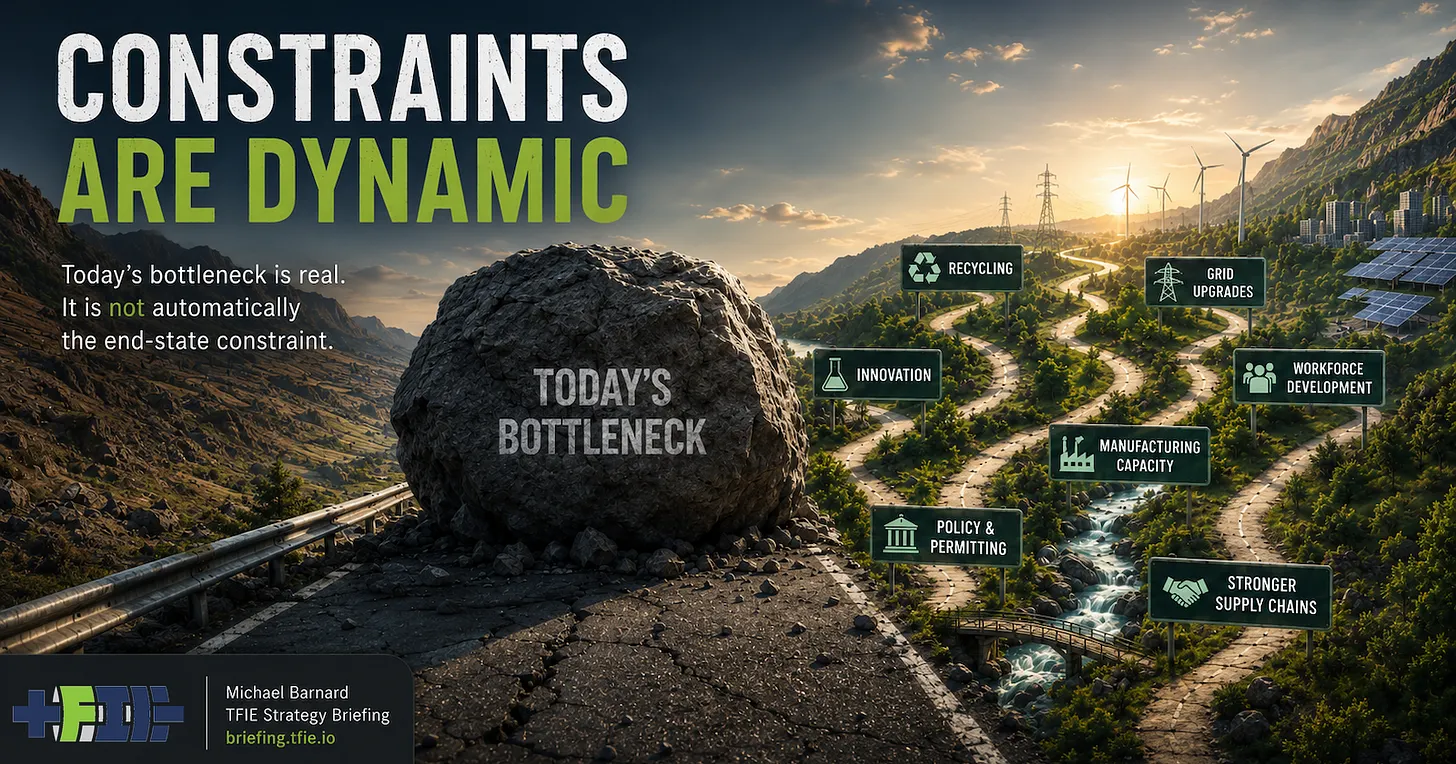
Including a constraint, however, is not the same thing as freezing it in place. When a bottleneck becomes material, it changes prices, capital flows, engineering choices and policy attention. Substitutes become more attractive. Manufacturers redesign products to use less of the constrained input. Governments rewrite rules, usually too slowly, but not never. Customers shift timing or adopt adjacent technologies. Competitors enter because the constraint itself has created a margin.