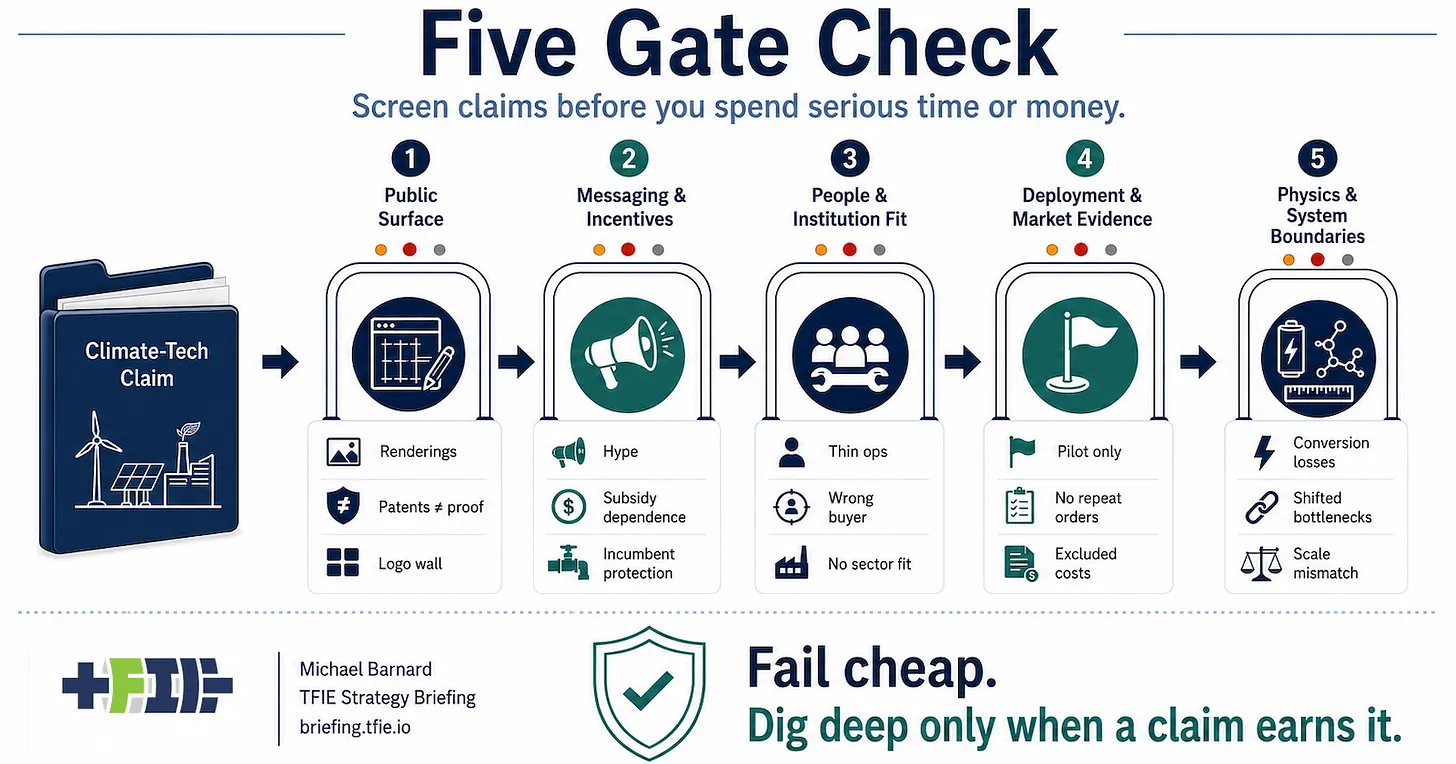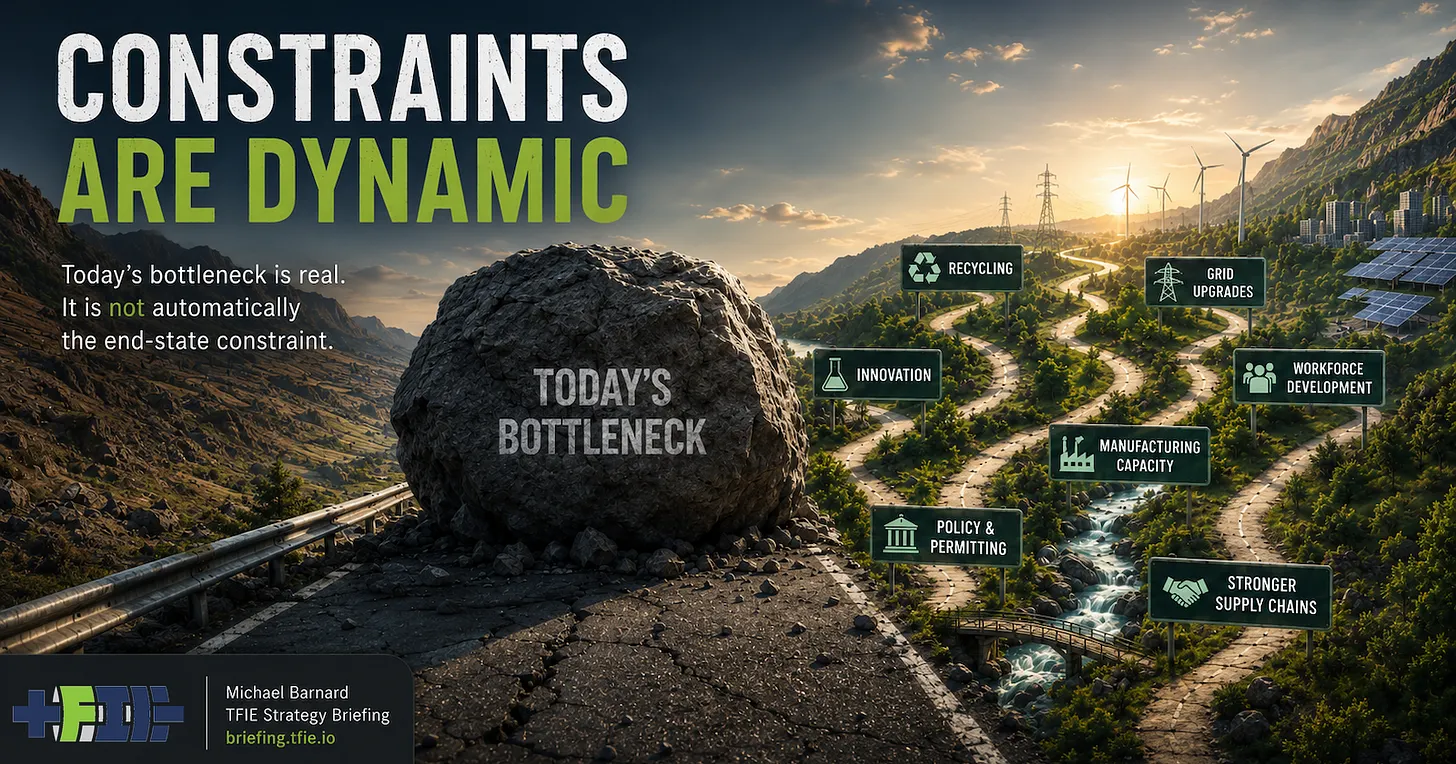
Transition claims become serious only after they survive the science, beat the alternatives, and pass through adoption reality.
Support CleanTechnica's work through a Substack subscription or on Stripe.
A lot of transition analysis gives too much credit to technologies that can be made to work and not enough scrutiny to whether they matter. The difference shows up across carbon capture hubs, synthetic fuel claims, small modular reactor schedules, cement decarbonization pathways, aviation fuel projections, ammonia shipping forecasts, grid storage proposals, critical-mineral panic stories, and hydrogen strategies. A process can work in a lab, run in a pilot, attract a grant, or look credible in a diagram and still fail as a useful pathway for climate, capital, or policy.
The first test is technical, but not in the weak sense of asking whether something can be made to happen once. Many things can be made to happen once with enough money, attention, engineering talent, and tolerance for inconvenience. The harder question is whether the proposed solution holds together as science, engineering, operating system, and cost stack at the scale being claimed. Before a pathway competes with alternatives, it has to survive its own arithmetic.