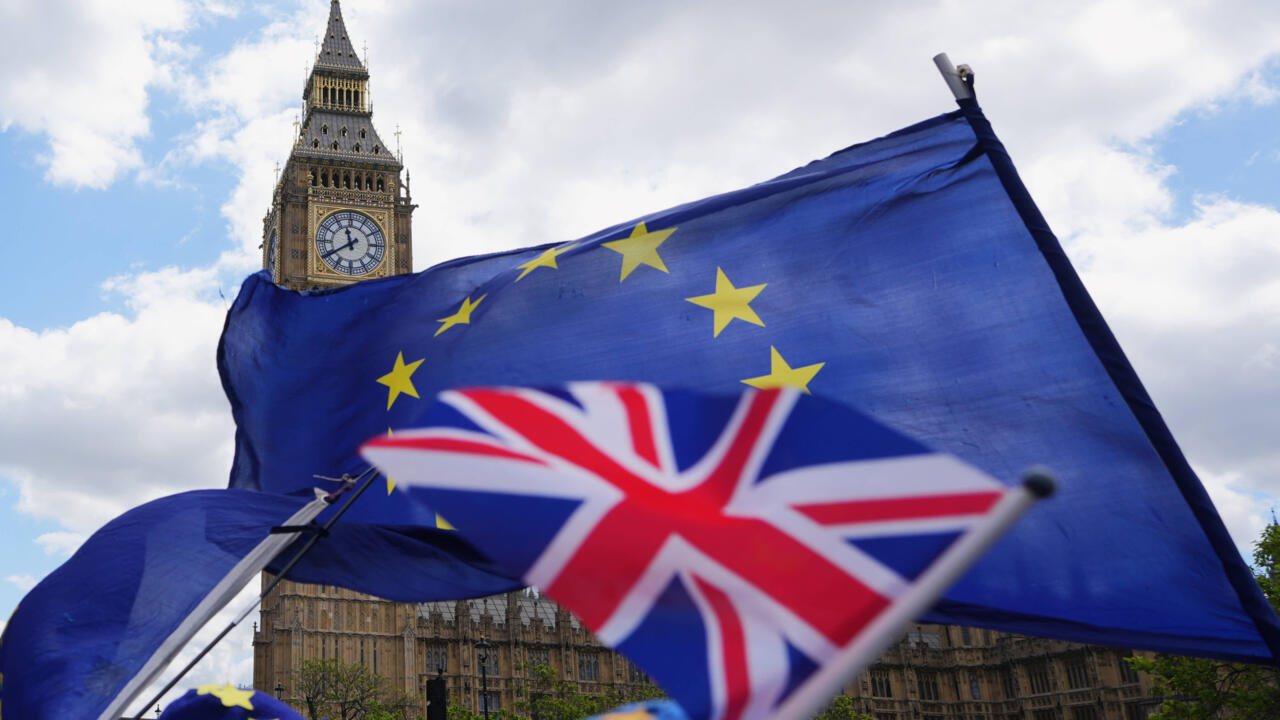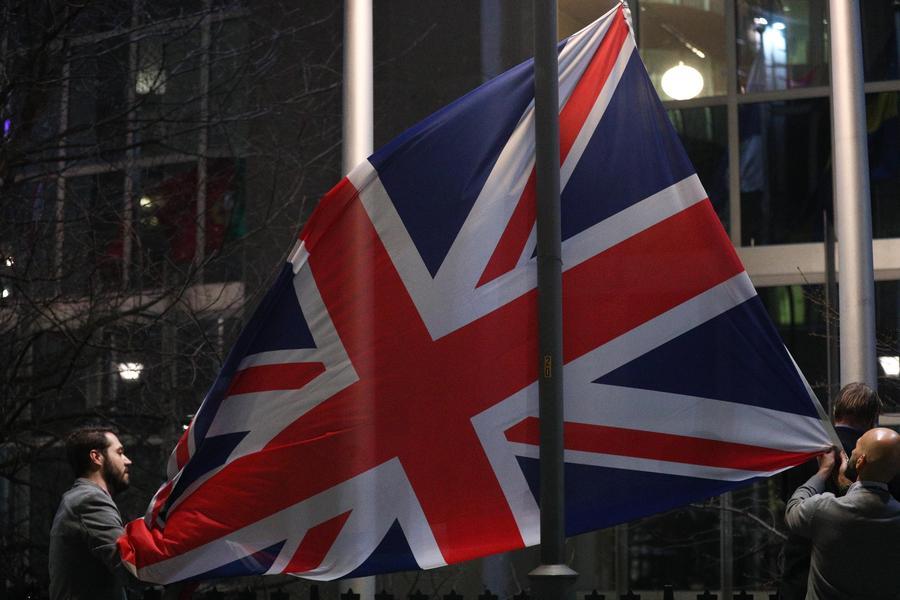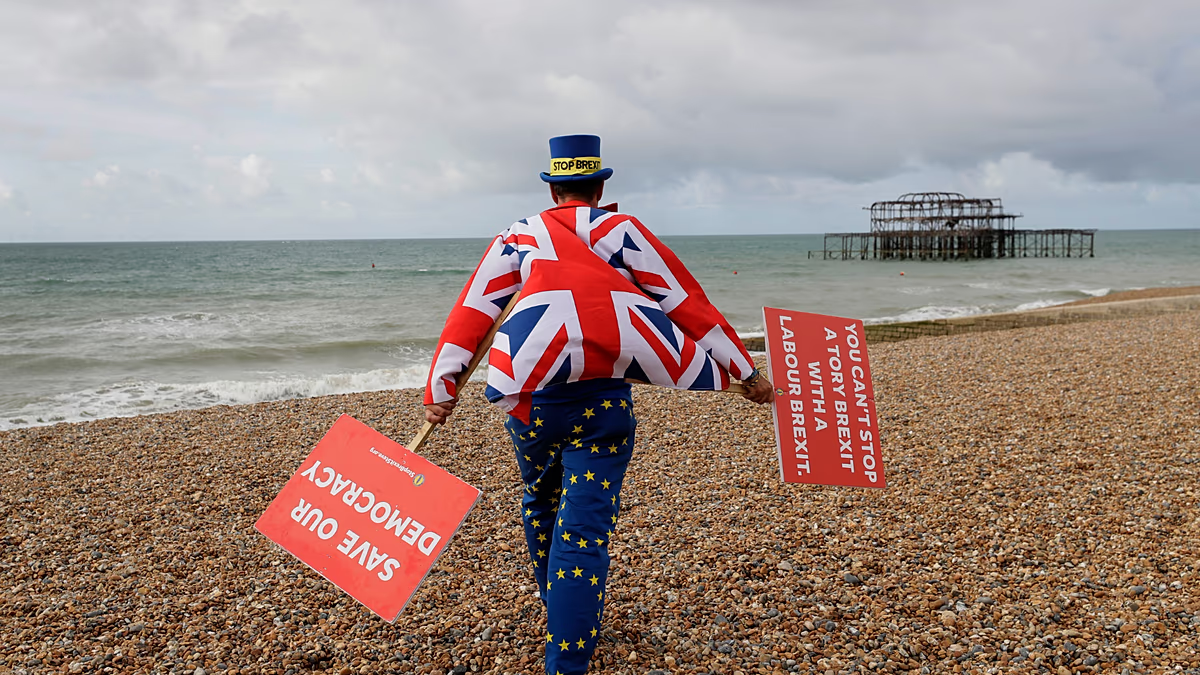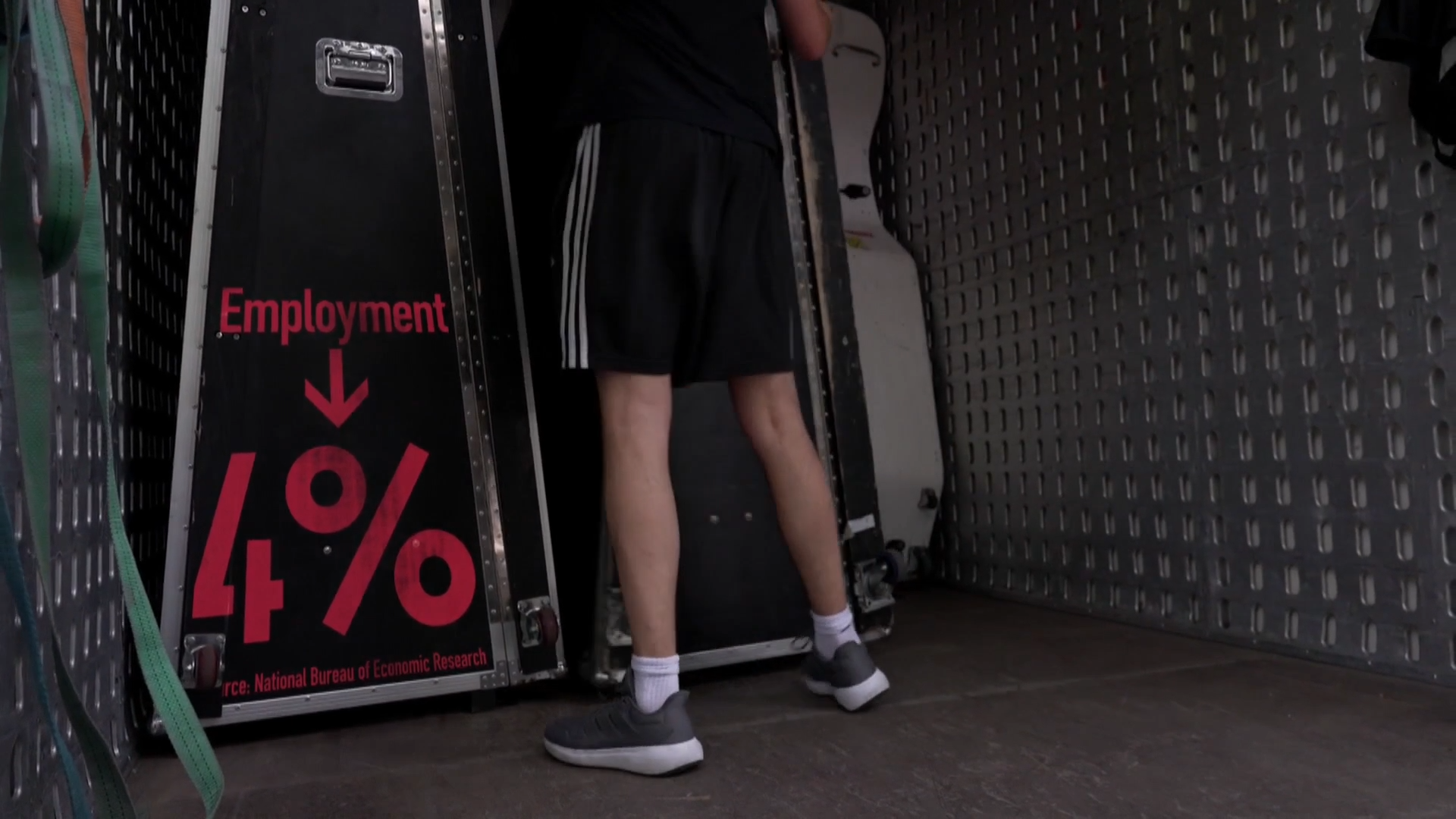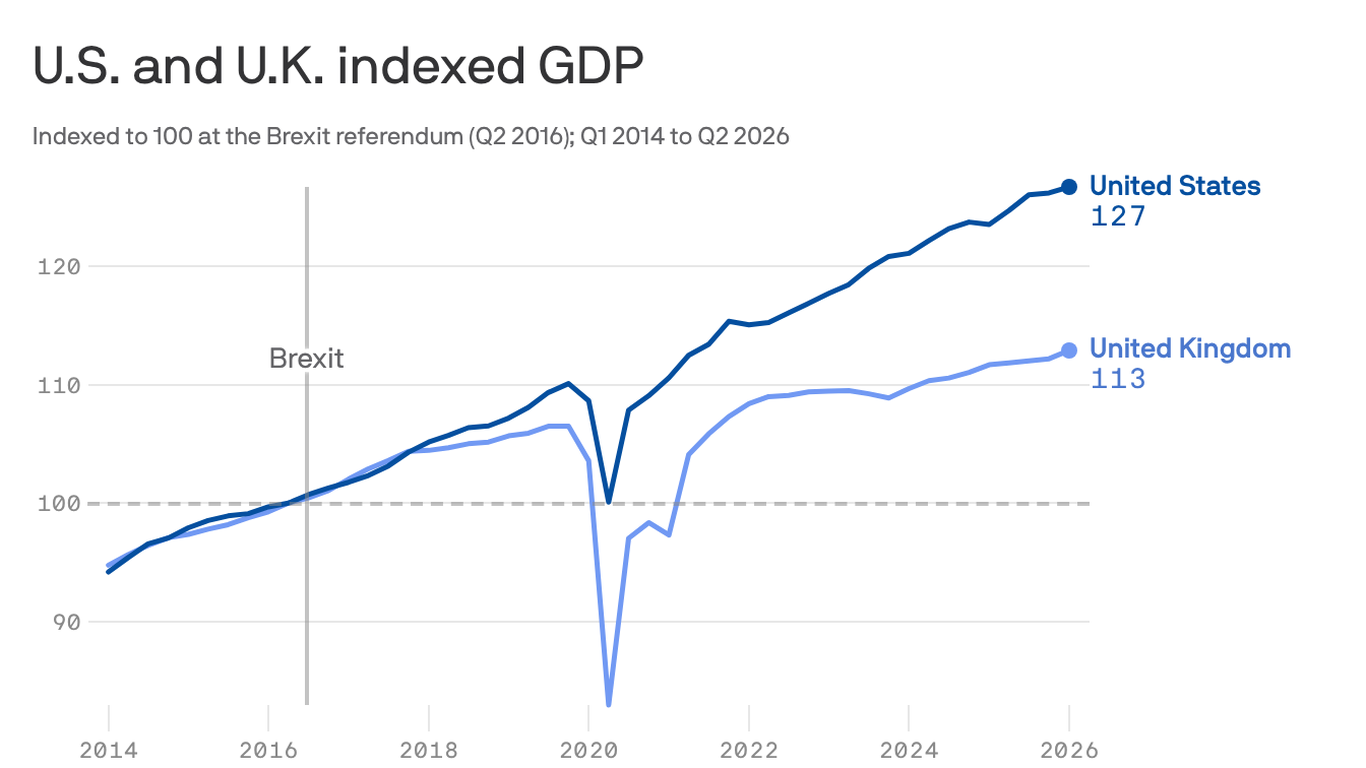
A decade on from the UK's referendum result to leave the EU, the Mirror looks at the cost of Brexit for businesses and workers, and how ordinary families have been hit16:13, 22 Jun 2026Updated 16:18, 22 Jun 202610 years after Brexit Jon Adams talks to the Mirror about its impact.Brexit has cost up to one million jobs and “permanently scarred” the economy, it is claimed.A decade on from the bombshell referendum vote to leave the EU, ordinary families are paying the price through an ongoing hit to living standards, say experts.And while the past 10 years have seen other major shocks - from the Covid crisis to the Middle East war - economists reckon Brexit is a “significant” reason why the UK is still in the grip of chronically weak growth, with major consequences for the state of the public finances.Professor Gregory Thwaites, research associate at think tank the Resolution Foundation, is one of the authors of a report on the economic impact of Brexit published late last year. It concluded leaving the EU reduced the UK’s gross domestic product - the value of everything we churn out - by 6% to 8%, slashed investment by 12% to 18%, employment by 3% to 4% and productivity by 3% to 4%. “It’s much worse than we thought,” said Prof Thwaites, speaking last week. “We know that by comparing the UK with other countries that didn’t leave the European Union and by looking within the UK at firms which were exposed to the EU and those that weren’t.“In any one year we are £240billion poorer than we would have been. We didn’t lose all of that growth in one year, we lost it over the course of 10 years."Prof Thwaites, an associate Professor of economics at the University of Nottingham, now calculates the impact on the labour market has been jobs - up to one million - that would have been created if the economy had grown in line with other countries. He also estimates weak growth has meant the average worker on £40,000 a year has lost out on at least £2,400 of potential wage rises.“Because it’s happened slowly over a long period - and with other things going on - most people won’t be able to identify Brexit as the cause,” he said, adding the economic drag has also reduced tax receipts by £70billion a year, or nearly a third of NHS annual budget. “It is a permanent scar,” he added. “People voted for Brexit because they wanted to be able to make our own laws, control our borders, and we have some of those things now. The question is, was it worth it?”Research by the Institute For Public Policy Research for the Mirror also found reduced exports to the EU due to Brexit had cost the UK economy on average £18.1billion a year. As a result, our exports to the bloc are on average 14.5% lower than they would otherwise have been, it added.Jonathan Portes, Professor of Economics and Public Policy at King’s College London, said: “As almost all serious economists predicted, Brexit has had a significant - not catastrophic - negative economic impact on the UK. It is not the only reason the economy has struggled over the last 10 to 15 years but it is a significant factor.”Others say the impact of Brexit has been far less than the cliff edge warning issued by the Treasury ahead of the Brexit vote.Under a “shock scenario”, it forecast a recession would immediately follow a vote to leave the EU, when in fact it grew. It also predicted 500,000 UK jobs would be lost within two years, whereas in fact the jobless rate fell by nearly one full percentage point.Professor Anand Menon, director at UK in a Changing Europe, said: “Brexit has been a slow puncture, not a cliff edge. It’s had real impacts but the impacts have been subtle and taken place over time. It wasn’t fire and brimstone.”He also says the root of the current political and economic turmoil pre-dates Brexit. “The problem you get with a lot of remainers is they argue our economy started going wrong in 2016,” he said. “No it didn’t. One of the reasons we voted to leave was because our economy was already going wrong.”TUC general secretary Paul Nowak said “A closer relationship with the EU is just plain common sense – particularly in a volatile global economy with an unpredictable US president who has slapped arbitrary tariffs on Britain and threatened more. Just look at the damage to our economy and living standards ten years on from the referendum result – the Conservatives’ botched Brexit agreement set workers and business back at home and abroad.”Farming and horticultureFlower wholesaler Jon Adams said the impact of Brexit on his business had been “very traumatic.”The owner of Hertfordshire based family firm Jane Adams lists an array of issues, including sometimes delays of up to 30 hours for lorry drivers when EU grown stock arrives at the UK border. “It is easier dealing with Ecuador or Columbia than it is with the EU now,” he says, adding that paperwork and other Brexit related costs have wiped £10,000 a year off the firm’s profits.Before Brexit, when there were no borders, he could order flowers from Holland or Belgium up to 3pm to arrive the same day. Now he says they have to order up to five days in advance.“I’ve been in the industry over 50 years,” says Mr Adams. “I’ve been through the Thatcher years, the three day week, we’ve had boom and bust, the pandemic, all sorts of problems, but Brexit is, without a doubt, the most damaging to our industry.”Tom Bradshaw, president of the National Farmers Union, says Brexit has “completely reshaped the landscape for British agriculture”.Leaving the EU meant the end of unfettered access to its market, as well as subsidies through the Common Agricultural Policy (CAP). In England, direct CAP payments have been replaced by others, including paying farmers based on how they care for the environment. “That transition has neither been transparent nor predictable for our farmers and growers and has left us more exposed to extremely volatile global markets,” Mr Bradshaw said.Suit retailerOnline suit retailer Mike Dobell’s sales to the EU have slumped 60% since Brexit.“It has posed a lot of significant challenges in terms of trade barriers,” he said. “We used to have localised websites in each of the EU countries and offered next day delivery. Trade was easy - trading with Berlin was like trading with Manchester. Now it’s easier to send something to Sydney than it is to Calais. There is a lot more red tape, bureaucracy, work on our side and duties to pay.”A 10% import tariff is applied to the retail cost of what it ships to the EU adding a potential £20 to £200 suit. “If the customer returns the item, you don’t get that back,” said Mr Dobell, founder of Eastbourne-based Dobell formalwear.The EU used to account for 35% of the firm’s turnover, but turnover with the bloc has slumped. While it has ramped-up its UK arm, an attempt to boost trade to the US has been thwarted by tariffs by Trump. “We used to have a lot of EU staff, but they left,” Mr Dobell adds. “We had Polish warehouse workers but they didn’t feel wanted in the UK.”Fishing hooksMark Hamnett, managing director of a specialist fishing hook manufacturer and distributor, said Brexit had been “devastating”.One consequence has been import duties and VAT, which makes his products less competitive, just when they are facing a flood of cheap China-made rivals. “The paperwork is also unbelievable,” said Mr Hamnett, co-owner of Wincanton-based Fishing Matters.He also takes a big hit when importing the other way. One example he quotes is a fishing hook made in France on which he now pays 20% VAT and a 3.5% French steel tax. Were he then to sell that back to the EU, a further duty and VAT would be added. Before Brexit, none of those would have applied, he said.Mr Hamnett estimates its European business, which previously accounted for about 25% of its trade, was down 50%.Matters have been made worse by US President Donald Trump’s import tariffs, which as hit its business in the States. “It is a perfect storm,” is how he sums it up. “It is really frustrating,” says Mr Hamnett, who feels a lot of people are unaware of the ongoing impact of Brexit. “And the politicians aren’t listening.”ManufacturerChris Hudson recounts a recent example of Brexit and the obstacles it has created.Article continues belowHis firm, Sheffield-based cutlery and silverware maker Chimo, sent a shipment to France that took three days. “It can take weeks,” Mr Hudson adds. A couple of days later it shipped a similar product to northern Spain and the goods were returned by customs. It turns out the customs official had imputed a product code wrongly. Having come all the back to the UK, it was then resent to Spain, and this time the right code was entered and it went on its way.Chimo, whose customers include restaurants and others in hospitality, used to rely on the EU for around 20% of its trade. Its turnover with the bloc has slumped from £100,000 to around £25,000 a year. “When we were part of the EU, I could get products to customers in 24 hours, wherever it was in Europe,” Mr Hudson says. “Now we can’t promise that.”
Brexit has hit up to one million jobs and 'scarred economy' 10 years on
A decade on from the UK's referendum result to leave the EU, the Mirror looks at the cost of Brexit for businesses and workers, and how ordinary families have been hit
1,577 words~7 min read