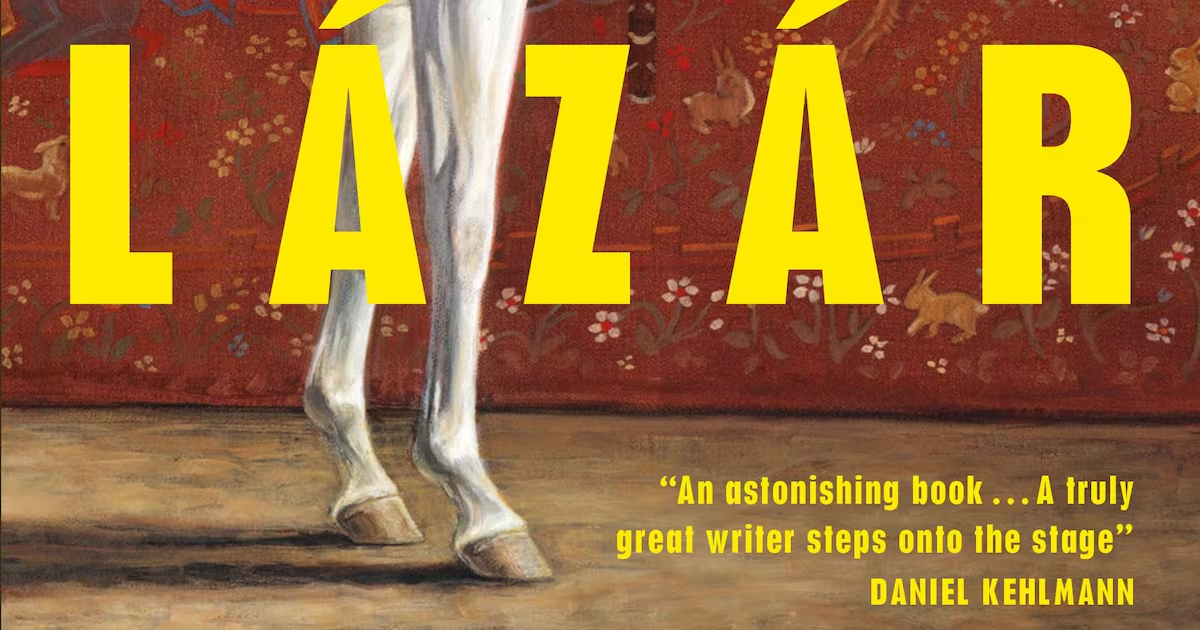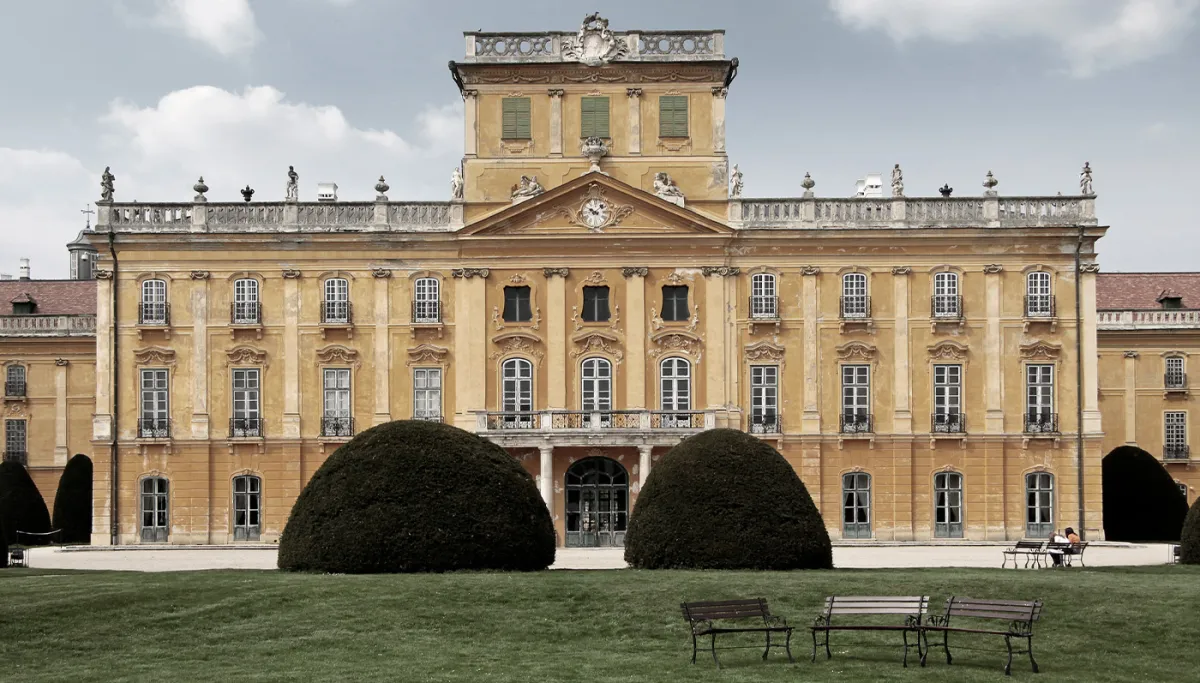
There are a disproportionate number of dental offices in western Hungary because Austrians frequently cross the border for cheap, high-quality tooth care. About 15 minutes from a border post that is about as relevant today as it was at the height of the Habsburgs, you can tour “the Hungarian Versailles,” the ancestral home of the Eszterhazys, arguably the most powerful family of the old empire. In the late 18th century, Joseph Haydn was a composer in residence for several decades. More recently, Soviet troops sacked the place on their implacable march into the heart of the Third Reich. The palace, now a walkable museum, has several old wooden doors crudely stenciled with hammers and sickles. Decline, fall, and the uncomfortable sense that some things lost will never be recovered are enduring themes in Central European literature because reminders of past glories (and horrors) are right down the street from a dentist offering a two-for-one deal on crowns. Enter Nelio Biedermann, a Swiss university student and the newest contender for the title of Next Great European Novelist. His second novel, Lázár, chronicles the tumultuous history of a noble Hungarian family, not all that different from the Eszterhazys, from the end of the 19th to the middle of the 20th century. The success of an ambitious historical epic written by a young male author is worth remarking upon. American publishers have decided that men no longer read books. It is an open question whether the lack of prominent male authors is a cause or a consequence of this state of affairs, but the ambitious, tortured, and unapologetically masculine novelist, once a fixture of the American literary scene, is suddenly in short supply.
Review of Lázár
Nelio Biedermann is a promising young author, but his book’s unlikely success is about more than the trials and tribulations of the Lazars.
1,155 words~5 min read