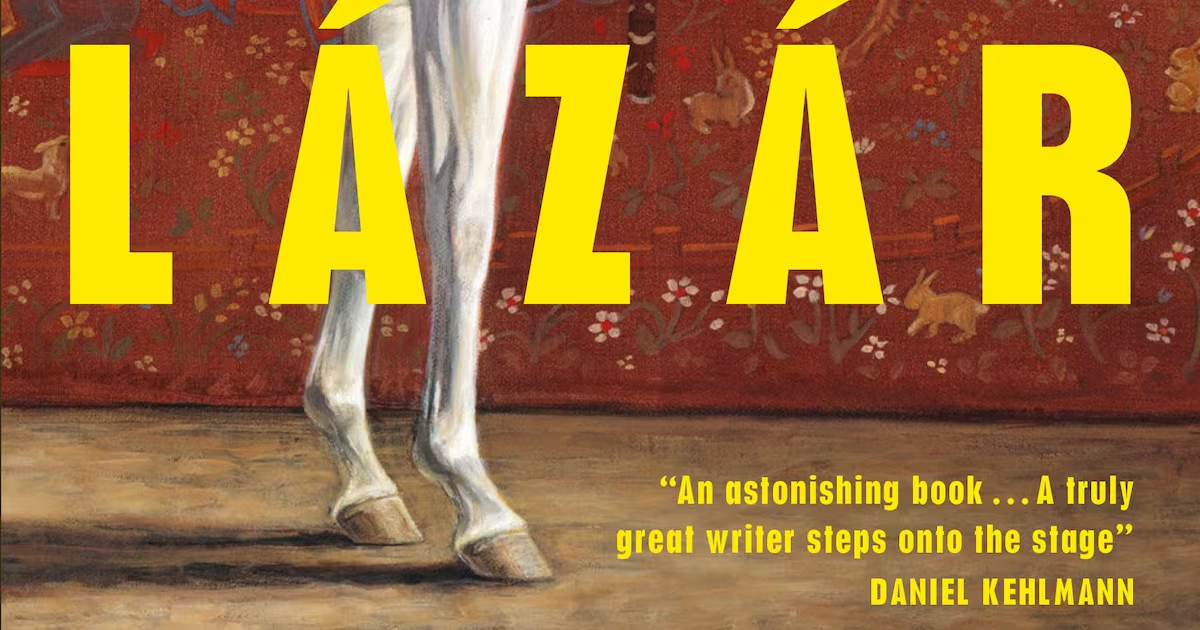
The fortunes of a single family are entwined with the turmoil of the 20th century in this ambitious, gothic-inflected debut
T
his gothic-inflected saga has received much attention in Europe for its quirky and confident take on 20th-century Hungarian history. It is sobering to reflect that its author not only has no personal memory of the end of communist rule in eastern Europe, but that he wasn’t even alive when the twin towers fell. Born in 2003, Nelio Biedermann is among the first wave of gen Z writers of fiction and Lázár is his debut novel.
The opening pages introduce us to a world straight out of gothic fable. In an isolated manor house by a forbiddingly dark forest, a strange-looking baby is born. This unearthly child, Lajos, is fated to carry forward the family name of the Lázárs, a noble dynasty with an alarming tendency to go mad, die violently, or both. Meanwhile, in another wing of the house lurks the baron’s older brother, Imre, who is barred from the baronetcy by reason of insanity.
In fact, Lajos von Lázár’s parentage isn’t quite what it appears. We soon learn that he is the product of an illicit liaison between Maria, the lady of the manor, and one of the grooms. Luckily for Maria, the groom is about to perish from a horse kick, leaving Maria to take the secret of Lajos’s paternity to her grave, an event which which, given the presiding atmosphere of the story, seems likely to be premature.