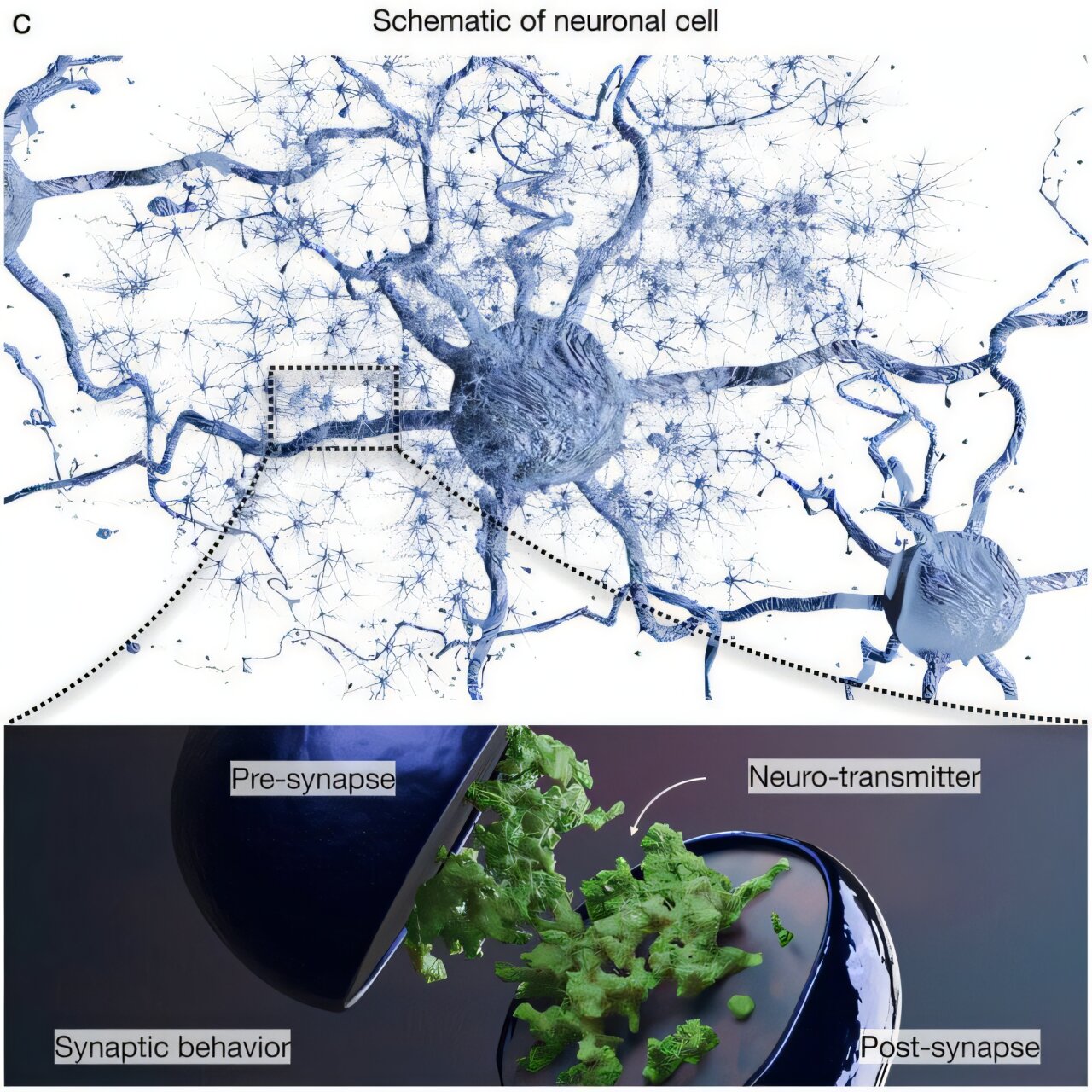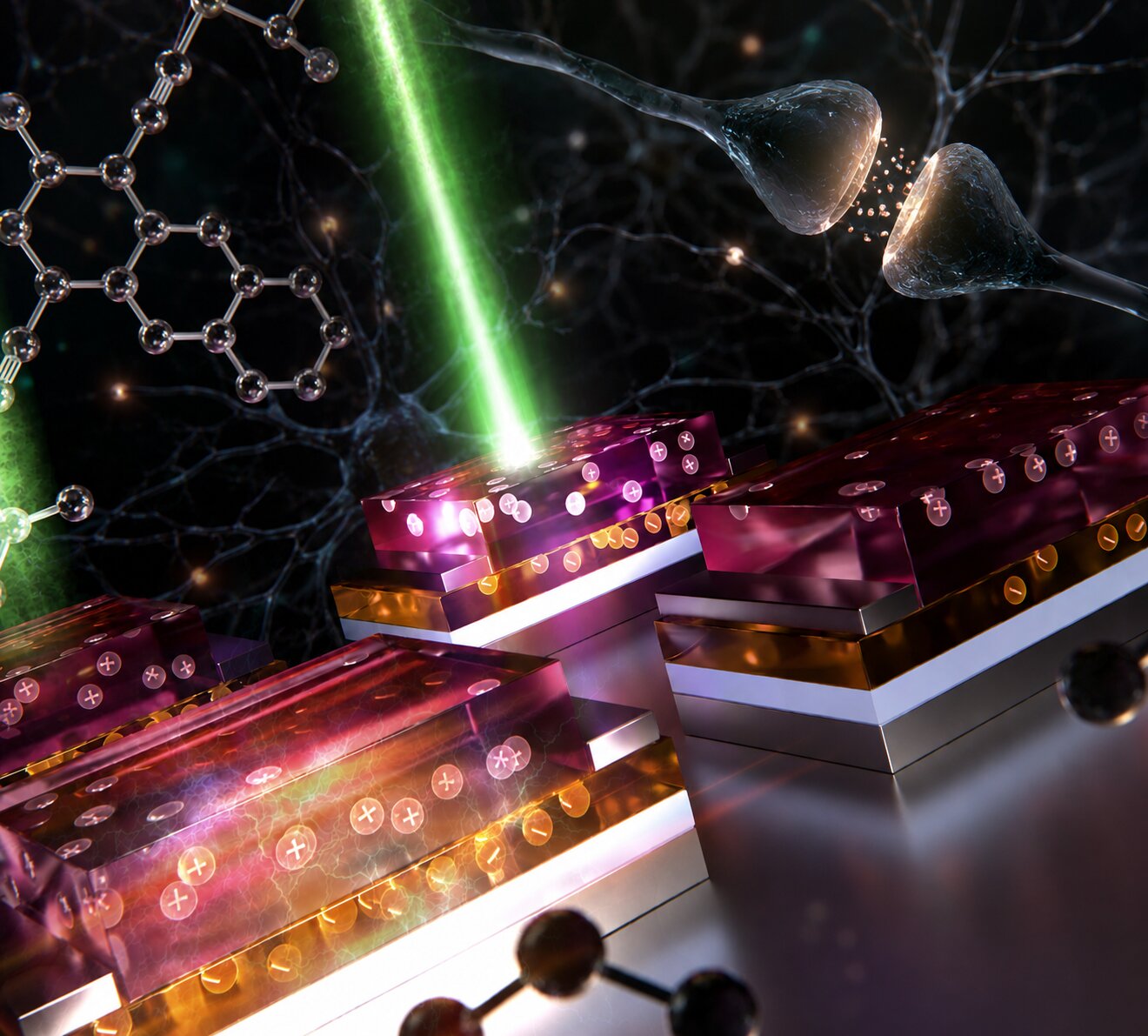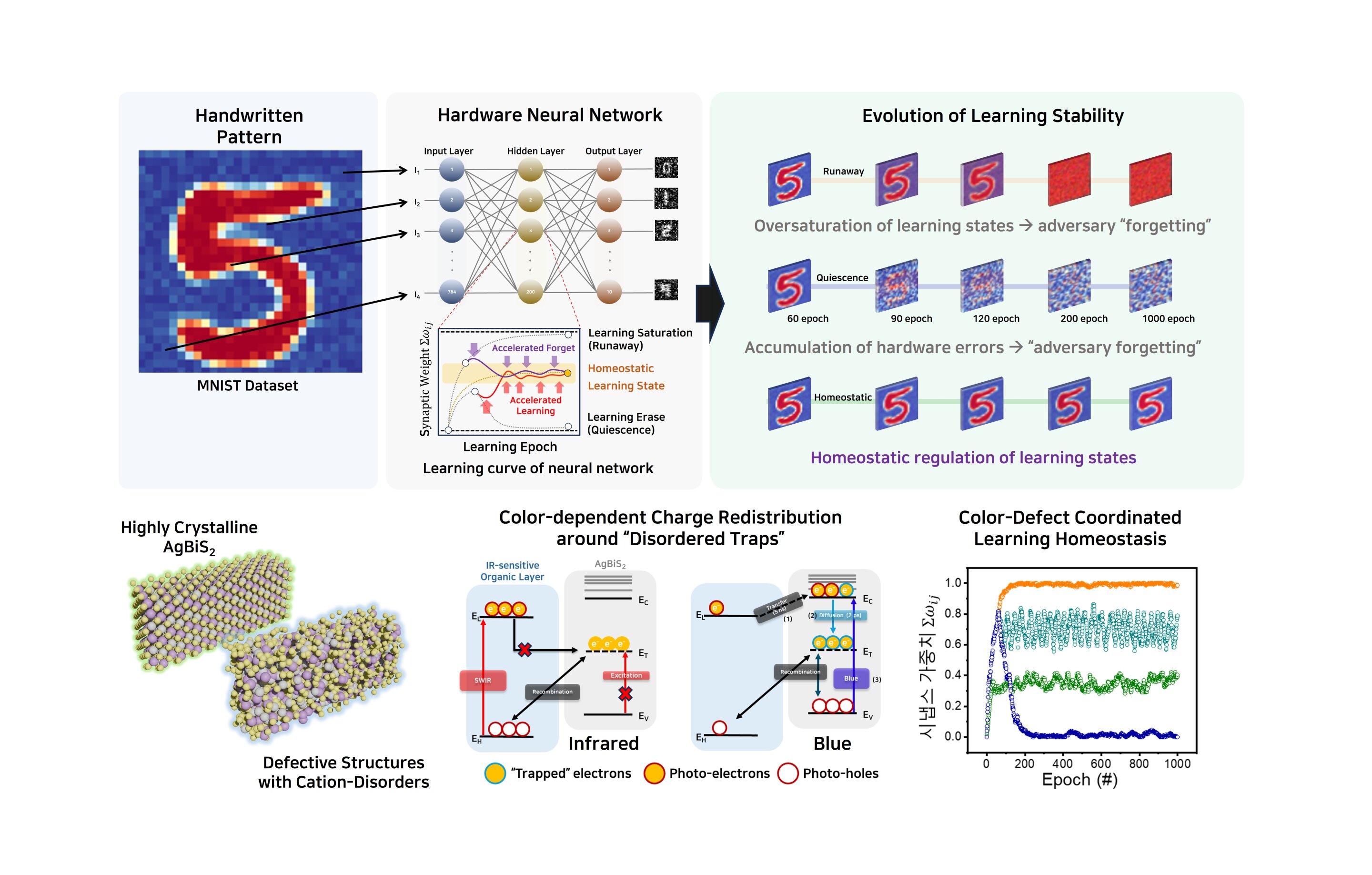
By the color of light, a single disorder-engineered synapse selectively strengthens or weakens its memory, enabling brain-like homeostatic learning. Credit: Nature Communications (2026). DOI: 10.1038/s41467-026-73235-5
The human brain actively keeps "learning" in balance by holding on to what matters and letting go of what does not. Researchers in Korea have now reproduced this ability in a semiconductor device, using the color of light to strengthen (remember) or weaken (forget) an artificial synapse's memory. Remarkably, the key ingredient is a material "defect" that engineers usually try to eliminate. The study appears in Nature Communications.
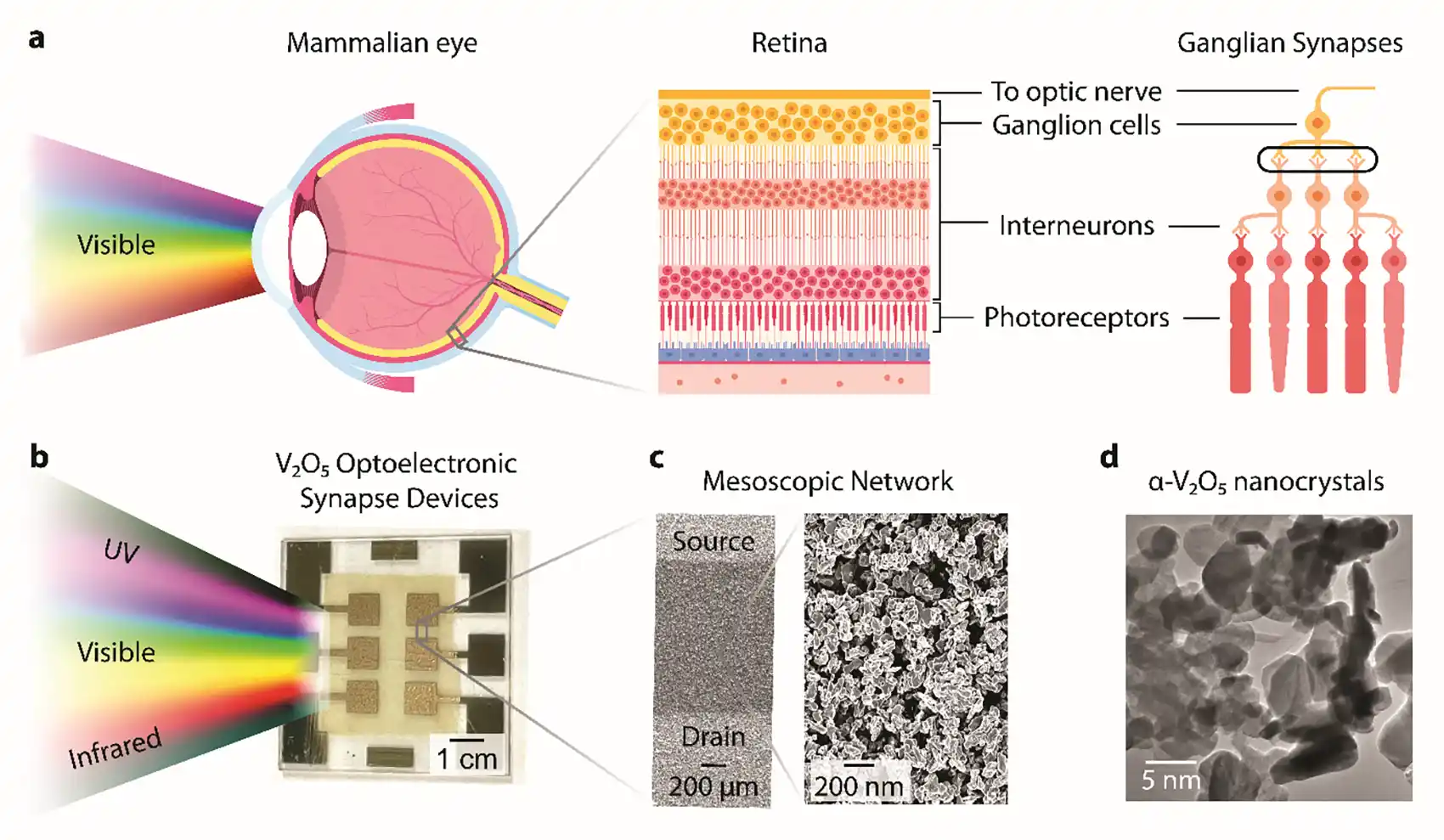
Modern artificial intelligence is extraordinarily power-hungry. Training a single generative model can consume as much electricity as a small city. The brain, by contrast, outperforms supercomputers on far less energy than a light bulb because it stores and processes information in the same place: the synapse. This has driven intense interest in neuromorphic (brain-inspired) computing, especially in light-driven photonic synapses that promise ultralow-power, high-speed operation.
A long-standing obstacle, however, is that conventional artificial synapses use the same control knob for both "remembering" (potentiation) and "forgetting" (depression). This makes the learning balance collapse over time—weights either saturate (run away) or fade away (quiescence), erasing what was learned. The brain avoids this through homeostatic plasticity, but artificial hardware has had to mimic it with costly extra software.