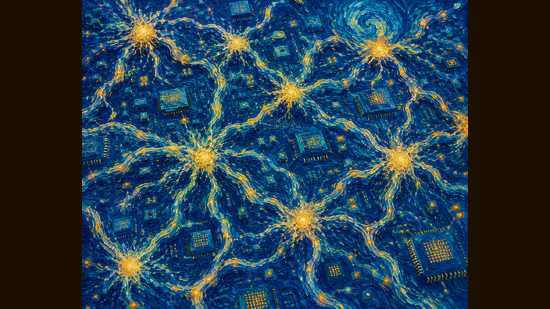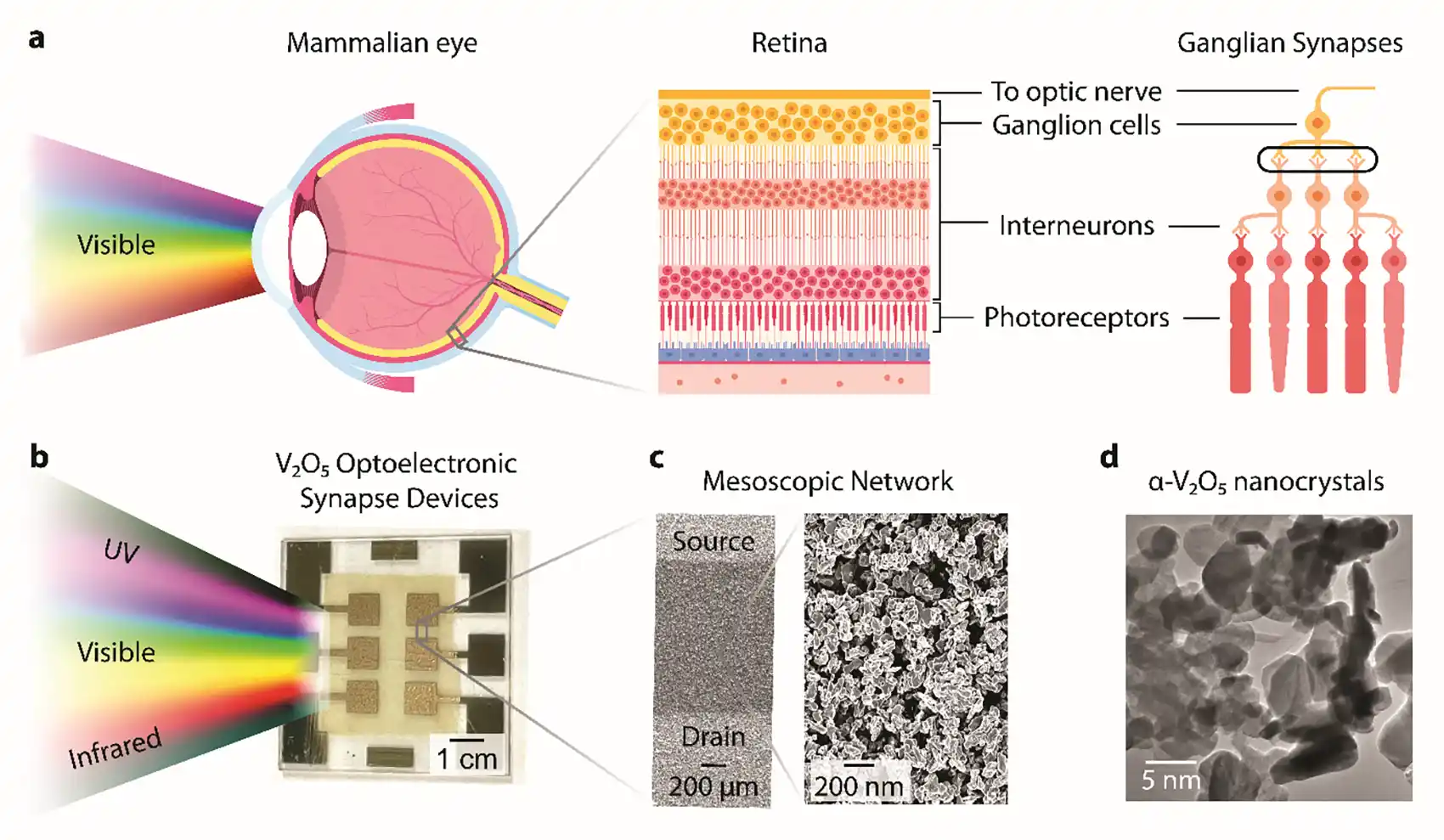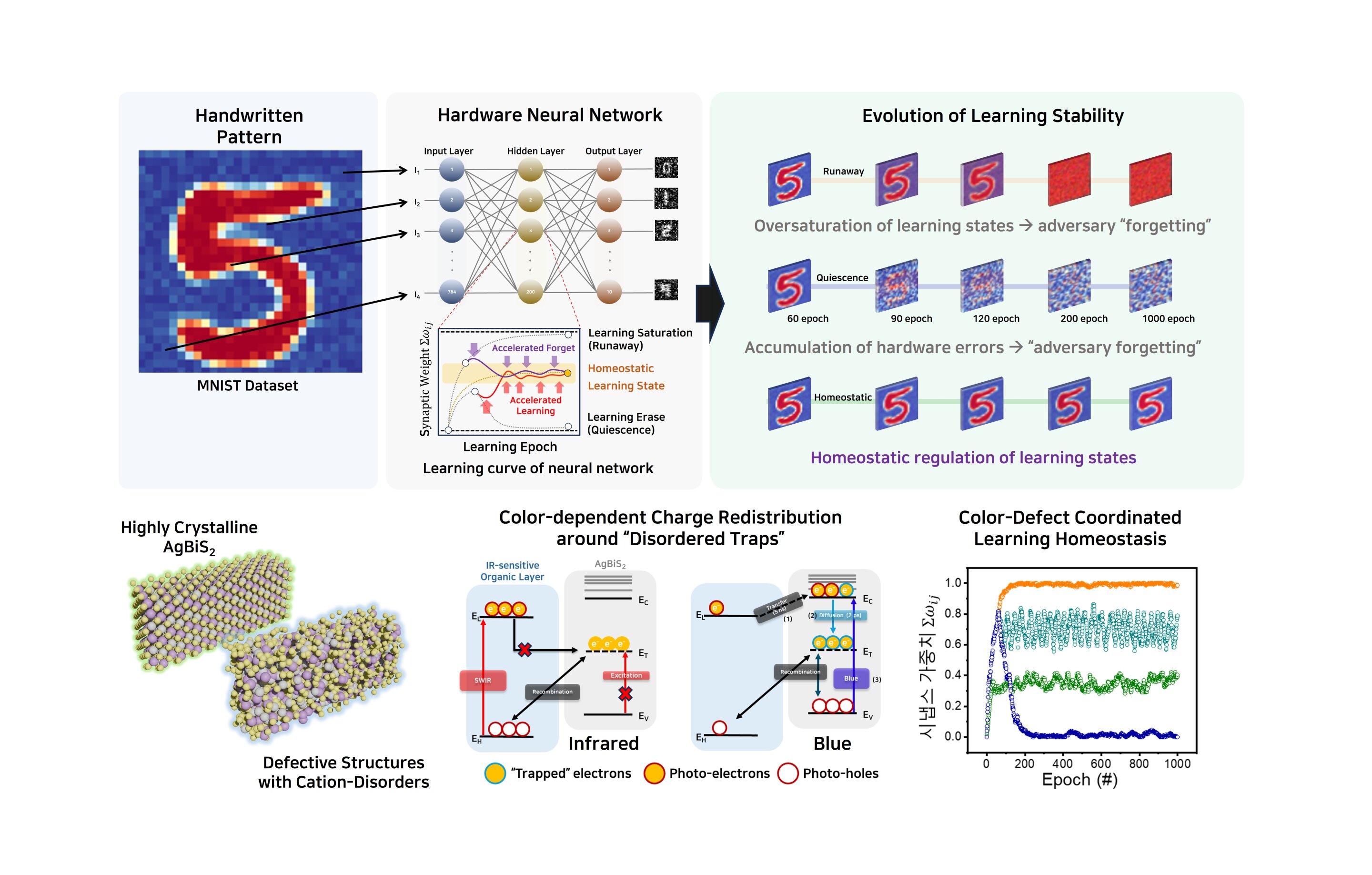
Illustration of neuro-phototransistor. Credit: Oregon State University
Inspired by the human brain, Oregon State University researchers have developed a new light-sensitive device that combines sensing and memory while controlling how digital memories strengthen or fade over time. The research was published in Advanced Functional Materials.
Technology that functions more like the human brain could enable artificial intelligence systems to work faster while consuming less electricity, said Larry Cheng of the OSU College of Engineering.
The new device integrates light sensing, memory and signal processing in a single phototransistor. Current AI hardware, Cheng explains, typically spreads those functions among different components, requiring information to move between them and increasing energy demands while reducing efficiency.
"Our optoelectronic device introduces a new hardware capability that may enable more efficient processing of information directly at the sensor level," said Cheng, a professor of electrical engineering and computer science. "Unlike conventional memory that is designed to preserve information, our device can electronically control how memories strengthen or decay."