Support CleanTechnica's work through a Substack subscription or on Stripe.
Optoelectronic Synapse Shows Exceptional Photoresponse for Neuromorphic Vision
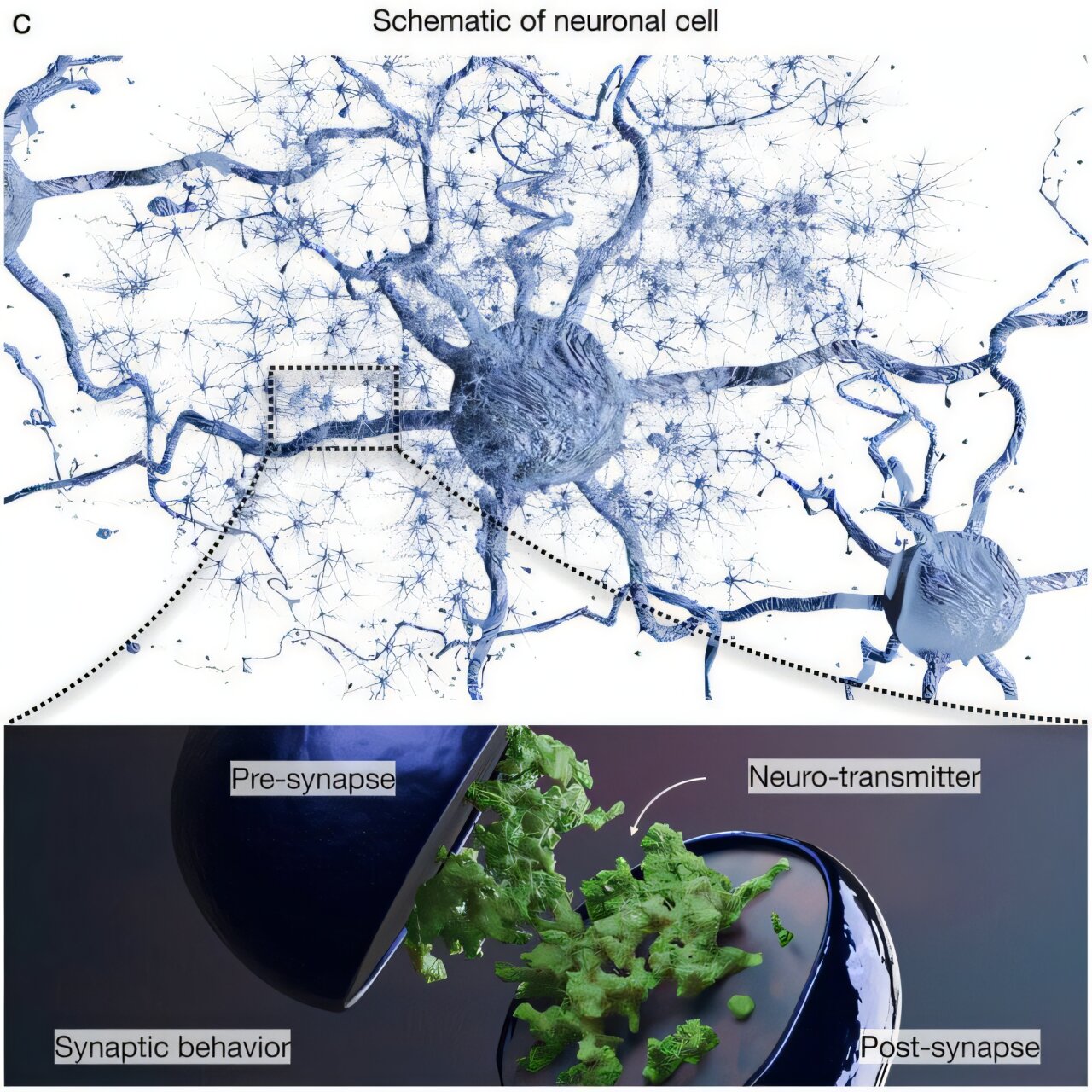
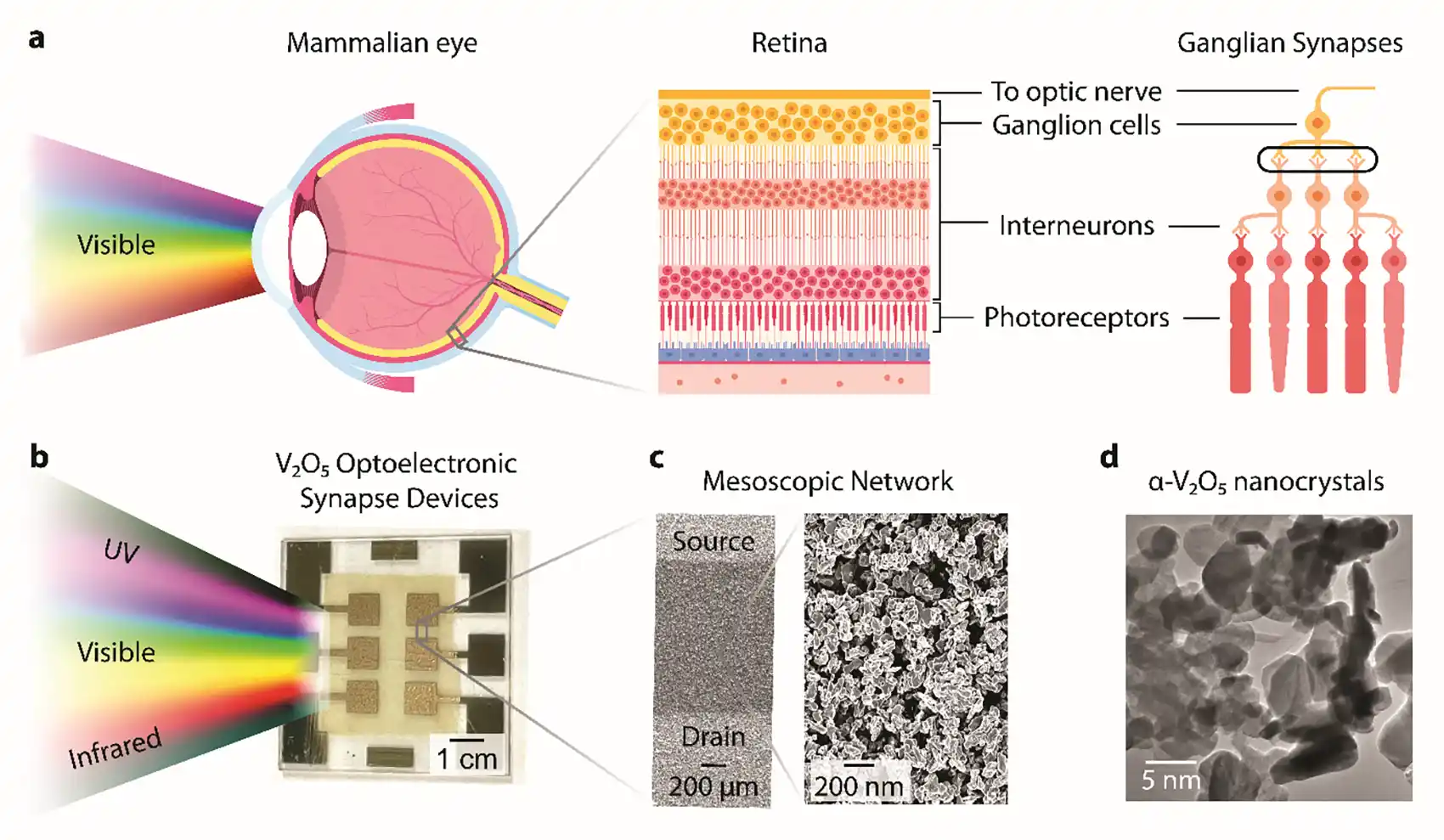
Like so much else in nature, the human visual system has both a complex structure and functional efficiency that is difficult for scientists to replicate. The system is both a sensor and a processor, with the eyes and the brain working together to resolve images with less energy use than anything people have invented.
But a technology called optoelectronic synapses can reproduce at least some of the phenomena that make human vision so successful, and a team of researchers at the National Laboratory of the Rockies (NLR) has discovered why certain materials perform so well at artificial vision and memory.
In their article “Interlayer Exciton Polarons in Mesoscopic V2O5 for Broadband Optoelectronic Synapses” published in Advanced Functional Materials, the NLR-led research team discovered the source of persistent photoconductivity—a mechanism that mirrors some of the functionality of biological synapses in the eye—for a particular vanadium-oxide material.