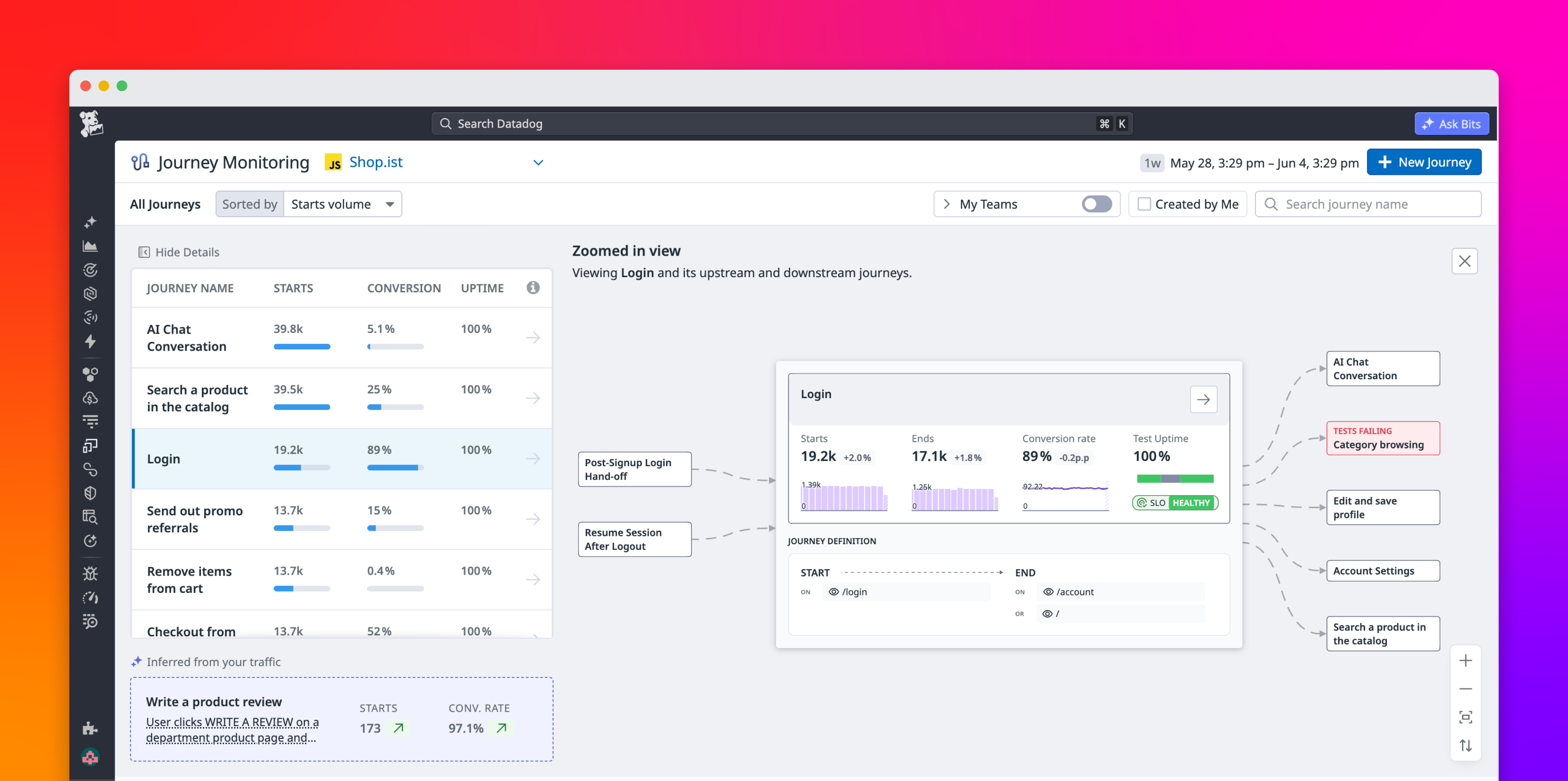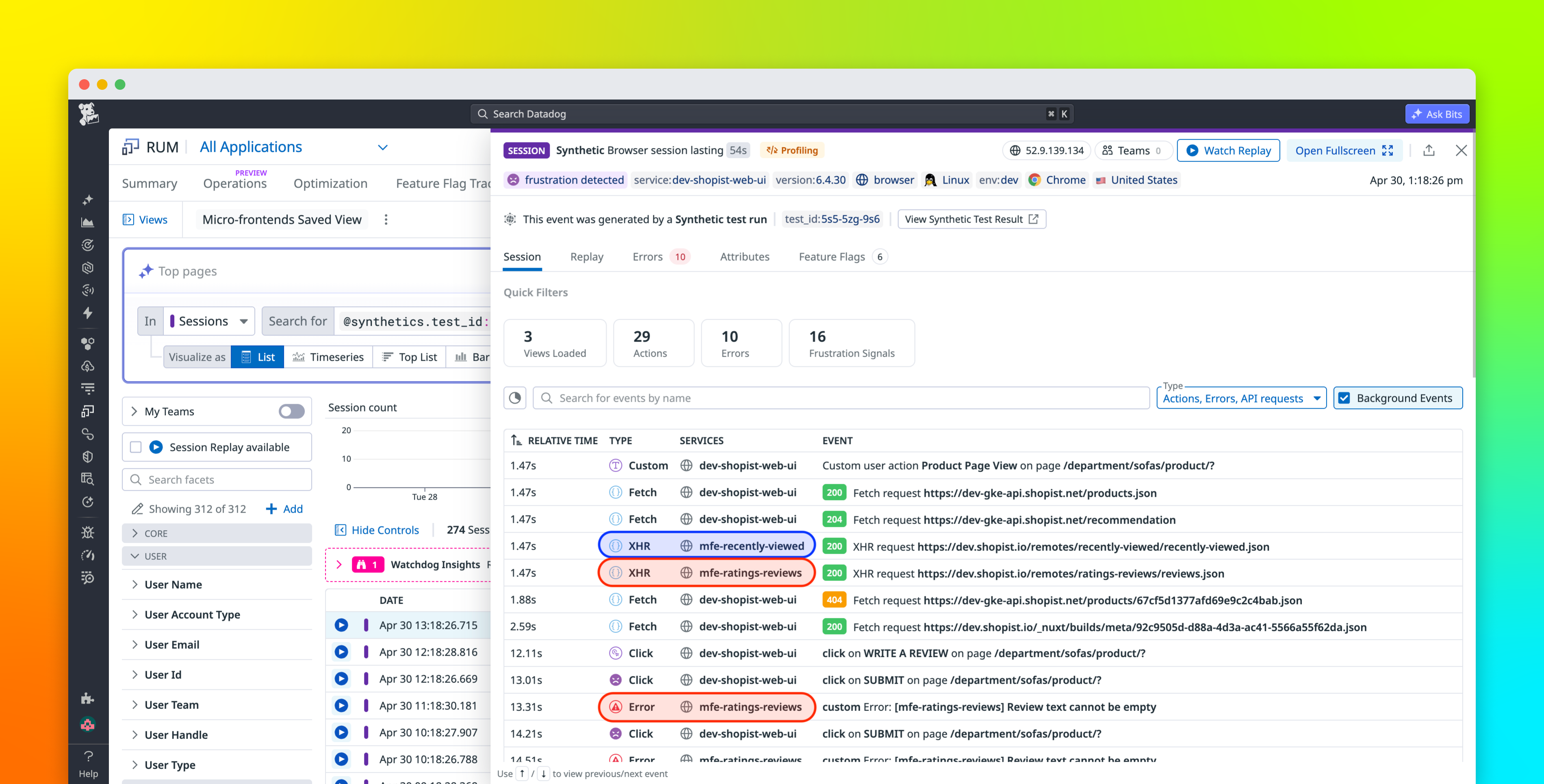
Two monitoring approaches answer two different questions. Synthetic monitoring answers "would the checkout flow work right now if someone tried it?" Real user monitoring answers "what did the checkout flow actually do for the 4,000 people who tried it today?" The first is a robot testing a path on a schedule; the second is instrumentation recording reality as it happens.
Teams reach for one when they need the other, then conclude monitoring "doesn't work." The fix is understanding what each is structurally good at — and where each is blind.
Synthetic monitoring: proactive, scripted, continuous
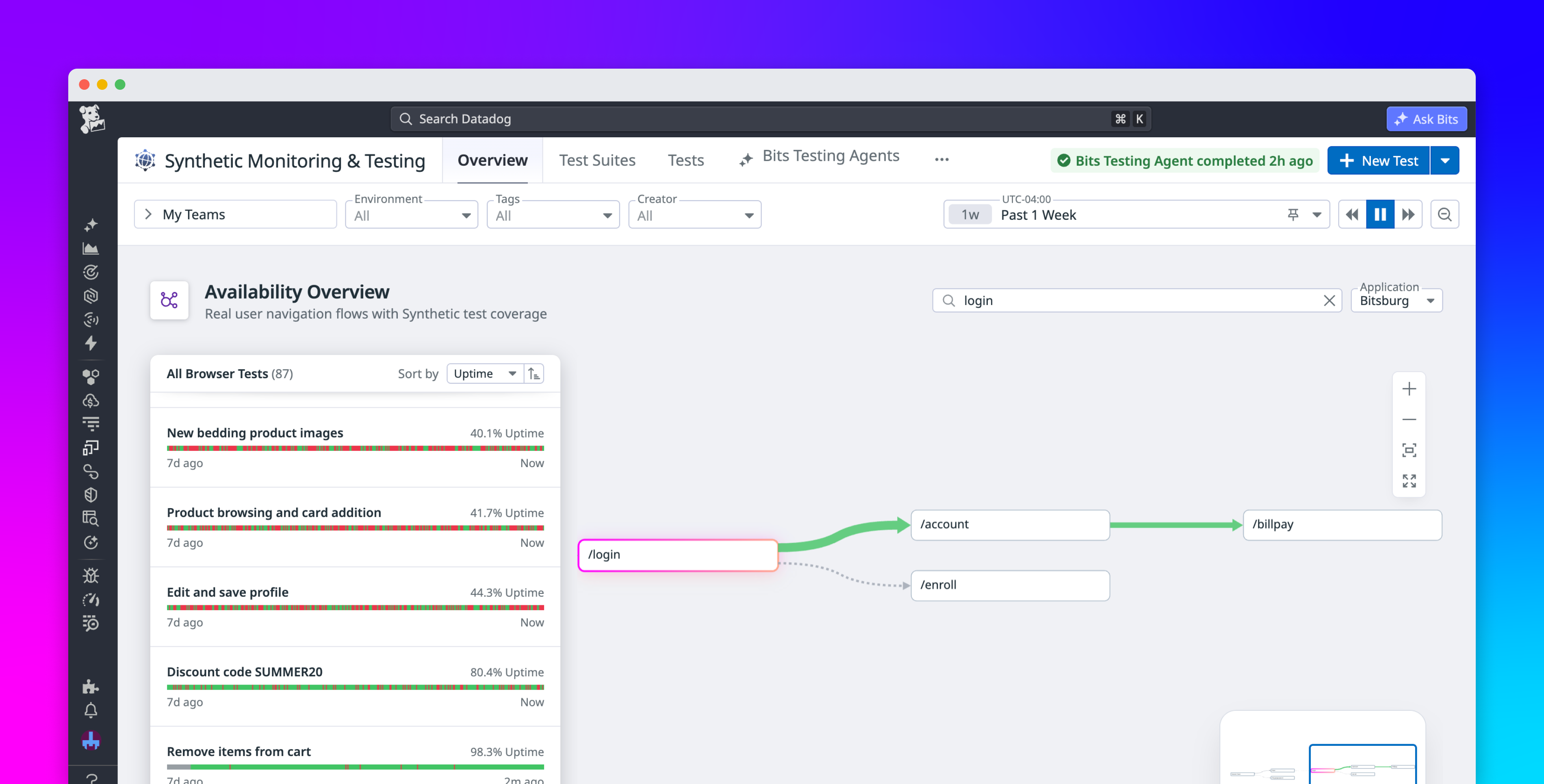
Synthetic monitoring runs scripted checks against your application from the outside, on a fixed schedule. An HTTP check hits an endpoint and asserts on the response; a browser check drives a headless Chromium through a journey — log in, add to cart, pay — and asserts on what the user would see.
The defining property is that it does not need real traffic. The check runs every 30 seconds whether or not anyone is using the app, from datacenters you choose, testing exactly the journeys you scripted. When a deploy breaks checkout at 3 AM, a synthetic check catches it at 3 AM — not at 9 AM when the first customer wakes up.