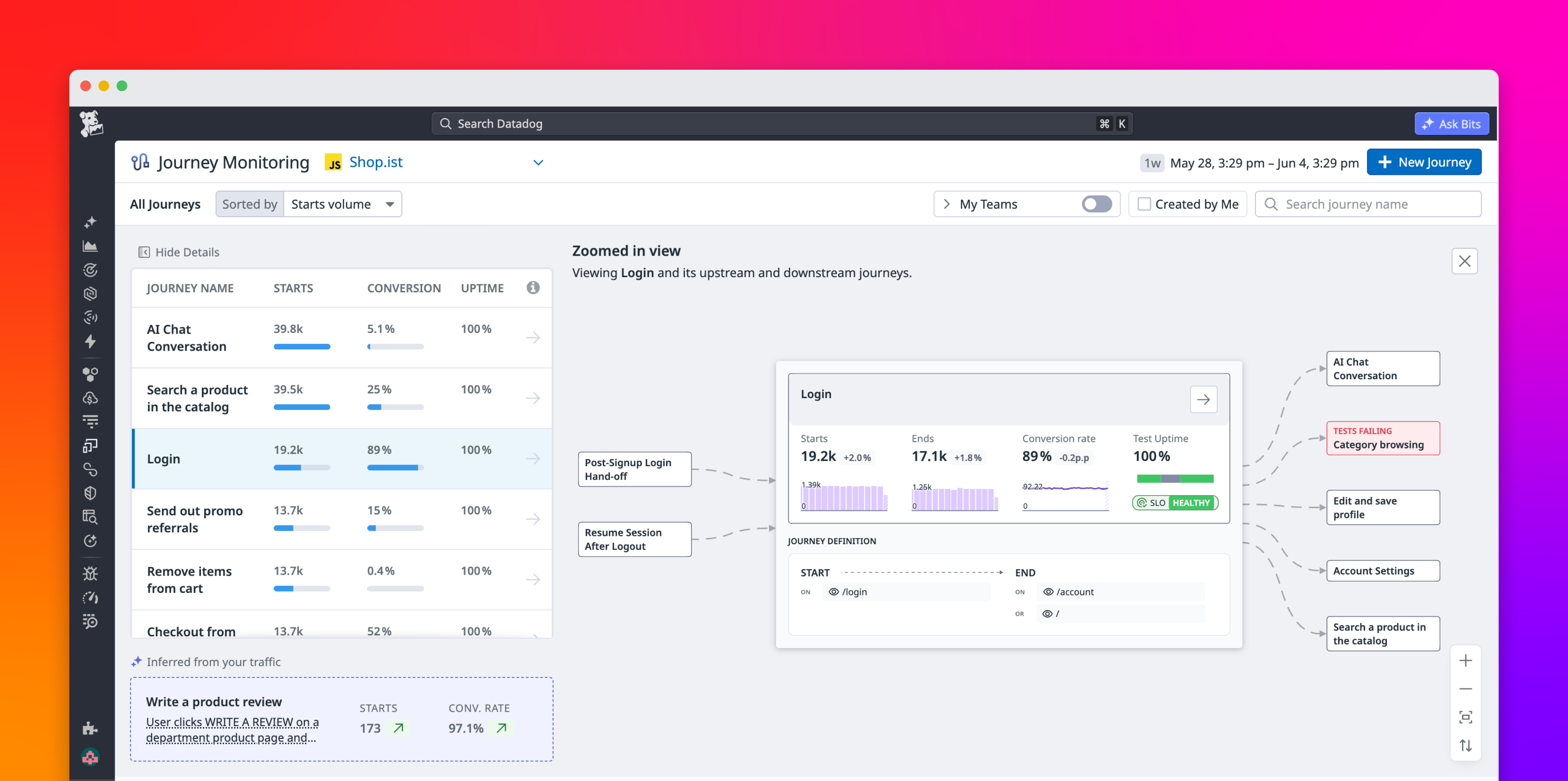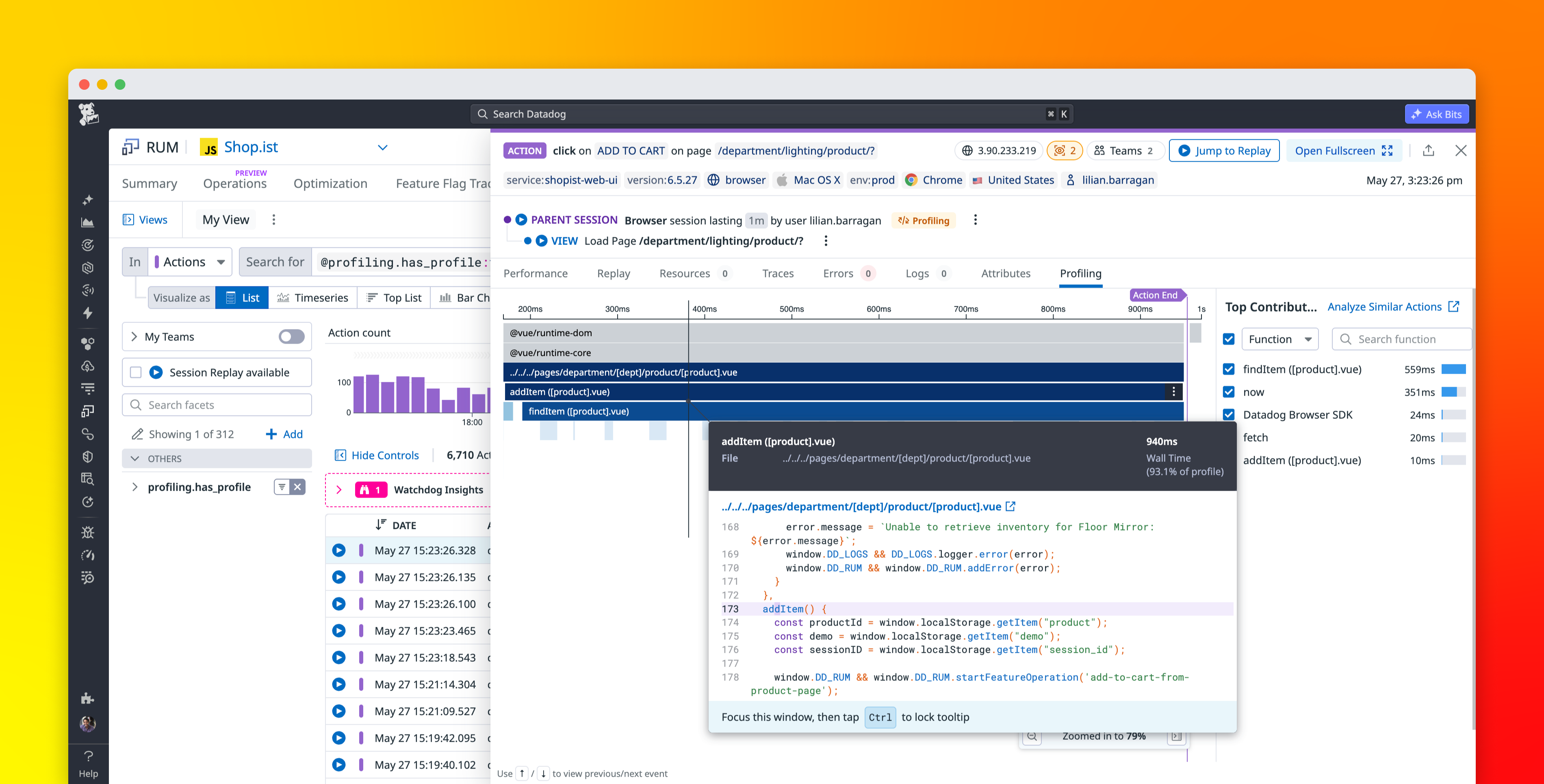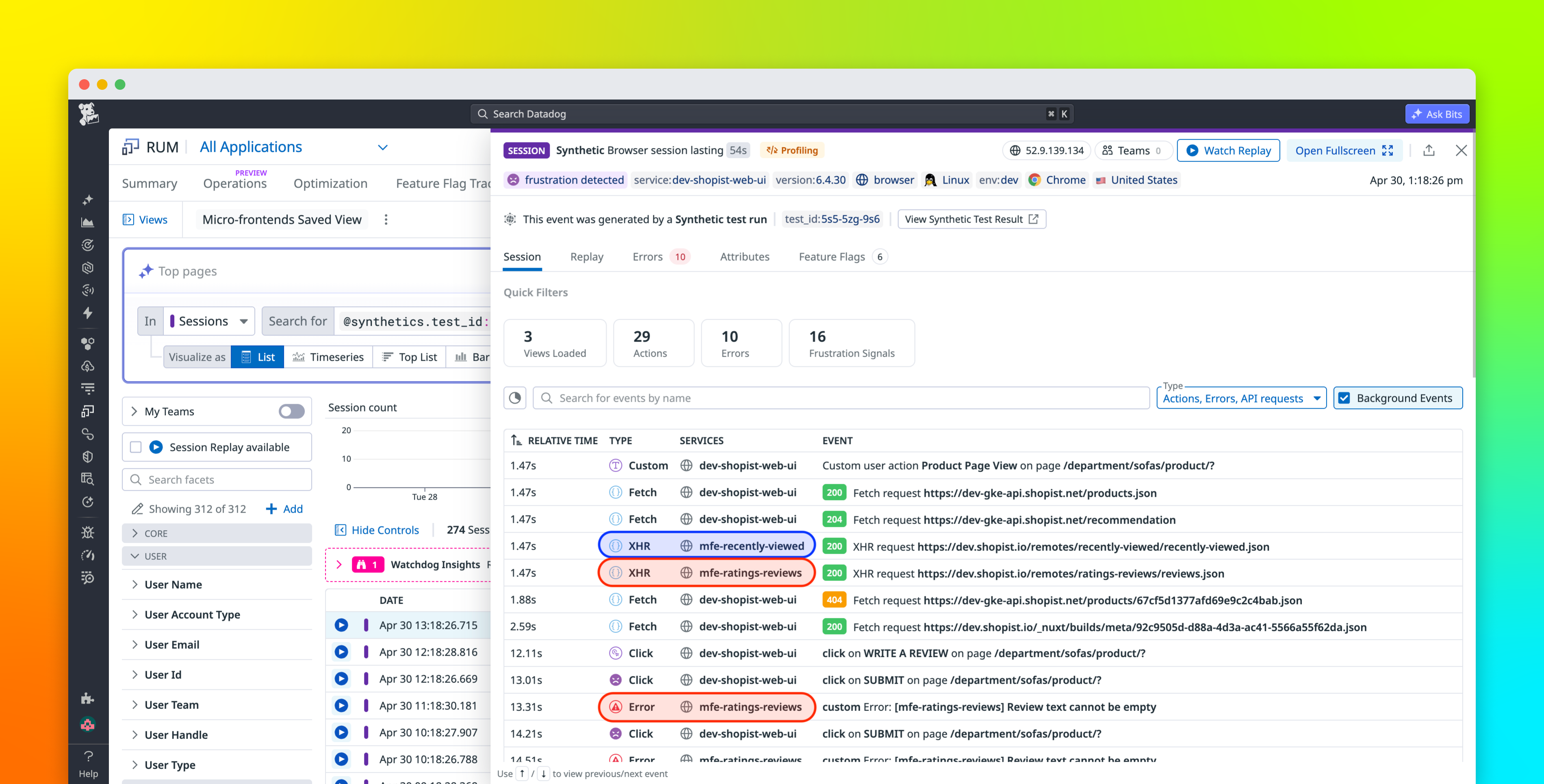
Micro-frontend architectures, where independent teams build and deploy separate parts of a frontend application, introduce an observability challenge: Telemetry data is fragmented across services, making it difficult to determine which micro-frontend caused a performance degradation or error spike. Whether that’s a Largest Contentful Paint (LCP) regression or a surge in JavaScript errors, correlating frontend performance with service ownership becomes a manual effort, increasing mean time to resolve (MTTR).
Datadog Real User Monitoring (RUM) supports micro-frontend architectures and provides a build plugin that automatically attributes frontend telemetry data to the correct service and version at run time. By removing the need for manual instrumentation and runtime mapping, Datadog RUM enables teams to monitor, troubleshoot, and scale observability alongside their micro-frontend architecture.
In this post, we’ll cover how the RUM build plugin helps you:
Attribute micro-frontend telemetry automatically Enable service ownership and visibility for faster troubleshooting
Attribute micro-frontend telemetry automatically with the RUM build plugin