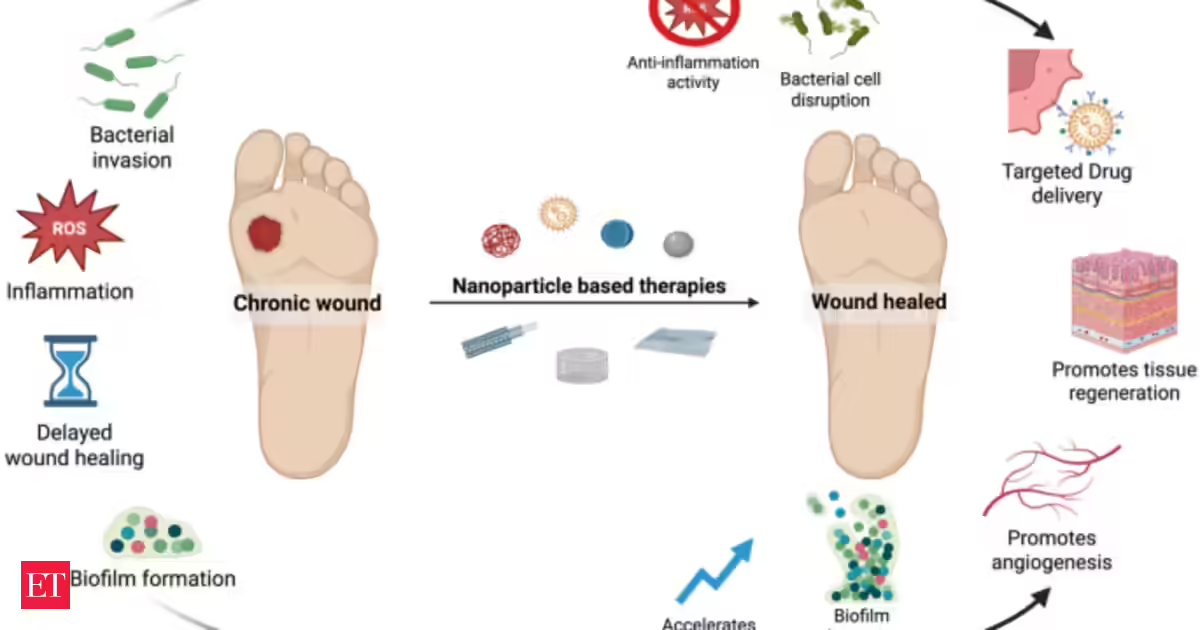
Scientists are using nanomaterials to heal stubborn wounds that resist antibiotic treatment, creating a new path for patients facing chronic infections. Severe burns, diabetic ulcers, and slow-healing lesions often become dangerous because bacteria develop protective biofilms. These infections can survive standard medicines and increase the risk of serious complications.The rise of antibiotic-resistant wounds has pushed researchers toward smarter therapies that target bacteria without harming healthy tissue. Light-activated nanomaterials are emerging as a promising solution because they can release heat or antibacterial molecules only when needed.For millions of people living with diabetes, wound healing remains a major medical challenge. A small injury can become a lifelong problem when infections continue spreading beneath the skin. Researchers believe advanced materials could change how doctors approach these cases.Scientists are now designing tiny therapeutic systems that combine biology, chemistry, and engineering. These materials respond to light and deliver controlled antimicrobial effects directly inside infected areas. Early experiments in animals have shown faster healing and major reductions in harmful bacteria.The technology is still under development, but the results have created excitement in medical research. New wound treatments could become especially important as antibiotic resistance continues growing worldwide. Instead of relying only on traditional drugs, doctors may soon have precision tools that fight infections differently.How light-activated nanomaterials are changing wound healing researchScientists are using nanomaterials to heal stubborn wounds by turning light energy into targeted medical action. These advanced materials can produce localized heat or create reactive oxygen species that damage bacterial cells.Unlike ordinary antibiotics, the treatment focuses on the infection site itself. This approach helps reduce bacterial survival while protecting surrounding skin. Researchers say this controlled method could become valuable against bacteria that form strong biofilms.Biofilms are one of the biggest reasons chronic wounds fail to heal. These protective layers allow bacteria to hide from antibiotics and immune responses. Studies suggest more than 78 percent of chronic wounds contain these resistant bacterial communities.A major breakthrough came from researchers who combined natural antibacterial proteins with smart materials. A team led by materials scientist Raffaele Mezzenga developed a gel using lysozyme, a protein found naturally in egg whites.The gel contained a light-sensitive dye that responded to near-infrared light. When activated, the material warmed up and released lysozyme exactly where bacteria were present. When the light stopped, the activity reduced again.Animal studies showed impressive results. The treatment removed more than 95 percent of bacteria from wounds in mice and pigs. It also supported faster recovery because the antibacterial action happened only during light exposure.Can nanomaterials defeat antibiotic-resistant wound infections?Scientists are using nanomaterials to heal stubborn wounds because antibiotic resistance has become a global healthcare concern. Traditional treatments often struggle when bacteria mutate or protect themselves inside biofilms.Another research team tested a different nanomaterial made from gold nanoparticles and graphene oxide quantum dots. The combination worked through two mechanisms: controlled heat and reactive oxygen species.When exposed to blue light, gold particles absorbed energy and converted it into heat. At the same time, graphene oxide improved chemical reactions that produced bacteria-killing molecules.The results were significant. In laboratory tests, the material destroyed around 97 percent of bacteria after only ten minutes of light exposure. Experiments in mice showed nearly 99 percent wound healing after nine days.The technology also showed potential beyond skin injuries. Researchers tested similar treatments around infected medical implants, where biofilms can cause repeated infections. The therapy cleared about 99 percent of bacteria around implanted materials in animal studies.These findings suggest that nanomaterials could support a new era of infection control. Instead of using broad antibiotics everywhere, doctors may use precise treatments that activate only in damaged areas.What challenges remain before nanomaterial wound therapy reaches patients?Scientists are using nanomaterials to heal stubborn wounds, but researchers caution that clinical use requires more testing. Animal results are promising, yet human safety studies remain necessary before hospitals can adopt these therapies.Scientists must understand how these materials behave inside the human body. Cost, manufacturing complexity, and long-term safety are also important concerns. A treatment must be effective and affordable before it can reach millions of patients.Experts believe the concept has strong potential because it addresses two major problems at once. It supports wound repair while fighting bacteria that resist existing medicines.The future of wound care may depend on combining technology with biology. Nanomaterials show how small-scale engineering can create large medical changes. Their ability to deliver precise antibacterial effects could transform care for diabetic patients and burn victims.As antibiotic-resistant infections continue rising, new solutions are urgently needed. Light-triggered nanomaterials may become one of the most important advances in the search for safer and smarter wound treatments.FAQs: Q1. How do light-activated nanomaterials help heal antibiotic-resistant wounds? Light-activated nanomaterials help heal antibiotic-resistant wounds by delivering targeted antibacterial effects directly where infections exist. These smart materials convert light into heat or reactive oxygen species that destroy harmful bacteria and weaken biofilms. The approach may reduce tissue damage while supporting faster wound recovery.Q2. Can nanomaterials replace antibiotics for chronic wound infections? Nanomaterials are being studied as a next-generation option for chronic wound infections, but they are not yet a complete replacement for antibiotics. Early research in mice and pigs shows strong results, including up to 99 percent healing improvement in some studies. Human trials and safety testing are still needed before wider medical use.
A new nanotech breakthrough could help heal dangerous wounds antibiotics can’t treat
Scientists are using nanomaterials to heal stubborn wounds that resist antibiotic treatment through a new era of smart wound care. These light-activated therapies target antibiotic-resistant bacteria, destroy protective biofilms, and support faster healing. Research shows up to 99% bacterial reduction in animal studies. The breakthrough could transform treatment for diabetic ulcers, severe burns, and chronic wound infections.
876 words~4 min read