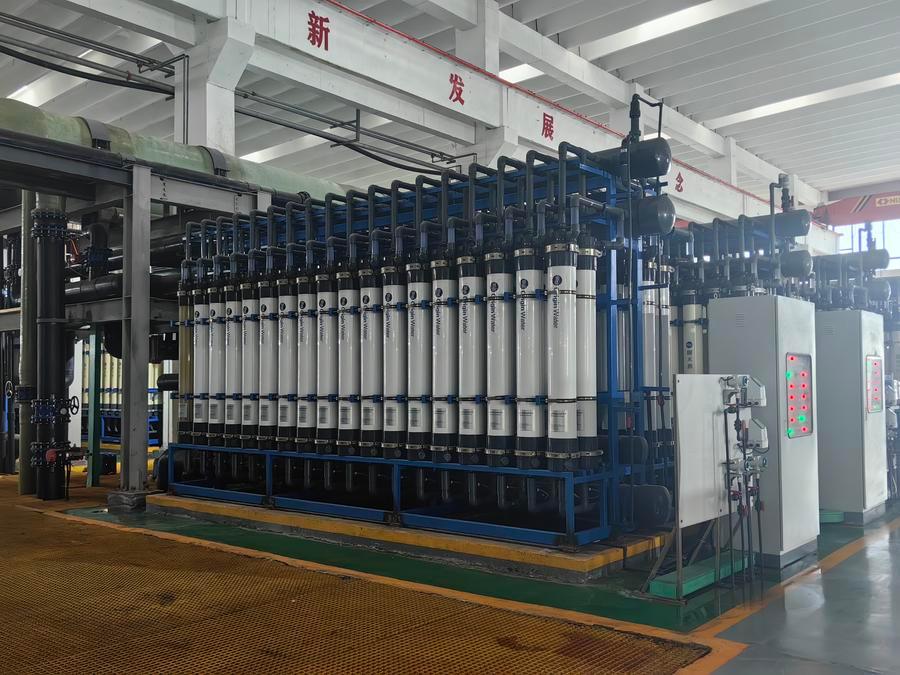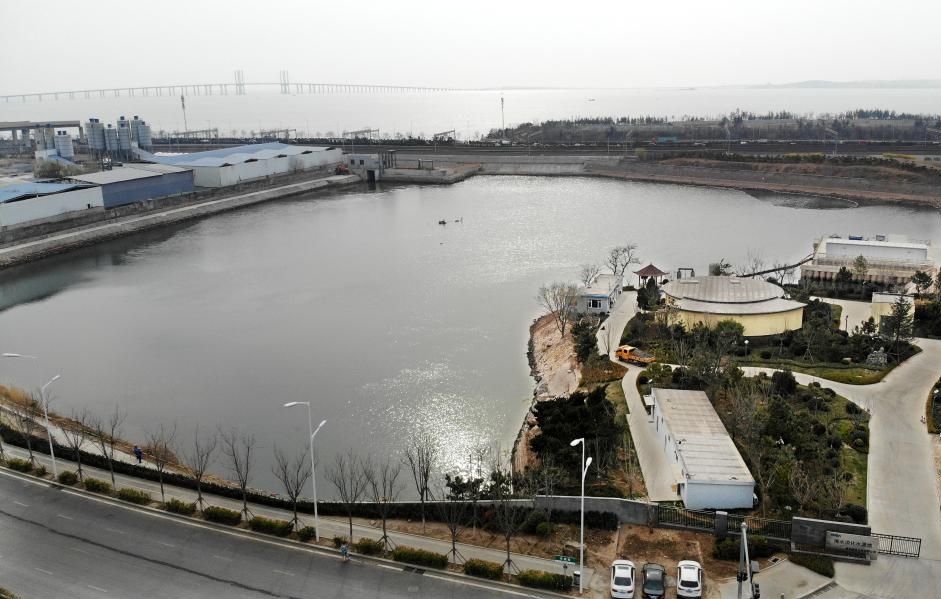
This aerial photo taken on March 20, 2023 shows the water source area of a seawater desalination plant in Qingdao, east China's Shandong Province.
The language of Abu Dhabi's partnership expansion with Chinese institutions, intelligent systems, advanced manufacturing, knowledge transfer, reads on the surface like standard diplomatic communiqué. Strip it back, and what it describes is one of the most consequential technology relationships a water-scarce region has ever needed to build. The Middle East's water crisis is not a future risk. It is a present emergency, and the question of who helps solve it carries geopolitical weight that extends far beyond desalination contracts.
The numbers establish the stakes. The Middle East holds only 2% of the world's renewable freshwater, while 83% of the region faces severe water scarcity. The World Resources Institute projects that 100% of the population will face acute scarcity by 2050. The region has responded by becoming the global leader in desalination, the MENA region now accounts for 41.8% of global operational desalination capacity, with approximately 5,000 plants in operation. But desalination is energy-intensive and environmentally complex, and the current model, stripping oil revenues to produce water from seawater, is a loop that cannot hold indefinitely.