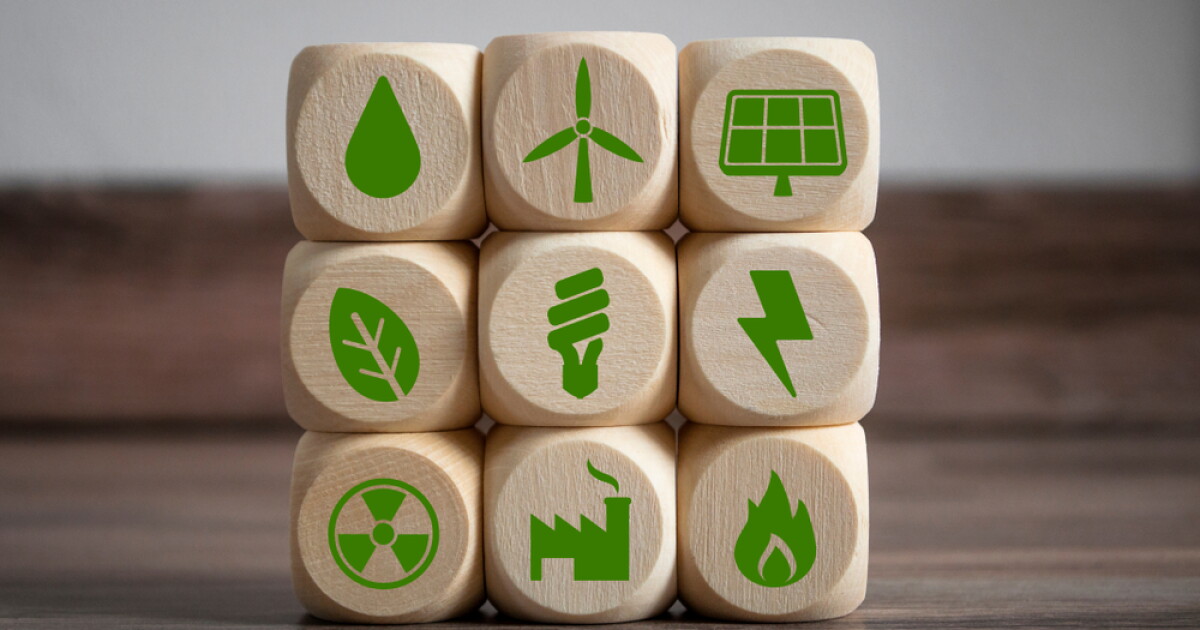
stockwerk-fotodesign/Shutterstock
Water, energy and climate are no longer separate policy domains for countries in the Gulf Cooperation Council (GCC); they have become a single strategic challenge that will increasingly define the region’s future. In a part of the world where natural freshwater resources are among the scarcest on the planet, where energy demand continues to rise and where temperatures are warming faster than the global average, the nexus between water, energy and climate now sits at the heart of long-term sustainability, economic diversification and social stability.For decades, GCC member countries — Bahrain, Kuwait, Oman, Qatar, Saudi Arabia, and the UAE — have relied on hydrocarbons to fuel rapid urbanization, industrial growth and rising living standards. Revenues from oil and gas have funded major infrastructure projects, including power plants, desalination facilities, transport networks and new cities. This development has brought clear benefits, but it has also created deep structural dependencies. Urban water security in the Gulf now rests largely on large-scale desalination, which in turn is tied to the availability and cost of energy. Much of that energy still comes from fossil fuels whose emissions drive climate change, feeding back into higher temperatures, greater cooling demand and new stresses on water and land. The GCC therefore faces a reinforcing loop: more heat drives up electricity demand for air conditioning, more electricity demand raises fuel consumption and emissions, rising emissions contribute to climate change, and climate change intensifies water scarcity and energy stress.Converging ChallengesWater scarcity is the first pillar of the challenge. Most GCC states have per capita renewable water availability far below the threshold commonly used to define water stress. Surface water is extremely limited, aquifers have been heavily exploited and, in many areas, salinization and water resources degradation are emerging as serious concerns. For decades, desalination has been the answer. It has enabled reliable urban water supply, facilitated industrial growth and underpinned high living standards. Yet, it has also created a dependence on an energy-intensive technology that is tightly coupled to the power system. In some GCC countries, desalination already accounts for a significant share of total electricity demand, and this share is likely to grow as populations increase and expectations of service quality rise.Energy demand is the second pillar. The GCC’s hot climate, high levels of air conditioning, growing industrial base and extensive water infrastructure mean that electricity consumption is both high and strongly seasonal. Peak loads in summer strain grids and generation capacity, especially as countries reduce energy subsidies and seek to integrate higher shares of variable renewable energy. In the GCC, the same gas or oil has long powered both electricity generation and desalination. This has secured supply, but it also leaves the region vulnerable to fuel price swings.Climate change is the third pillar and the catalyst that binds the nexus together. Rising average temperatures, more intense heatwaves, shifting humidity patterns and potential changes in regional rainfall all affect both water and energy systems in the Gulf. Higher temperatures increase cooling demand and thus electricity consumption. They also accelerate evaporation losses from reservoirs and soils, stress ecosystems and agriculture, and can drive up water demand in cities. Climate change is therefore not just an environmental issue; it is a direct driver of future water and energy planning in the region.Integrated PlanningAgainst this backdrop, the traditional approach of treating water, energy and climate as distinct sectors, each with its own plans, is increasingly inadequate. In several GCC countries, water utilities, power companies, environmental regulators and planning authorities have historically operated within their own mandates. Desalination capacity may be planned purely on projected water demand, while power generation is modeled separately around past load growth and fuel supply, and climate policy sits apart as a high-level emissions framework. This fragmented approach risks locking the region into poor long-term choices, such as water-intensive industries in areas already facing groundwater depletion and tightening environmental limits.The GCC must now move decisively toward integrated planning. This means treating water, energy and climate as a single strategic system rather than three separate agendas. Integrated planning begins with shared data and scenarios. Energy planners, water authorities and environmental agencies need a common view of population growth, economic trajectories, climate projections and technology costs. From this basis, they can explore systemwide options: how different combinations of renewable energy, storage, desalination technologies, wastewater reuse, efficiency measures and demand management perform under a range of futures.Technology and EfficiencyTechnology plays a central enabling role in this transition, but choices need to be shaped by a nexus mindset. One prominent opportunity is the deployment of large-scale solar power across the GCC, directly linked to water services. Solar energy is well aligned with the region’s climate; high levels of irradiation, particularly in desert areas, make solar technologies increasingly competitive.Alongside changes on the supply side, efficiency and demand management offer a powerful but still underused approach. In many GCC countries, past subsidy structures have encouraged high levels of water and electricity consumption. As tariff reforms proceed, there is an opportunity to redesign incentives so that households, businesses and industries use water and energy more efficiently. Advanced metering, stronger building codes, appliance standards and public awareness campaigns can help flatten peak loads, reduce unnecessary demand and ease pressure on both water and power infrastructure.Digital technologies can amplify these gains. The GCC has invested heavily in smart infrastructure, and the next phase of this investment can explicitly target optimization across the nexus. Integrated control systems that manage desalination plants, pumping stations, reservoirs and power grids together open the door to more flexible operational strategies. Advanced digital models of water and energy networks can support long-term planning by testing scenarios that account for climate impacts, urban development and technological change.Governance and ResilienceThe governance dimension is just as important as the technical one. Integrated planning requires institutional arrangements that encourage collaboration rather than competition. Committees that bring together different government bodies, joint planning teams and common regulatory frameworks can help bring objectives and timelines into alignment. There is also scope for regional cooperation within the GCC. Shared grids, joint investments in solar and green hydrogen, and regional markets for electricity and potentially desalinated water could provide additional flexibility and resilience. As Gulf countries continue to articulate national visions for 2030 and beyond, placing the water–energy–climate nexus at the center of those visions would send a clear signal that sustainability is understood as an interconnected challenge.The nexus matters more than ever in the GCC because it sits where three priorities meet: secure water and energy for growing populations, the shift to a lower-carbon economy, and the need to safeguard environmental and social stability as the climate changes. If these are tackled separately, they can undermine each other, but if approached through integrated planning and smart technology choices, they can work together, turning potential crises into drivers of innovation and long-term resilience.Olga Potapova-Crighton is an assistant professor in the School of Engineering and Physical Sciences at Heriot Watt University Dubai. The views expressed in this article are those of the author.