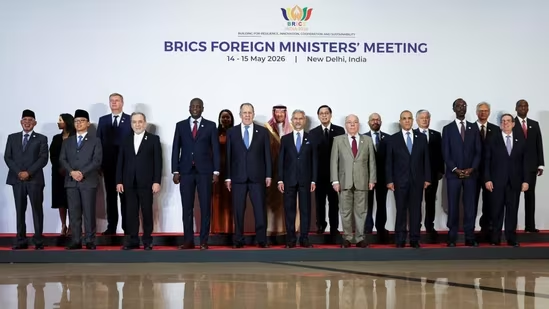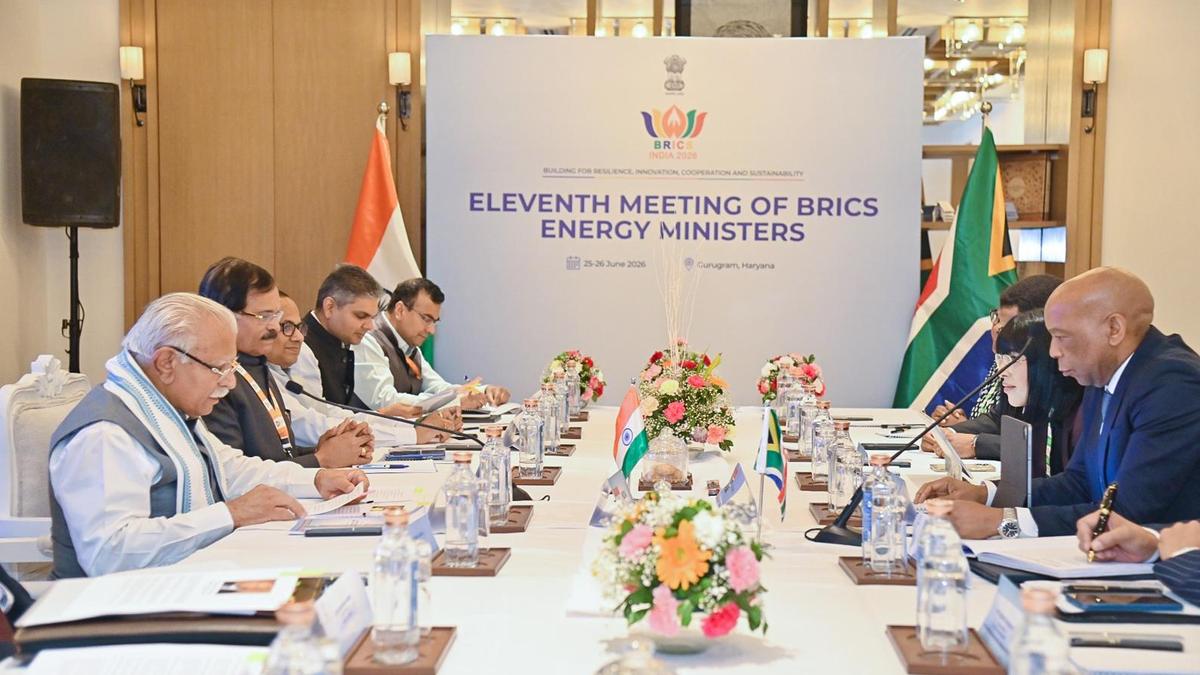
Under its 2026 chairship, India hosted the 11th BRICS Energy Ministers’ Meeting last month, focusing on the theme ‘Building for Resilience, Innovation, Cooperation and Sustainability’ where the BRICS Energy Ministers reaffirmed the importance of respecting national circumstances, development priorities and energy pathways.As is the case in all such meetings, it concluded with the adoption of the Joint Communiqué, reflecting the collective vision and consensus of BRICS countries. A major outcome of India’s Chairship was the launch of the BRICS Digital Centre of Excellence for Smart Grids and Energy Storage.The entire meeting was guided by the Energy Track theme ‘Energy for All’ and was split into three priority areas:Energy Security and Sustainability — focusing on resilient energy systems, diversified energy sources, critical minerals, supply chain resilience, grid modernisation, energy storage, and secure, affordable energy supplies.Energy Access and Equity — focusing on universal access to affordable, reliable, sustainable and modern energy, clean cooking solutions, affordable financing, capacity building, and support for emerging markets and developing economies.Technology and Innovation — focusing on smart grids, energy storage, hydrogen value chains, digitalisation of energy systems, artificial intelligence, energy efficiency, biofuels, carbon capture technologies, and strengthening research and innovation cooperation across BRICS countries.Diplomatic edgeNow, translating these ideas from paper to reality will challenge any country’s diplomatic agility.However, the expanded BRICS+ landscape gives New Delhi a distinct edge by bringing energy powerhouses such as Russia, Saudi Arabia, the UAE, and Iran under one umbrella. By negotiating long-term contracts and deep discounts on hydrocarbons, India can build a resilient firewall against global price shocks and geopolitical turbulence.Addressing the Ministerial Meeting, Union Minister of Power Manohar Lal had highlighted that energy remains fundamental to economic growth, social progress and human development and emphasised that developing countries require adequate time, resources and policy space to pursue sustainable development while meeting the aspirations of their people. He underlined India’s commitment to building resilient, future-ready and people-centric energy systems guided by the principle of ‘Energy for All’.India’s energy transformation over the last decade is not unnoticed. The country has emerged as the world’s third-largest producer and consumer of electricity, with installed power capacity reaching nearly 540 GW and non-fossil sources accounting for more than half of the installed capacity. India’s rapid clean energy expansion, with solar capacity increasing from about 3 GW in 2014 to more than 154 GW today, underscores the role of New Delhi’s flagship initiatives.The Minister, at the meet, highlighted India’s ambitions to achieve over 400 GWh of energy storage capacity by 2032 and 100 GW of nuclear power capacity by 2047, alongside its achievement of 20 per cent ethanol blending ahead of schedule and leadership in initiatives such as the Global Biofuels Alliance and the International Solar Alliance.The BRICS Ministers also appreciated the ongoing efforts in finalisation of the BRICS Joint Report on Hydrogen Value Chains 2026, which provides a foundation for enhanced cooperation on hydrogen technologies, standards, industrial applications and future value chains.The Joint Communiqué reaffirmed that energy security remains a cornerstone of BRICS cooperation. The Ministers underscored the importance of balanced and diversified energy mixes, promotion of cleaner and more efficient energy technologies, and cooperation in areas such as new technologies in fossil fuels, renewable energy, biofuels, hydrogen, energy storage, critical minerals, carbon capture technologies, digitalisation and energy efficiency while reaffirming the importance of affordable financing.The Ministers also reaffirmed their commitment to deepening collaboration in support of secure, affordable, sustainable and resilient energy systems and looked forward to continuing cooperation under the Chairship of the People’s Republic of China in 2027.The challenges aheadAs India gets ambitious about its green energy transition, and China globally is a major supplier, to what extent will the two be able to create a trade balance? What few are talking about is a concept of co-trade and joint purchasing power within an expanded BRICS+ framework present India with a unique strategic mechanism to protect its economic interests, stabilise volatile energy costs, and limit China’s regional hegemony.With BRICS generating over half of the world’s solar power, India must pivot the forum’s agenda away from installation targets and toward supply chain resilience. This structural shift is vital to stop China from leveraging the platform to cement its monopoly on upstream manufacturing components.India can counter Chinese dominance by anchoring BRICS transnational grid initiatives to the International Solar Alliance. Championing ISA-approved standards and open-source protocols establishes a systemic defence against proprietary Chinese energy networks across the Global South.Yet, transforming this strategy into reality will severely test India’s diplomatic agility. Since China serves as the primary green-tech supplier to India and the rest of the world, New Delhi will need to deploy highly sophisticated statecraft to alter these entrenched trade dynamics.Published on July 8, 2026
Leveraging BRICS Energy platform
India must use the expanded BRICS+ group, with Saudi Arabia, Iran and the UAE, to curb China’s green tech domination
779 words~4 min read