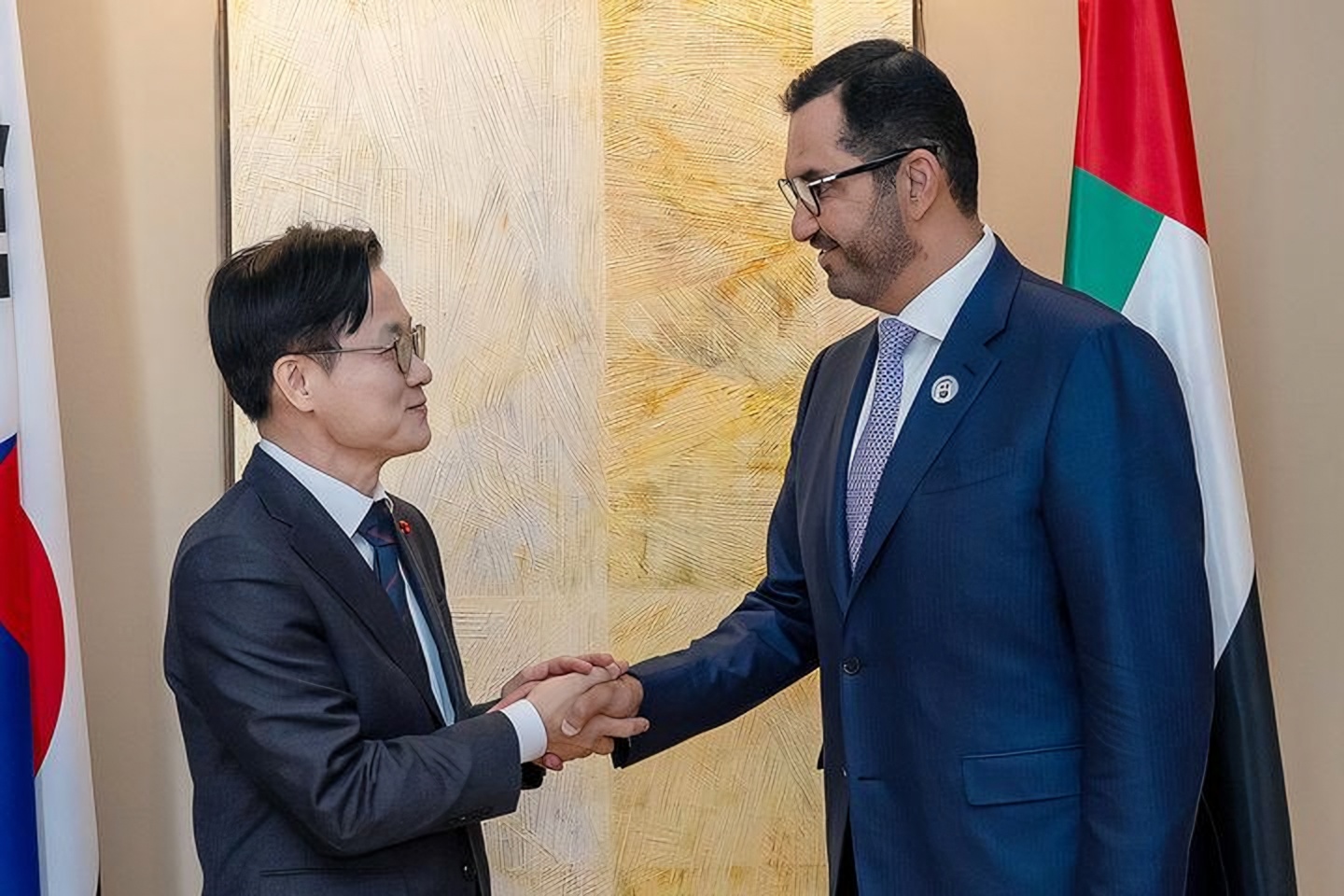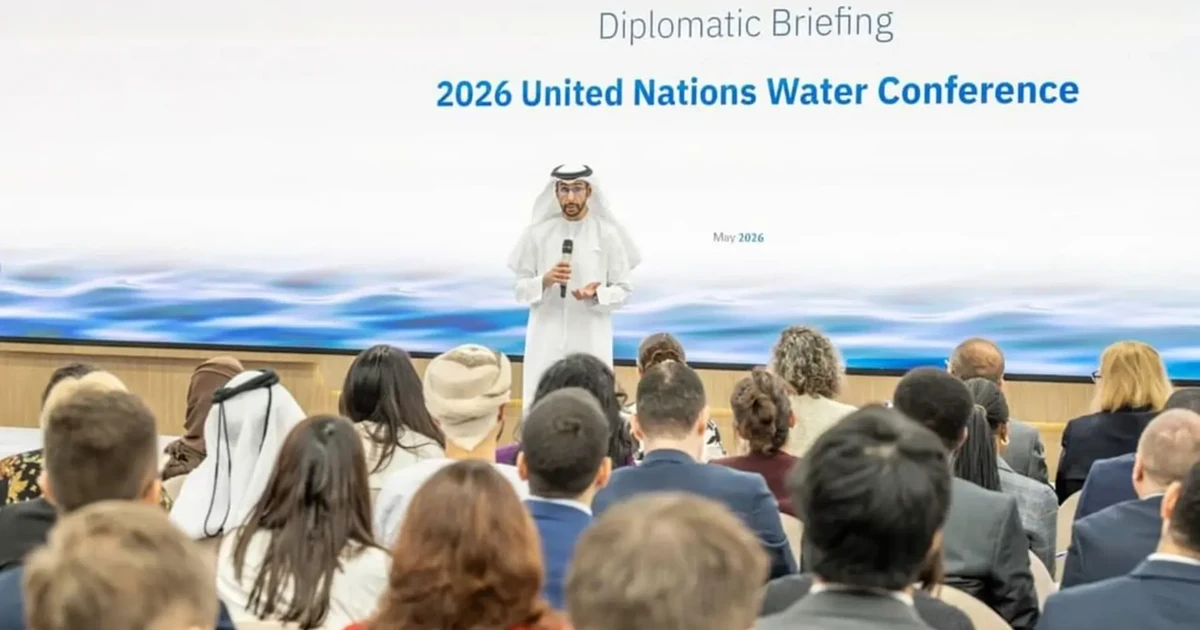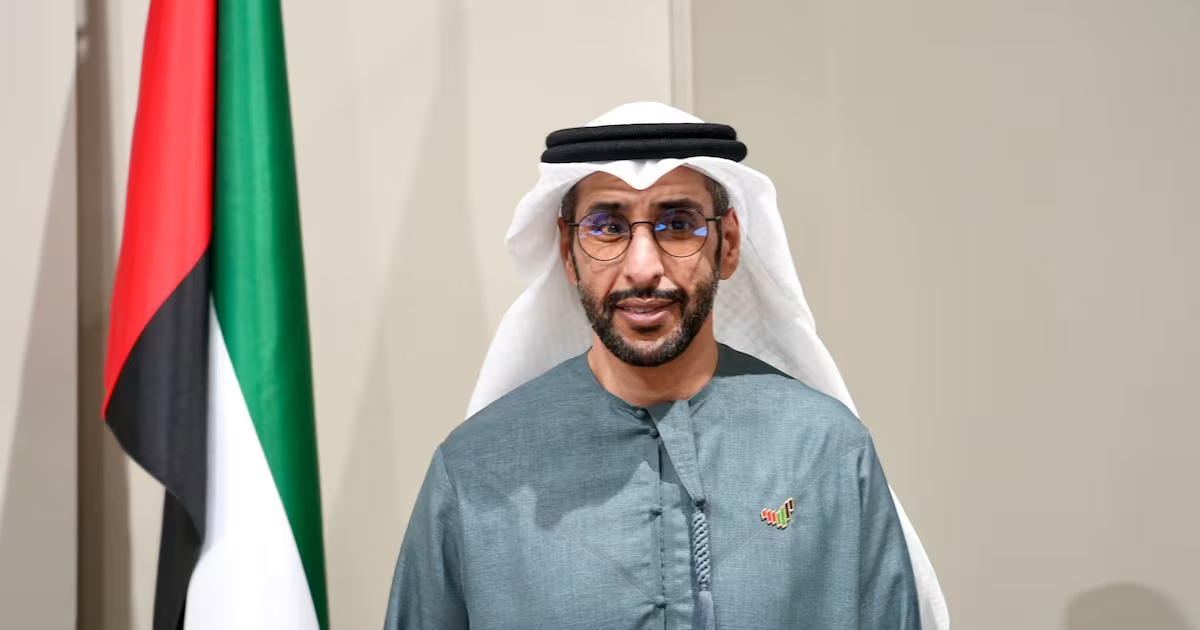
UAE Ambassador to South Korea Abdulla Saif Al Nuaimi (UAE Embassy in Seoul) The United Arab Emirates is seeking deeper cooperation with South Korea in desalination, artificial intelligence and clean energy as it prepares to host the 2026 UN Water Conference, positioning Seoul as a key partner in efforts to tackle the growing global water crisis.In a written interview with The Korea Herald, UAE Ambassador to Korea Abdulla Saif Al Nuaimi said South Korea's technological strengths make it a natural partner for the conference, which the UAE will co-host with Senegal in Abu Dhabi from Dec. 8-10."The active participation of the Republic of Korea will be crucial to the success of the conference," Al Nuaimi said, referring to South Korea by its official name.Water security is emerging as a major geopolitical challenge alongside energy and food security as climate change, population growth and prolonged drought place mounting pressure on freshwater resources. Gulf countries, despite investing heavily in desalination, remain among the world's most water-stressed nations.The envoy said the UAE intends to make the conference "solution-driven, inclusive and action-oriented," accelerating progress toward UN Sustainable Development Goal 6 on clean water and sanitation.He described South Korea as a natural partner, citing its strengths in engineering, advanced water treatment, digital infrastructure, artificial intelligence and clean technologies."Korean institutions, companies and researchers can contribute concrete solutions in smart water management, wastewater reuse, advanced desalination and climate-resilient infrastructure," he said.From COP28 to the UN Water ConferenceCalling water scarcity one of the defining challenges of the century, Al Nuaimi said the UAE's experience as an arid nation and Korea's technological capabilities provide a strong foundation for deeper cooperation.He identified desalination, smart water networks, wastewater treatment and reuse, groundwater management, water-efficient agriculture and climate-resilient infrastructure as the most promising areas for bilateral collaboration."The UN Water Conference can provide a platform to develop results-oriented partnerships that benefit not only our two countries but the wider international community," he said.Water meets energyAl Nuaimi said water resilience and energy security are increasingly inseparable, as sustainable desalination depends on reliable low-carbon electricity.He pointed to the Barakah nuclear power plant — the Arab world's first nuclear power station, built with Korean technology — as proof that the two countries can successfully deliver complex strategic projects."The success of Barakah demonstrates what the UAE and Korea can achieve when they combine long-term vision with technological excellence."Artificial intelligence, he added, can strengthen water resilience by forecasting demand, detecting leaks, optimizing desalination systems and improving emergency planning."The opportunity is to build a scalable water-energy-technology partnership," he said.The UAE has made water resilience a central pillar of its climate strategy through the UAE Water Security Strategy 2036, which focuses on improving water efficiency, reuse, storage and long-term resilience.Internationally, it elevated water on the global climate agenda during COP28, while initiatives such as the Mohamed bin Zayed Water Initiative and the Abu Dhabi Global Water Platform seek to strengthen global water security.According to Al Nuaimi, the next phase of UAE-Korea cooperation should translate shared commitments into concrete projects, with particular potential in AI-powered water management, smart desalination, water reuse, climate-resilient infrastructure and smart agriculture."The conference should be a catalyst for a new generation of UAE-Korea cooperation," he said. "The focus should move from dialogue to projects, from ideas to pilots, and from pilots to scalable solutions."Meanwhile, he also invited Korean innovators to the UAE's growing water innovation ecosystem, stressing practical partnerships as essential to advancing water resilience and climate solutions.
UAE looks to Korea for water security partnership ahead of UN summit
The United Arab Emirates is seeking deeper cooperation with South Korea in desalination, artificial intelligence and clean energy as it prepares to host the 202
572 words~3 min read