The matter was listed to continue on Thursday at 2:30 pm.
| Photo Credit:
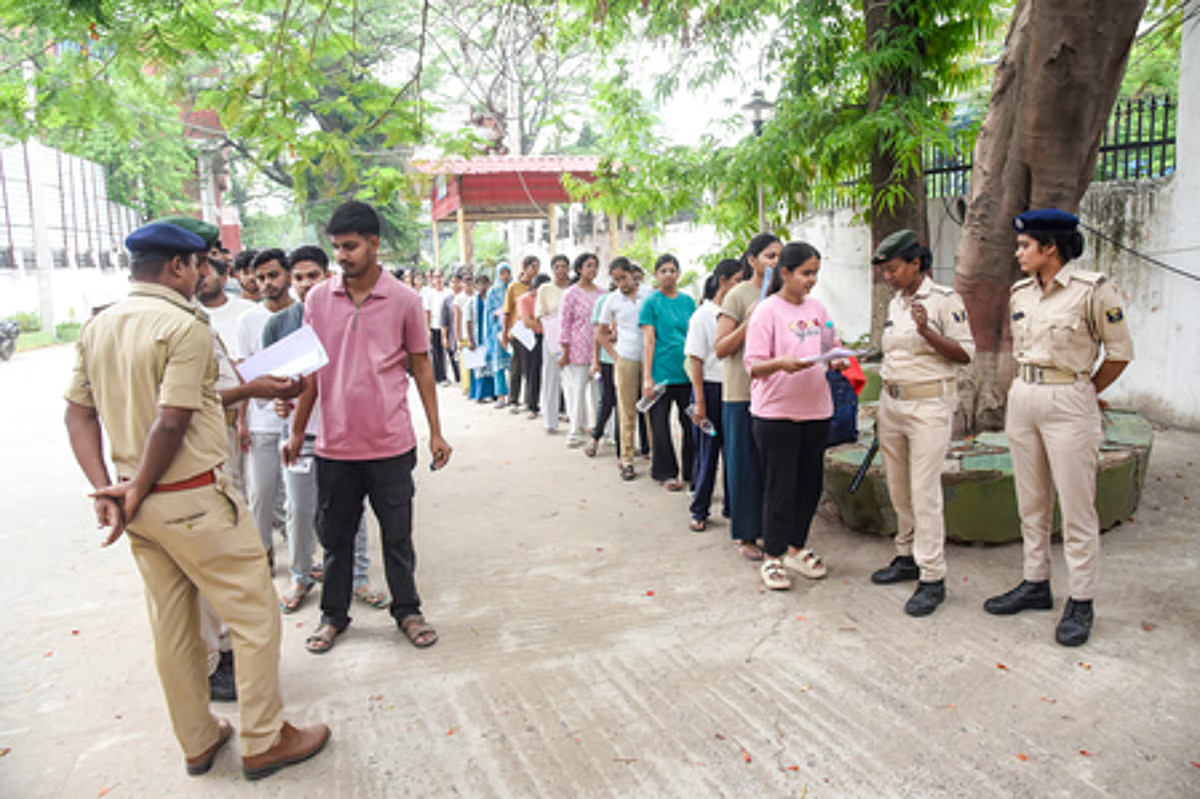
The government has staunchly defended its decision to block Telegram ahead of the NEET examinations, with National Testing Agency (NTA) Director General Abhishek Singh asserting that the app’s design features made it particularly vulnerable to misuse even as Telegram pressed the Delhi High Court on Wednesday to strike down the order, and the two sides clashed in court over whether the action was proportionate.“Telegram was unique among major social media and messaging platforms in allowing users to edit content retrospectively in a manner that could be exploited to manipulate records and facilitate scams,” Singh told businessline, pointing to repeated paper-leak investigations in which Telegram channels came under scrutiny, besides cases involving child sexual abuse material, drug trafficking, fake investment advisories and “digital arrest” scams.Ruling out any let-up in enforcement, Singh warned that “nobody will be spared”, whether the misuse continued on Telegram or shifted to other apps, and said agencies were keeping a vigil on every movement.Singh said Telegram founder Pavel Durov had himself conceded flaws in the app and had begun correcting them. Durov, on X, said hundreds of channels sharing leaked exam material had been removed over the past few weeks and that the “edited” label was being made more visible to deter backdating scams, while maintaining that banning Telegram, even temporarily, was a mistake. He separately accused Reliance of “sabotaging access” to Telegram for users outside India through BGP hijacking, suggesting it could be linked to Meta’s stake in the telecom company.Telegram’s petition before the Delhi High Court, filed on 17 June through Khaitan & Co., argued the blocking order, issued a day earlier by the Ministry of Electronics and IT under Section 69A of the IT Act, singles out the platform without a comparative basis, violating Article 14, and is disproportionate, given the order’s impact on over 150 million Indian users.The petition contended Section 69A permits blocking specific information, not an entire platform, and said the company was denied the pre-decisional hearing mandated under Rule 8 of the 2009 IT blocking rules, with the government instead invoking the emergency provision under Rule 9. It also details a paper trail of engagement since 19-20 May, including written responses on its moderation framework and the takedown of more than 900 URLs flagged by authorities, often within an hour of being notified.to be continuedIn court on Wednesday, Solicitor General Tushar Mehta, appearing for the Centre with ASG Chetan Sharma, sought a day’s time to file a reply, telling the bench that NEET begins June 21 and that the platform had been repeatedly asked to fix its systems but failed to do so. Pressed on whether a blanket block was proportionate, Mehta said he would show “something shocking” if the matter was deferred to Thursday.Telegram’s counsel countered that the order reflected complete non-application of mind, contained no reference to the company’s communications, and was impermissibly overbroad, the remedy, the counsel argued, lay in blocking specific content, not the entire platform, which ISPs had cut off entirely without stated grounds. The court asked the Centre what proportion of any platform’s traffic typically constitutes misuse before such action is justified; Mehta said the government had material to support its case. The matter was listed to continue on Thursday at 2:30 pm.Published on June 17, 2026