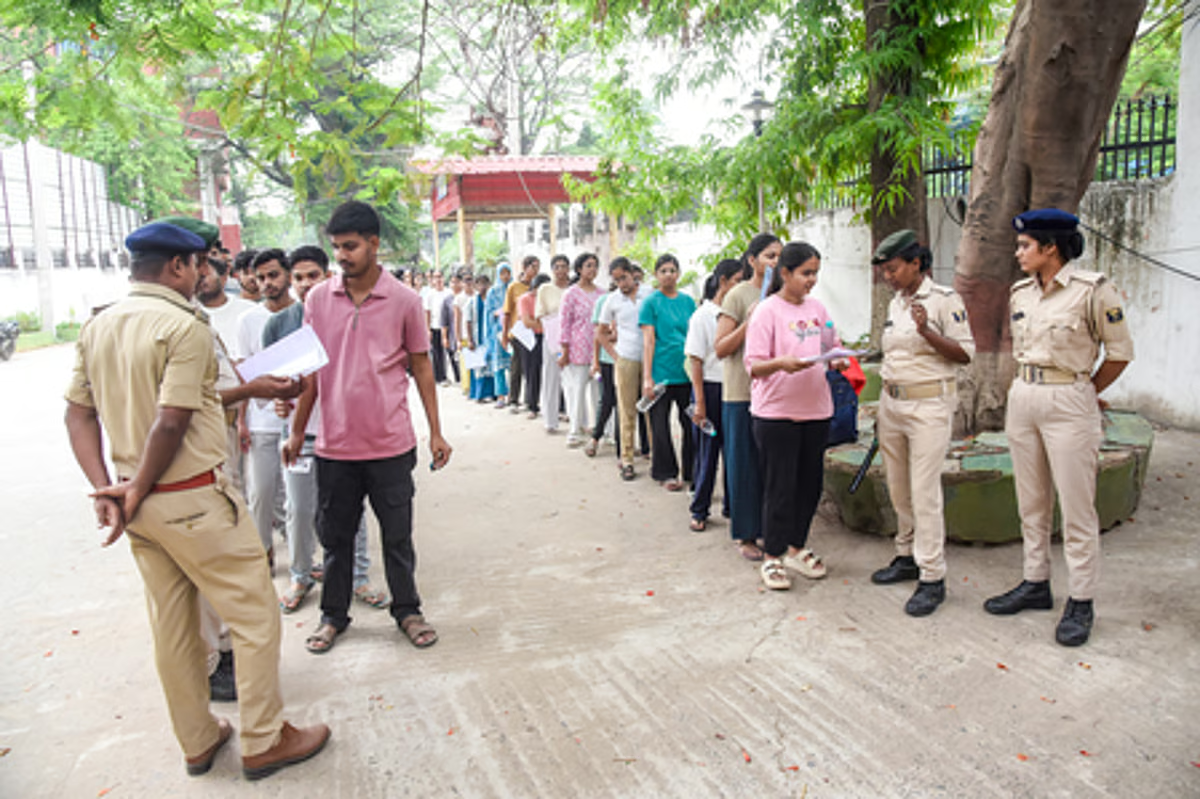
New Delhi: The Delhi High Court on Friday upheld the government's decision to suspend Telegram FZ-LLC's services in India till June 22 as part of its efforts to prevent fraud during the NEET (UG) re-examination.The ban order does "not suffer from the vice of non-application of mind", Justice Tejas Karia held in his order while dismissing the messaging platform's petition challenging the restriction.The government strictly followed the procedure prescribed under law while invoking emergency blocking powers, and the reasons given to Telegram for banning its platform were sufficient, the HC said. The government orders identified a legitimate objective, and the measures adopted were the least restrictive and justified in the circumstances surrounding the conduct of the nationwide medical entrance examination, meeting the test of proportionality, the court said.Also read: HC questions Telegram ban ahead of NEET re-testThe National Testing Agency had cancelled the May 3 NEET examination following allegations of a paper leak. Telegram was allegedly used to circulate leaked questions and communicate with students, middlemen and others linked to the network. The re-examination is scheduled for June 21 and the Telegram ban is effective until the following day. "...given the emergency nature of the impugned order, the reasons supplied in arriving at the decision were sufficient," the court said. It noted that Telegram's architecture enabled rapid and large-scale dissemination of content through channels, groups, bots, cloud-based storage and username-based anonymity.According to Telegram, the government had singled it out while allowing other social media intermediaries to operate without restrictions, thereby violating Article 14 of the Constitution. The government's order was "grossly disproportionate", resulting in a blanket shutdown of a platform with over 150 million users in India, it argued before the court.Also read: Telegram ban: Delhi HC upholds India's temporary ban on WhatsApp rival ahead of NEET re-testThe government order did not justify why less restrictive alternatives, such as targeted takedowns of unlawful content, were inadequate, or why the entirety of the Telegram application had to be blocked from public access, it said.In his 39-page judgment, Justice Karia observed that unlawful content could quickly spread and create public order concerns, and that merely removing specific channels or bots was ineffective because operators could easily create mirror channels and migrate subscribers.
Delhi HC upholds Telegram ban in India till June 22 amid NEET re-exam paper leak concerns
The Delhi High Court has upheld the government's decision to suspend Telegram services until June 22, citing its role in facilitating fraud during the NEET (UG) re-examination. The court found the government's actions justified, noting Telegram's architecture enables rapid dissemination of content and that targeted takedowns are insufficient to prevent leaks. The ban aims to ensure the integrity of the nationwide medical entrance exam.
370 words~2 min read