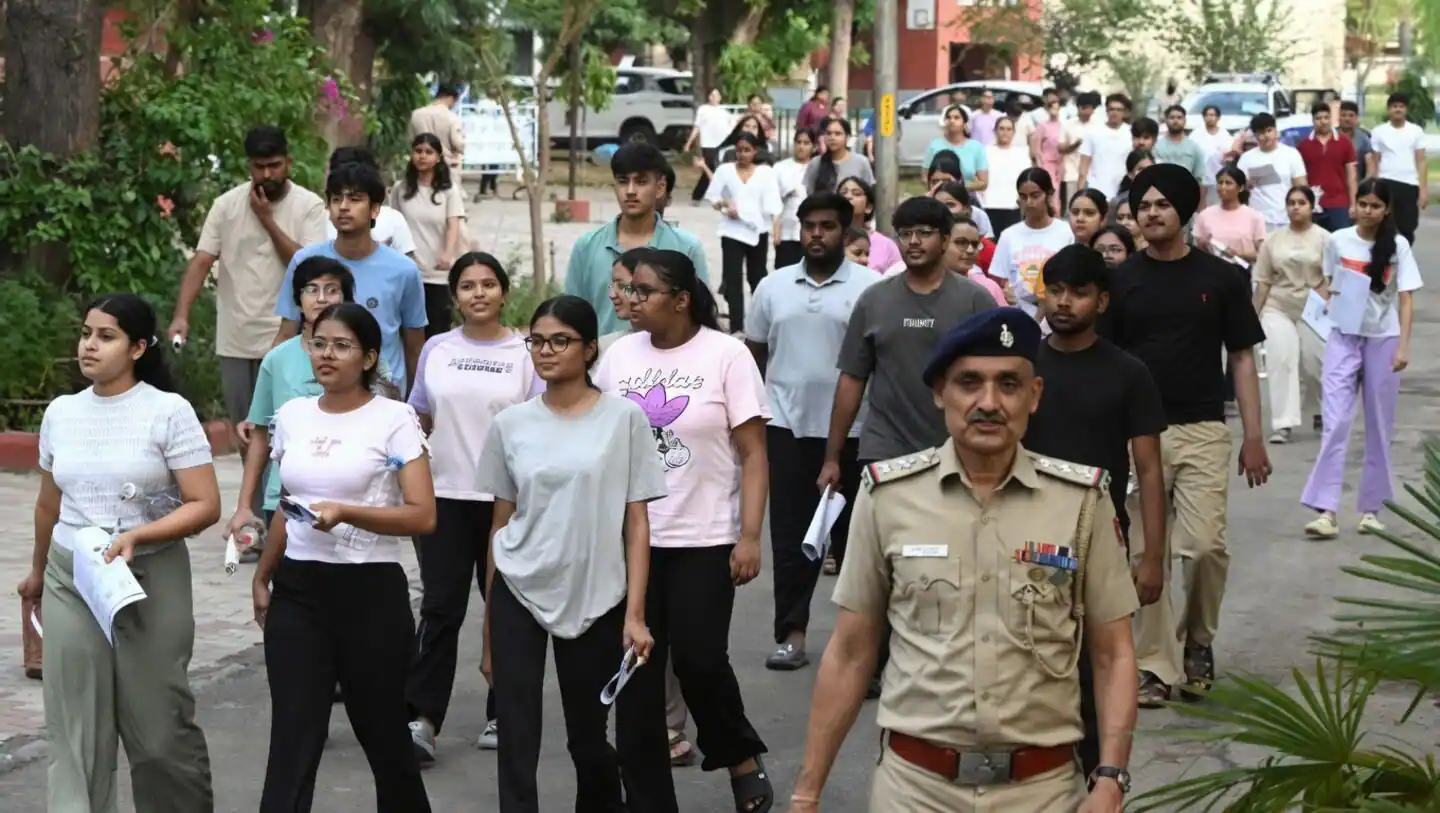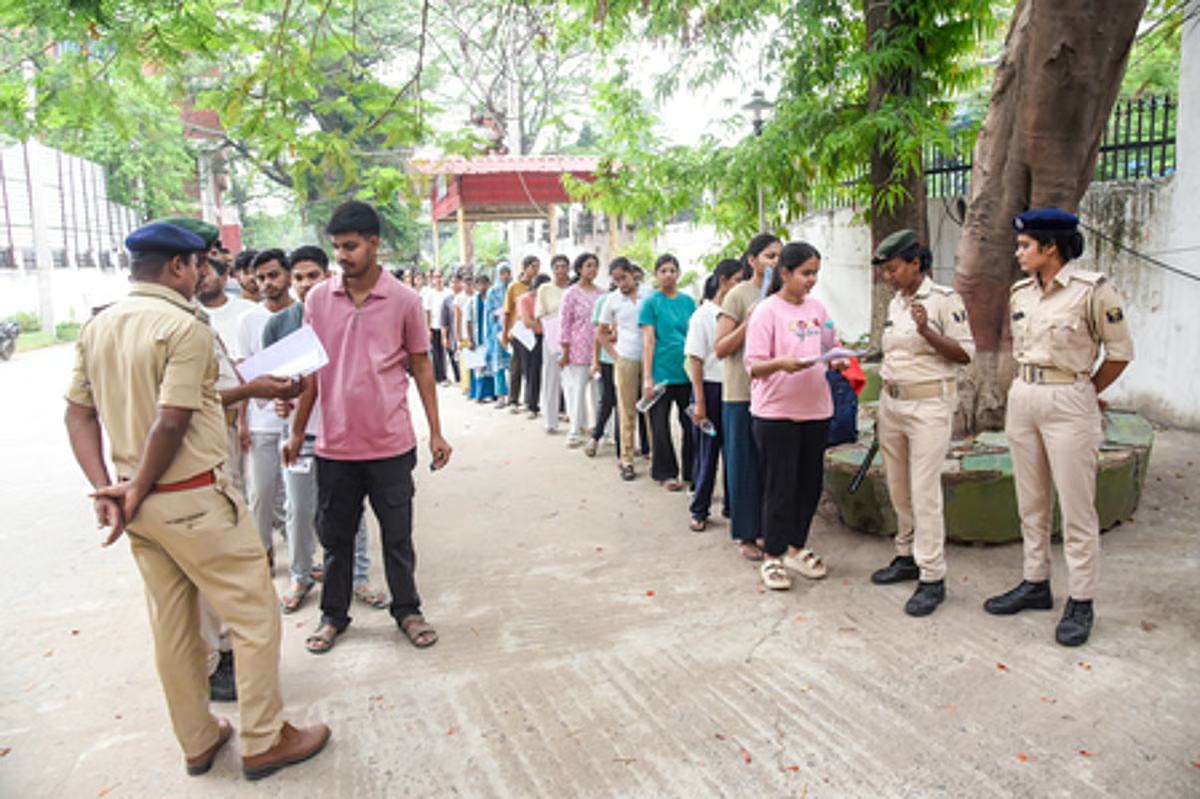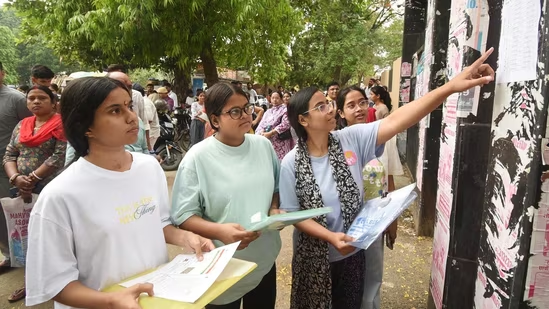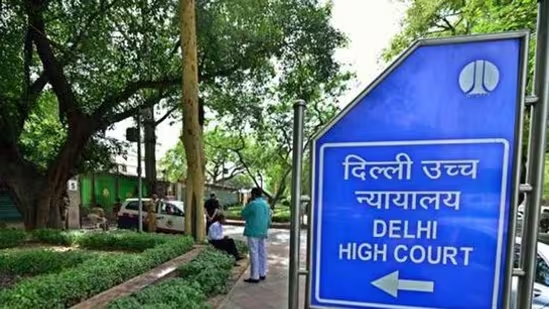
The Centre on Thursday explained in the Delhi High Court why Telegram was singled out for a temporary ban ahead of the NEET re-examination scheduled on June 21.The National Testing Agency (NTA) on Tuesday restricted access to Telegram in India till June 22, a day after the NEET re-exam. (REUTERS)Appearing for the government of India, Solicitor General (SG) Tushar Mehta argued that Telegram's bot architecture makes it uniquely susceptible to the large-scale dissemination of information. He told the court that a single Telegram user can create up to 40 bots, which can in turn multiply and form extensive automated networks, LiveLaw reported.Referring to a government report, SG Tushar Mehta said Telegram's bot infrastructure allows information to be disseminated in bulk, enabling the creation of sophisticated networks with minimal human oversight. He argued that this feature is not present in the same manner on other messaging platforms.Also Read | Telegram opposes temporary ban in India: ‘You should also shut down malls, close roads’The SG further submitted that Telegram operates through a cloud-based system, making it difficult for law enforcement agencies to identify the actual users behind unlawful activities. Even if the platform blocks an account, investigators often face challenges in tracing the individual responsible, he said, according to Livelaw.“This feature significantly impedes the ability of law enforcement agencies to identify co-conspirators, trace communication chains, and establish attribution during the course of investigation,” said Mehta.'Most preferred for terror acts'The SG also referred to a government report that described Telegram as a preferred platform for terrorist activities because of certain features embedded in its architecture.He told the court that Telegram has faced regulatory and law-enforcement challenges in several other jurisdictions as well due to its platform design, accoridng to Bar and Bench.The SG clarified that the government was not alleging non-compliance by Telegram. Instead, he argued that while the platform had complied with government directions, the measures taken by it were ineffective in addressing the concerns raised by authorities.The issue with Telegram's editing feature, flagged by govtThe SG also flagged Telegram's message-editing feature, claiming that it lacks a visible timestamp indicating when edits were made. Explaining the concern, he said that if examination papers were circulated on June 21, a user could upload them on June 22 and subsequently alter the date and time to make it appear as though they had been posted on June 18. He told the court that a similar issue had arisen during the 2024 NEET controversy, according to Bar and Bench.Opposing the ban, counsel for Telegram had argued that blocking the entire platform was disproportionate and unfair to its 150 million users in India. The company maintained that it had complied with all government directions issued since June 1 and contended that, despite removing content linked to the alleged NEET paper leak, authorities had proceeded to suspend access to the entire platform.
Govt explains why only Telegram is a problem: Multiple bots, 'most preferred' for terror acts, editing feature
SG said Telegram's bot infrastructure allows information to be disseminated in bulk, enabling creation of sophisticated networks with minimal human oversight | India News
475 words~2 min read