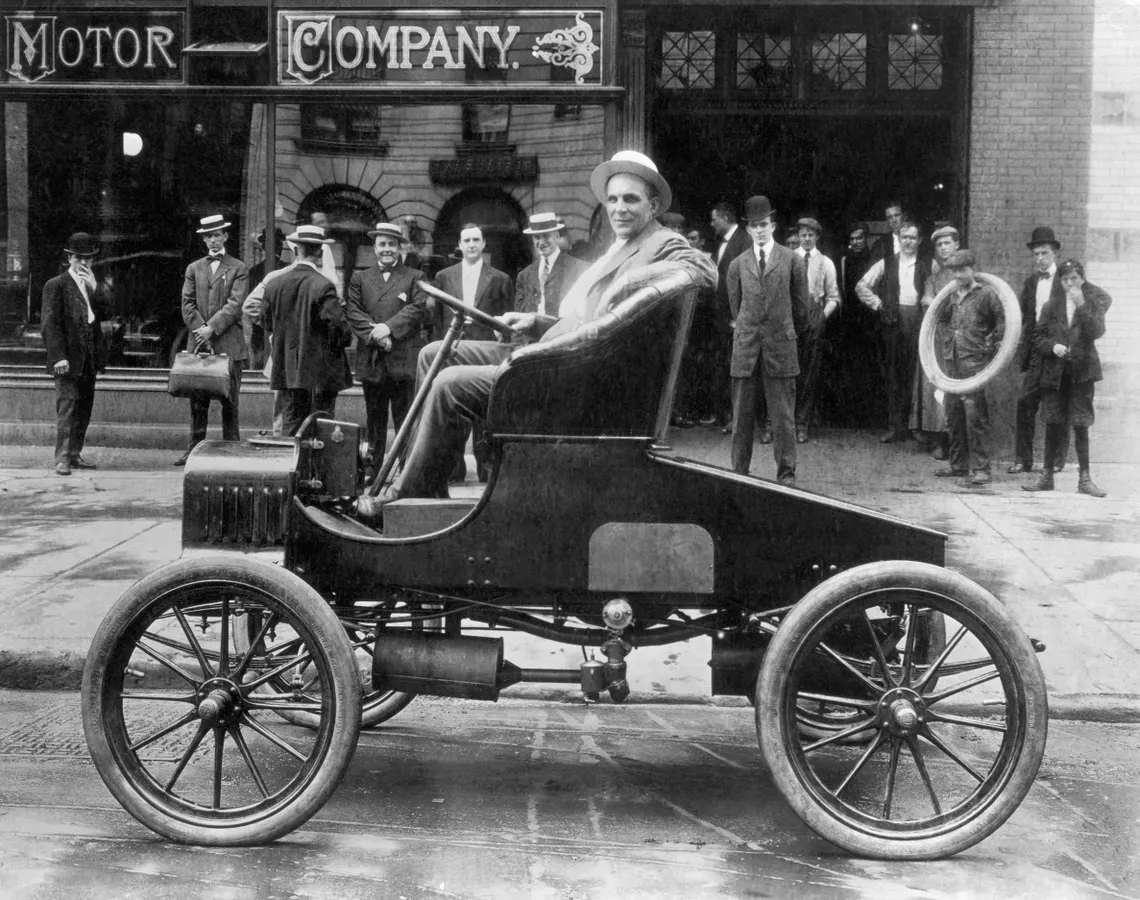
The Dawn of Everything by David Graeber & David Wengrow Farrar, Straus and GirouxWhy Value Creation Has Always Mattered: A 100,000-Year Historical PerspectiveLast Sunday’s article introduced a simple but powerful lens for understanding business and society: five categories of value orientation—Saints, Value Creators, Self-Dealers, Value-Extractors, and Oscillators. This framework helps explain why some people and organizations thrive while others stagnate or harm society.Applying this lens across deep history reveals a consistent pattern. Genuine value creators drive lasting progress, while self-dealers and extractors sow crises that eventually demand correction. The story is one of human imagination, repeated cycles of golden ages and “nuclear winters,” and the enduring possibility of better choices.From Jesus to the Middle AgesIn the time of Jesus of Nazareth, the ultimate Saint emerged—someone who taught radical care for the poor, human dignity, and “love your neighbor as yourself,” paying the ultimate personal price. Roman elites and tax systems operated as Value-Extractors. Some merchants functioned as Value Creators, while religious authorities often acted as Self-Dealers cloaking self-interest in piety. Crowds and authorities were classic Oscillators, shifting with pressure. Jesus’ teachings on subsidiarity and human dignity continue to inform modern value creation principles.The Middle Ages saw Value-Extractors dominate in the form of feudal lords extracting rents from serfs. The Church and monasteries often served as Saints or Value Creators through charity, education, and knowledge preservation. Guilds mixed genuine value creation (quality standards) with Self-Dealing cartels. Merchants were typical Oscillators navigating risky trade networks. Hierarchical structures limited broader value creation and social mobility.The Last 250 Years: Golden Ages and Nuclear WintersTechnological Revolutions and Financial Capital by Carlota PerezEdward Elgar PublishingThe Industrial Revolution ushered in an era of unprecedented growth marked by repeated cycles of technological excitement, investment booms, financial crises, and eventual renewal, as outlined by economic historian Carlota Perez. 1790s: Canals Canal Mania in England reflected early Value Creators funding vital infrastructure that transformed trade. However, Self-Dealers and hot-money Extractors overbuilt, leading to the 1797 Canal Panic. Fortunes evaporated, yet the productive canals endured, remaking the economy.1840s: Railways Rail Mania brought massive investment in transformative technology. Value Creators built essential networks, but speculation produced the 1847 Rail Panic. After the pain, rationalization and more stable practices followed, spreading benefits more widely.1880s-1890s: Oil, Steel, and Globalization In the US and Germany, oil and steel boomed alongside telegraph and electricity. Value Creators delivered extraordinary entrepreneurial contributions—scaling production, lowering costs, and building global infrastructure. Figures like Rockefeller and Carnegie were quintessential Oscillators: ruthless in building empires yet later making major philanthropic contributions through libraries, universities, and foundations.Public outrage over their monopolistic and extractive practices led to their vilification as “Robber Barons.” Self-Dealers and Extractors fueled financialization and trusts, triggering crashes across several countries. The US and Germany eventually refocused on the real economy; Britain and Argentina fared worse. Trusts were broken up and inequality addressed during the Progressive Era.1910s-1920s: Mass Production Henry Ford’s innovations excited investors. Value Creators transformed manufacturing, but Self-Dealers and speculators drove the stock market bubble until the 1929 crash and Great Depression. After deep pain, the New Deal and postwar reconnection of finance to real customer value produced decades of golden-age growth and shared prosperity.1990s–2008: Computers, Communications, and Finance Digital technologies created enormous opportunities. Value Creators like early Apple, Amazon, and Google built lasting infrastructure—fiber optics, modern systems, and social networks. The dot-com bubble (a Silicon Valley “nuclear winter”) burst in 2000, but left productive assets. Financial Self-Dealers then pivoted to real estate speculation, culminating in the 2008 housing collapse. Unlike earlier bubbles, this one produced few offsetting benefits. Bailouts protected big banks while Main Street suffered.2015 to the Present: The Magnificent Seven and AI Post-2008 recovery fueled the rise of the Magnificent Seven (Apple, Microsoft, Nvidia, Amazon, Alphabet, Meta, Tesla), which became multi-trillion-dollar giants through network effects and innovation. AI then ignited another surge of investment and growth, driving excitement about productivity leaps alongside widespread fear of job loss, inequality, and concentrated power.Value Creators such as Microsoft under Satya Nadella and Nvidia under Jensen Huang have used AI for genuine augmentation and customer value. Saints appear in open-source researchers and ethicists prioritizing broad benefit over profit. Self-Dealers dominate many legacy firms using AI mainly for cost-cutting while signaling responsibility. Value-Extractors include surveillance operators and hype-driven scams. Oscillators abound as companies swing between bold innovation and extractive pressures. Financial pressures pull many toward short-term gains.Timeless Lessons for TodayAcross 100,000 years, the pattern holds: Value Creators build enduring progress and human flourishing. Saints can inspire but often stumble. Self-Dealers and Value-Extractors generate bubbles, inequality, and crises. Oscillators ride the waves until forced to choose.In the AI era, the stakes are high. Leaders and boards should honestly audit their organizations. The evidence is clear: genuine value creation—customer obsession paired with human flourishing—is not just ethical. It is the surest path to long-term success.The next golden age will belong to those who consciously choose the value creation path.
Why Value Creation Always Mattered: A 100,000-Year Historical Perspective
A 100,000-year lens on value creation: Saints, Value Creators, Self-Dealers, Extractors & Oscillators. Golden ages often follow extractive crises. Value creation wins
817 words~4 min read