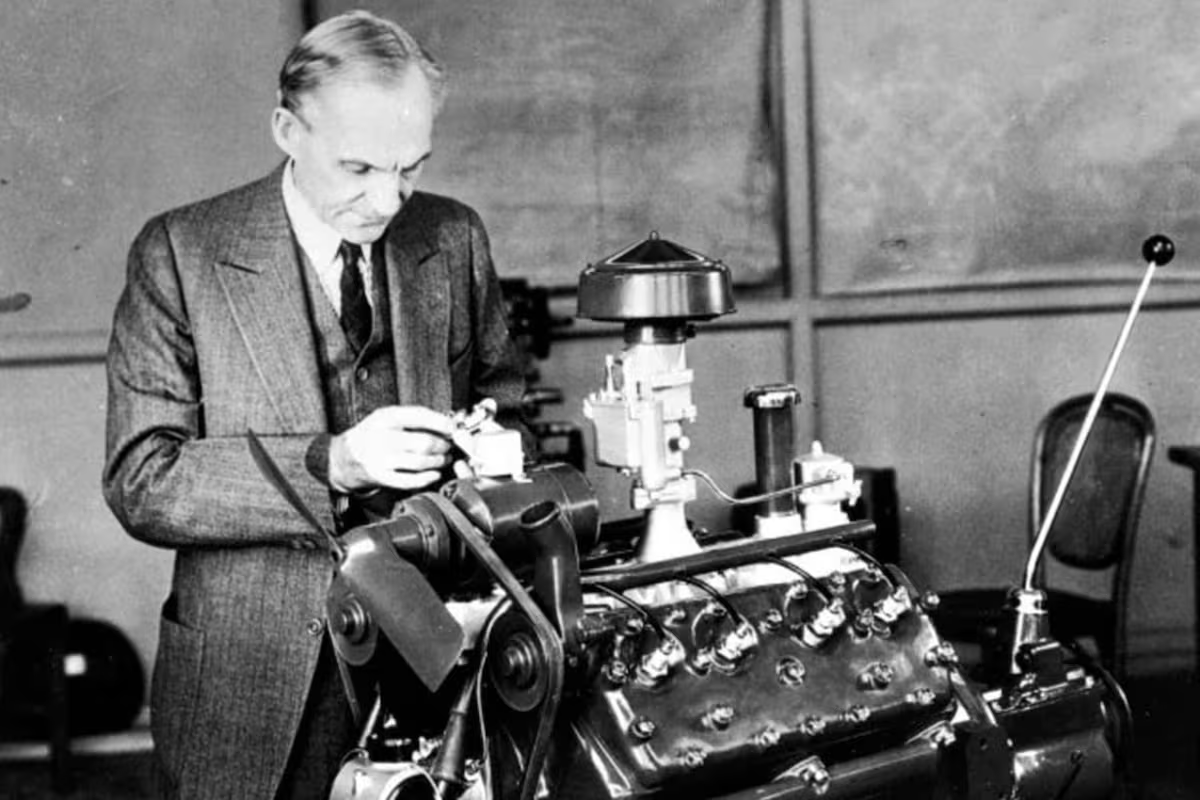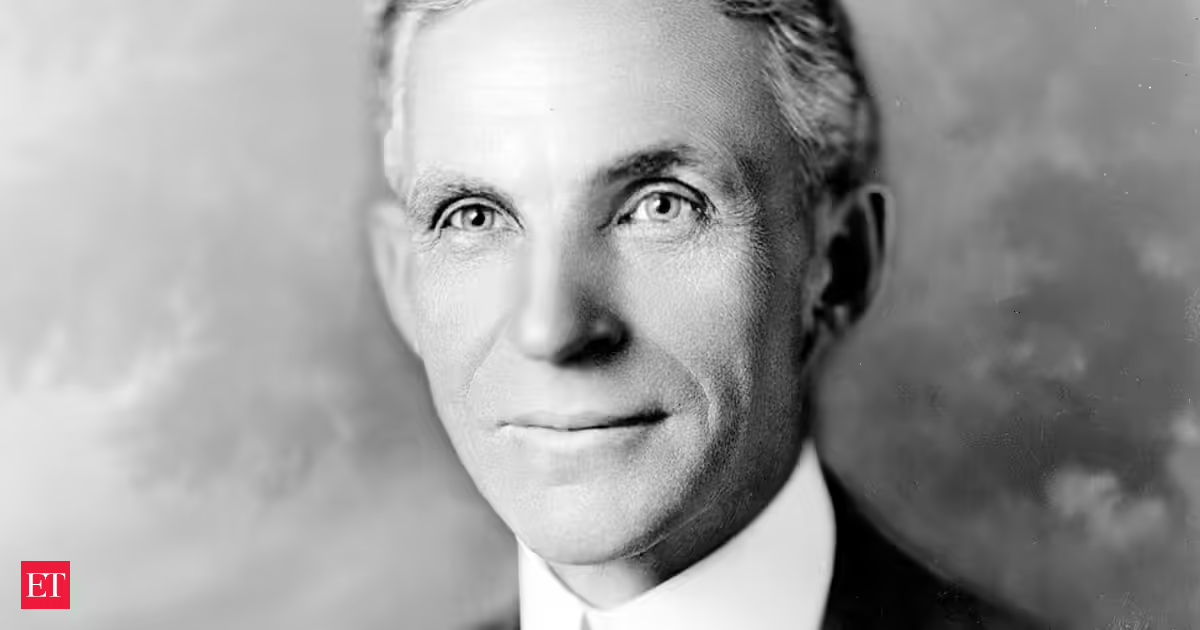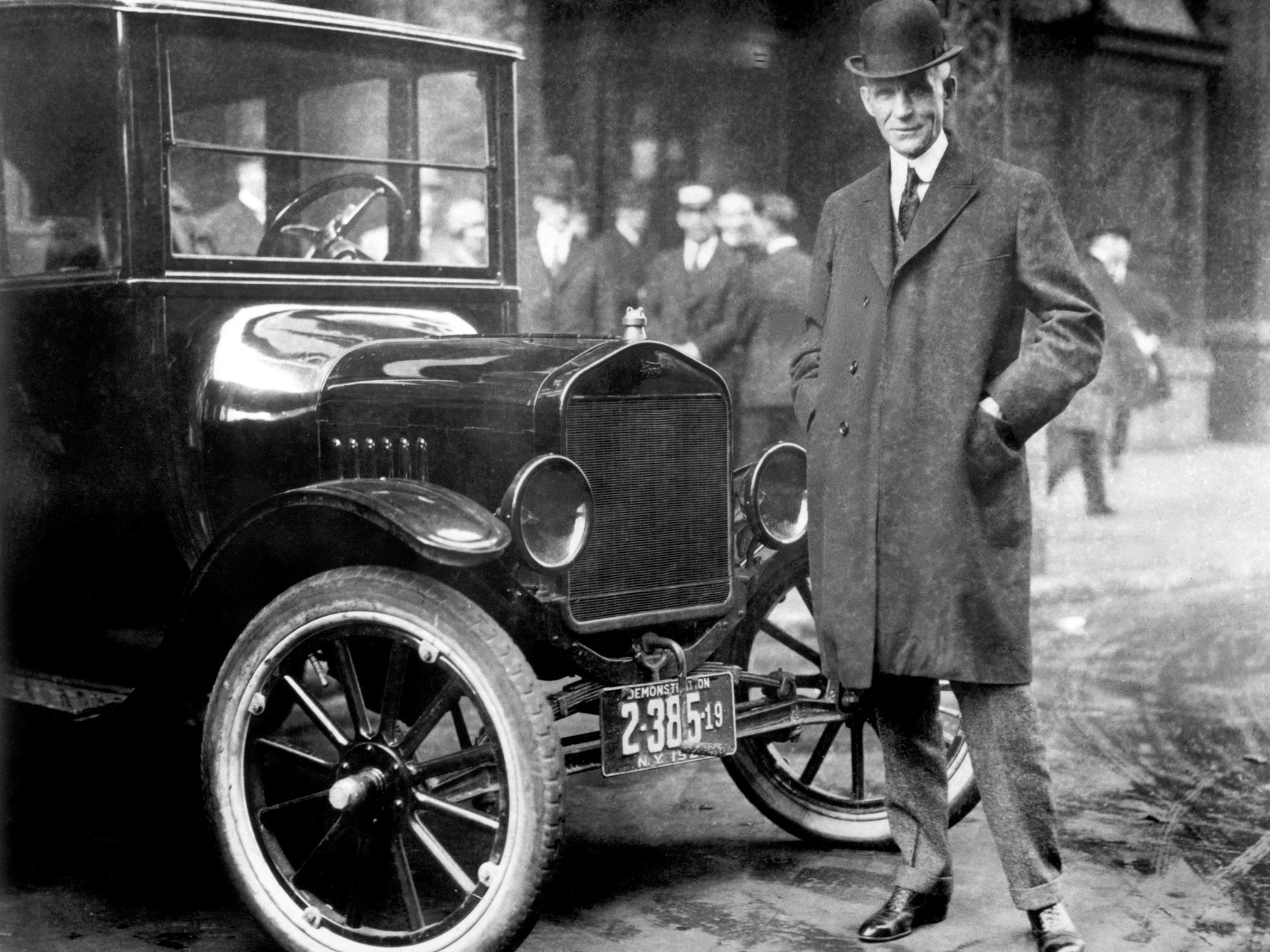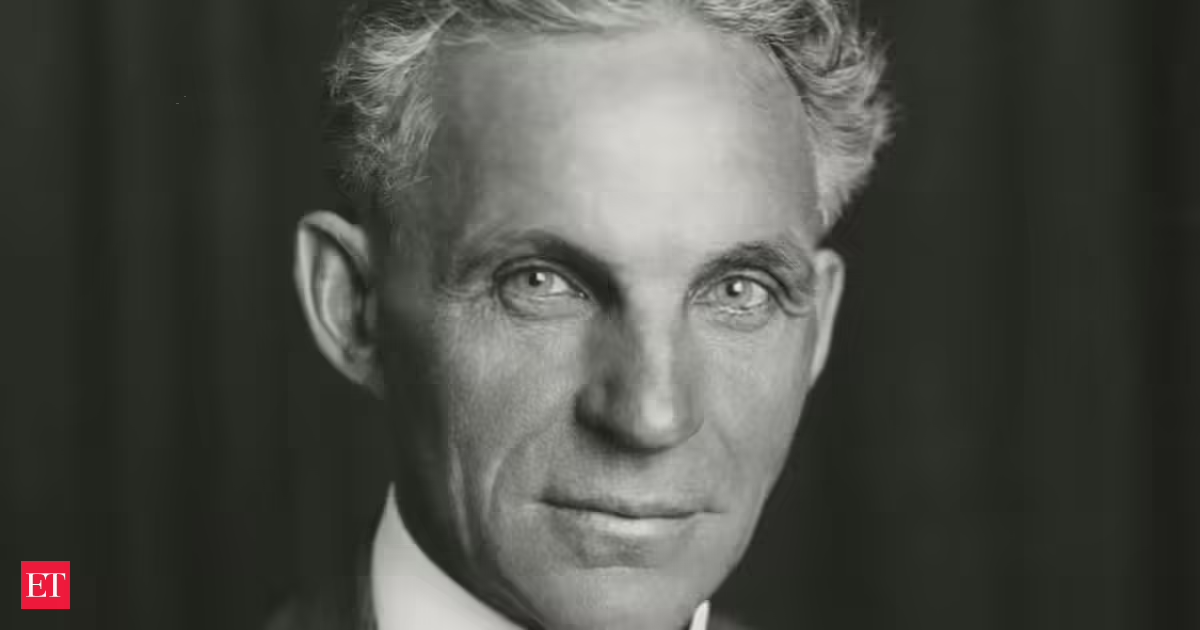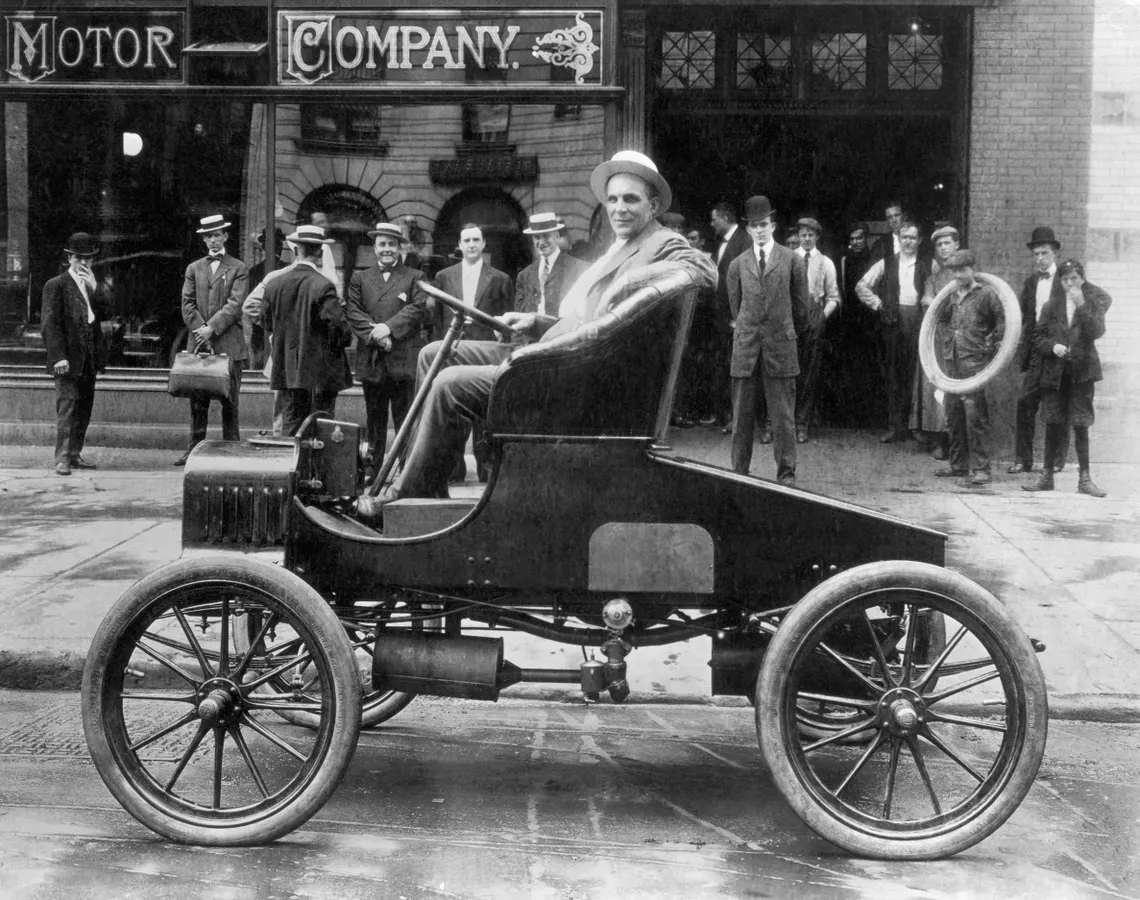
Henry Ford, seated in one of his automobiles made during the early 1900s. Undated image circa 1920s.Bettmann ArchiveIn 1907, Henry Ford was developing key innovations, including advancements in transmission systems that would help power his vision for affordable automobiles. He went on to launch a car business that transformed the United States and the world. The Model T democratized mobility, created millions of jobs, spurred infrastructure, and helped grow the American middle class. Ford made a great deal of money for himself and his family. At his death in 1947, his estate was worth the equivalent of $3 billion in today’s dollars, with the company holding massive additional reserves. Yet he was no saint; he had well-documented flaws, including authoritarian tendencies and antisemitic views. Yet what defined Ford was his prioritization of creating genuine value for customers through innovation, scale, and affordability. Ford was a quintessential Value Creator.In that same year, 1907, advertising pioneer Claude C. Hopkins was hired by Schlitz Beer. He crafted a compelling ad campaign highlighting the brewery’s purity processes—steps that were actually industry standard. Based on these ads, Schlitz surged from fifth place to the top of the U.S. market. Hopkins earned an extraordinary salary equivalent of around $6 million per year in today’s dollars today and made significant profits for Schlitz through short-term sales gains. Neither Hopkins nor Schlitz created much, if any, new value for customers or society. Consumers simply shifted spending on beer to Schlitz without getting a better product. Hopkins thus prioritized creating value for his client and himself through clever persuasion. He was not an evil person: he meant well. He used his advertising talent to make money for himself and Schlitz. But he was a quintessential Self-Dealer.The New BCG Book, How Change Really WorksThe recent book How Change Really Works by BCG consultants Julia Dhar, Kristy R. Ellmer, and Philip Jameson is essentially a song of praise for Hopkins. The authors found themselves inspired by “an unlikely hero Claude Hopkins” and his use of behavioral science to promote internal alignment rituals in support of top management’s goals. Its prime exemplar, as noted in my previous Forbes article, is the jewelry firm Pandora—a company that pursued short-term “transformations” with aligned processes but delivered poor long-term shareholder returns compared to the S&P 500. The book implicitly embraces a worldview resembling Maximizing Shareholder Value (MSV), where the firm’s purpose is to make money for the firm and its shareholders, with customer value as a secondary concern at best. As discussed in my critique of Bain’s HBR article “Bring Back Managing For Value”, this line of thinking risks accelerating flawed strategies despite tighter internal execution.The Growth Of Value Creation In The 20th And 21st CenturyValue creation isn’t new or isolated. Throughout the 20th century, a succession of great Value Creators followed in Ford’s footsteps. Figures like Walt Disney (entertainment empires), Bill Gates (democratizing computing), and Sam Walton (affordable retail for the masses) made substantial money for themselves while creating vastly more value for society through innovation, productivity, and expanded access. In the 21st century, leaders such as Steve Jobs/Tim Cook (Apple), Jeff Bezos (Amazon), Jensen Huang (NVIDIA), and Satya Nadella (Microsoft) amid scores of other firms have continued this pattern—generating enormous personal and shareholder wealth while delivering transformative customer and economic benefits.MORE FOR YOUThe Spread Of Self-Dealing In The 20th And 21st CenturyMeanwhile, a succession of Self-Dealers has continued the tradition of Hopkins and Schlitz. These include certain tobacco executives, financial engineers like Michael Milken in the junk bond era, and modern equivalents in targeted digital advertising and addictive product design. This mindset fed directly into the rise of MSV — the idea that every business should primarily be a self-dealing enterprise focused on short-term shareholder returns. Firms that are heavily on this track, like Pandora, often make less money in the long run and contribute to broader economic and social costs, as detailed in my article “Lest We Forget.”ROIC S&P500 2015-2025 and PandoraFelix Oberholzer, HBRPA Major Societal Issue The issue facing society today is whether we are to be a society of Value Creators or Self-Dealers. The growth of self-dealing has continued in the 21st century with the rise of sophisticated “phishing for phools” — the term coined by Nobel economists George Akerlof and Robert Shiller describing how markets exploit psychological vulnerabilities for profit. Examples include social media engagement algorithms and certain consulting frameworks that prioritize the apparent gains internal theater over real external results.The Deterioration Of Management Writing And AdviceThe same dynamic appears in management literature and advice. Books like Good to Great and Built to Last offer optimistic internal recipes for success, while Start with Why emphasizes purpose, yet often without specifying which purpose. Humanocracy pushes anti-bureaucratic reform, yet its list of 8 signature principles omits any reference to the customer. Without an explicit focus on value creation for customers these books risk becoming tools for self-dealing. BCG’s Change Really Works vividly illustrates the risk of their advice becoming modern Hopkins—style processes that flatter executives to believe that everything is ok without yielding real long-term results.The Data Favors Value Creation The evidence favors Value Creators. Firms with a sustained focus on value creation such as NVIDIA, Costco and their many peers demonstrate that prioritizing customer value while maintaining viability delivers superior long-term TSR and societal benefit. Self-dealing may yield short-term gains, but it often leads to stagnation, backlash, or decline.The Choice Facing Businesses and Society: Value Creation or Self-Dealing?Businesses and society face stark options. We can celebrate and emulate Ford-style innovation that compounds advantage for all, or drift toward Hopkins-style self-dealing that redistributes rather than creates. The path of Value Creation isn’t just morally preferable: in a world of rapid change and AI, it is the only sustainable strategy. HBR, BCG, Bain and the broader management industry should champion proven value creators over self-dealing processes. Society deserves nothing less.
Value Creators Or Self-Dealers? The Choice Facing Business And Society
Businesses & society must choose: Value Creators like Henry Ford (real innovation for customers) or Self-Dealers like Claude Hopkins. Data favor the Value Creators
978 words~4 min read