Financial markets often appear to move in recognisable cycles. Bull markets give way to bear markets, economic expansions are followed by slowdowns, and sectors that lead for years eventually lose momentum. Arthur Zeikel's insightful observation serves as a timeless reminder that while history may rhyme, it never repeats itself indefinitely.The Danger of Believing in Permanent TrendsInvestors naturally seek patterns. When a particular sector consistently outperforms, when a stock delivers years of strong returns, or when a market rises steadily, it becomes tempting to assume that the trend will continue indefinitely. Human psychology encourages us to project the recent past into the future.However, financial history repeatedly demonstrates that no trend lasts forever. The dot-com boom of the late 1990s, the housing market surge before 2008, and numerous commodity cycles all appeared unstoppable until they were not. The very belief that a trend is permanent often plants the seeds of its eventual reversal.When Consensus Becomes a Warning SignZeikel highlights a fascinating market paradox: the more people believe a trend will continue, the less likely it is to do so.When a majority of investors crowd into the same trade, valuations often become stretched, expectations become unrealistic, and future returns are effectively pulled forward. At that point, even a small disappointment can trigger a sharp correction.Markets thrive on expectations. Once everyone expects the same outcome, there are often few new buyers left to push prices higher. Consensus optimism can therefore become a contrarian indicator.Lessons from Market HistoryEvery generation of investors witnesses periods when prevailing wisdom seems unquestionable.There was a time when investors believed technology stocks could only rise. Later, many assumed real estate prices would never decline nationally. More recently, various market themes, from cryptocurrencies to artificial intelligence, have generated extraordinary enthusiasm.While many of these trends are based on genuine innovations and long-term opportunities, market prices often move ahead of reality. Eventually, expectations and fundamentals must reconnect.The lesson is not to avoid popular investments altogether but to remain cautious when confidence becomes excessive.The Importance of AdaptabilitySuccessful investing requires flexibility rather than rigid conviction. Investors who recognise changing conditions are often better positioned than those who remain committed to outdated assumptions.Markets evolve due to shifts in technology, economic conditions, government policies, consumer behaviour, and global events. Strategies that worked brilliantly in one decade may struggle in the next.Adaptability allows investors to respond to new information instead of clinging to past successes.Thinking Beyond the CrowdZeikel's quote also encourages independent thinking. Following the crowd may feel comfortable, but it rarely leads to exceptional investment results. The greatest opportunities often emerge when investors question widely accepted assumptions and evaluate situations objectively.This does not mean being contrarian for its own sake. Rather, it means recognising that widespread agreement can sometimes signal that a trend is already mature and fully reflected in market prices.Key TakeawayArthur Zeikel's wisdom remains as relevant today as ever. Markets do exhibit patterns, but those patterns are never permanent. Trends eventually change, cycles eventually turn, and investor sentiment constantly shifts.The most successful investors understand that certainty is an illusion. By remaining humble, adaptable, and sceptical of universally accepted narratives, they position themselves to navigate changing market environments more effectively.In investing, the moment everyone becomes convinced that "this time is different" is often the moment when caution becomes most valuable.
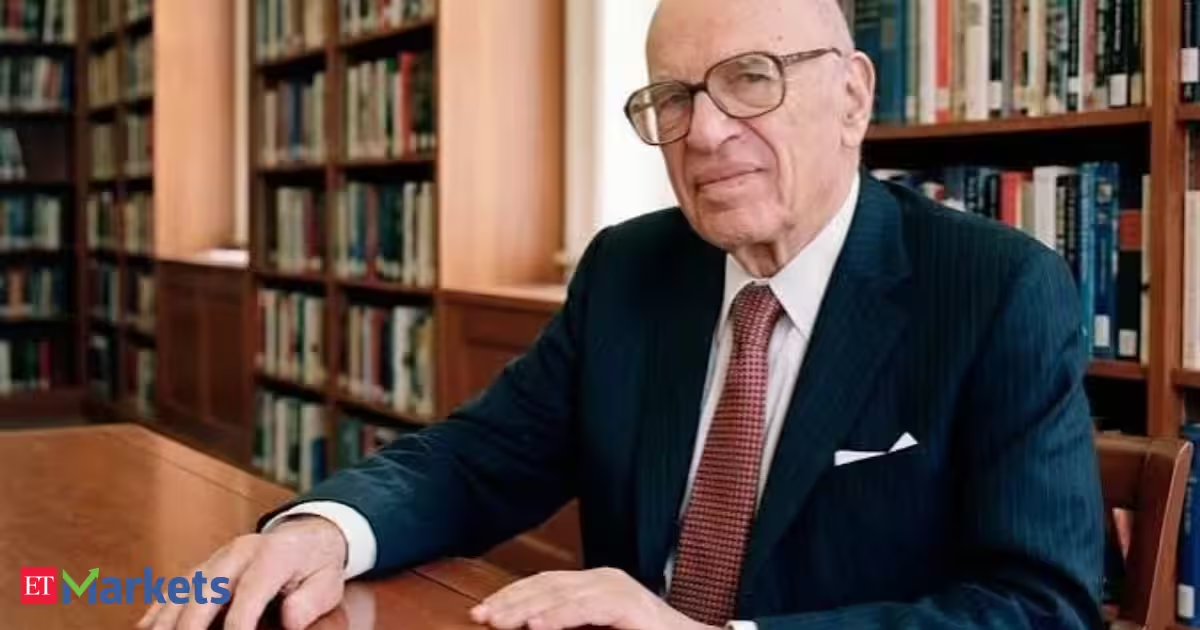
Quote of the day by Arthur Zeikel: "Investors must appreciate that, while there is a pattern to events, no pattern is perpetual. The more widely held the belief in the persistence of a current trend, the less likely it is to continue"
Arthur Zeikels quote underscores the impermanence of market trends and the risks of consensus thinking. The piece explains how investor psychology, crowded trades, and stretched valuations often precede reversals, drawing lessons from historical cycles while emphasising adaptability, independent thinking, and caution when market confidence becomes excessive.
543 words~2 min read