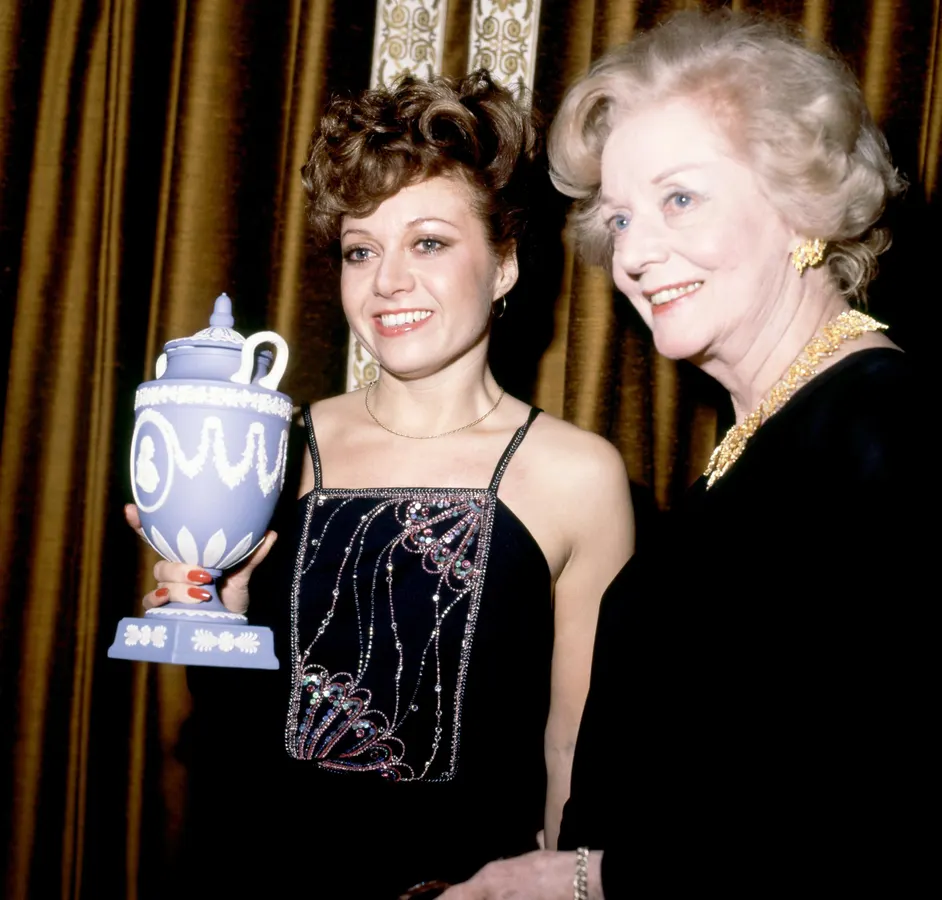
English singers and actresses Elaine Paige and Evelyn Laye (1900 - 1996) pose for a portrait with a Wedgwood vase in London, England, December 3, 1978. (Photo by TPLP/Getty Images)Getty ImagesFor the past half-century, a simple story has taken hold of boardrooms and business schools: the purpose of a business is, and always has been, to maximize shareholder value. Anything else is dismissed as soft-headed idealism or dangerous distraction. In 2011, Jack Welch called the idea “the dumbest idea in the world.” The Business Roundtable and several hundred business leaders publicly renounced it in 2019. Yet the doctrine has continued to shape practice, and recent voices in Harvard Business Review have even urged its return. The story has been comforting to many. It is also false.Profits are an essential part of business. But the notion that firms exist only to maximize shareholder value is an ideological anomaly, not a timeless insight. Profits matter—no enterprise survives without them. Adam Smith’s observation about the butcher, the brewer, and the baker remains valid: we do not rely mainly on their benevolence. Yet Smith never treated short-term self-interest as the sole or overriding goal. In the overall sweep of history, the single-minded pursuit of short-term profits was an aberration. Over more than two centuries the most enduring commercial successes repeatedly centered on creating value for customers, building trust, and expanding what people could do and afford. Profits followed as the inevitable result of generating customer value, not the short-term goal.Let’s look at a few examples.Wedgwood 1770sJosiah Wedgewood (Photo by © Historical Picture Archive/CORBIS/Corbis via Getty Images)Corbis via Getty ImagesMORE FOR YOUIn the 1770s, Josiah Wedgwood transformed pottery from a local craft into one of the first modern consumer brands. He studied taste with almost scientific intensity, pioneered catalogues, money-back guarantees, free delivery, elegant showrooms, and the strategic use of royal patronage. By marketing “Queen’s Ware” he linked his products to status while making refined ceramics accessible to a rising middle class. Profits came from creating a large and loyal customer base, not from maximizing the margin on every transaction.Procter & Gamble 1850sA century later, Procter & Gamble followed a parallel path. The development of Ivory soap— “99 44/100% pure”—reflected investment in product research, consistent quality, and the patient cultivation of household trust. The company was building enduring relationships with customers rather than extracting the highest possible price in any single year.The Industrialists Of The Late 19th CenturyEven the industrialists of the late nineteenth century present a more complex picture than pure extraction. Andrew Carnegie and John D. Rockefeller pursued aggressive consolidation, yet the practical effect was dramatic declines in the prices of steel, oil, and transportation. Ordinary people gained access to lighting, fuel, and the materials that built modern infrastructure. The effect of lower costs on less-efficient small businesses was often harsh, resulting in the derogatory media label of “robber barons.” But the overral effect of the efforts of these entrepreneurs led to a massive expansion of supply of essential products, and reduction of their prices, for the entire population. Henry Ford 1900sHenry Ford With His Model T. (Photo By Getty Images)Getty ImagesHenry Ford carried the logic further. His explicit goal was not to maximize the margin on each automobile but to build “a motor car for the great multitude.” He systematically lowered prices, raised wages with the five-dollar day, and redesigned production so that ordinary workers could eventually buy the cars they made. The company that pursued this course became one of the most valuable enterprises of its era.The Insights Of Management Writers Follett and DruckerWhile these practitioners experimented, management thinkers articulated what the best of them already understood. Mary Parker Follett argued that organizations succeed through integration rather than domination— “power-with” rather than “power-over.” Peter Drucker crystallized the insight in The Practice of Management (1954): the purpose of a business is to create a customer. Marketing and innovation are the only two basic functions. Profit is not the purpose; it is the result and the test of whether the purpose has been achieved.The Rise Of MSV: Late 20th CenturyMilton Friedman economist professor University of Chicago shown in file photo. 7/9/69.Bettmann ArchiveAgainst this longer-term backdrop, the rise of MSV thinking after 1970 looks less like the discovery of an eternal insight and more like a quirky over-simplification. In 1970, Milton Friedman’s ferocious political essay in the New York Times, and the agency-theorizing that followed provided sufficient intellectual justification. It was an era whose purest cultural expression was the line that “Greed is good.” What followed—the takeover wave, stock-based compensation, and the growing power of institutional investors—turned the idea into orthodoxy. Capital markets became more liquid, yet the ideology also encouraged short-termism, financial engineering, share buybacks, and the undervaluation of investments in the capabilities, skills, and customer relationships that pay off over longer horizons.James Moore: The Emergence Of EcosystemsEven while that orthodoxy spread, new realities were emerging. In 1993, James F. Moore showed how the most successful businesses were becoming complex ecosystems—networks of suppliers, customers, complementors, and competitors. Success depended less on defeating rivals in zero-sum contests and more on shaping systems that created value for end users and benefits for all. Digital technology accelerated the shift. Customers gained unprecedented information, choice, and voice.The 21st Century Value CreatorsJeff Bezos on August 30, 2022 in London, England. (Photo by Gareth Cattermole/Getty Images)Gareth Cattermole/Getty ImagesAmazon became the clearest large-scale expression of the value creation philosophy in a new technological era. From the beginning, CEO Jeff Bezos framed the company around customer obsession rather than near-term profitability. Heavy investment, lower margins, and continuous expansion of selection, convenience, and speed reflected a bet that creating and keeping customers at massive scale would produce durable returns. The results validated the approach that Wedgwood, Procter & Gamble and Ford had practiced in earlier periods. Similar logic has driven many of the strongest global performers today, including Apple, Alphabet, Nvidia, and Costco in the US and ASML, TSMC, and BYD in Europe and Asia.Value Creation Through AIThe same pattern continues in the age of AI. Firms that treat customer value as primary and use new technology to expand what customers can achieve are pulling ahead. Those that treat customers mainly as constraints to be managed while extracting returns by cutting costs mostly find themselves falling behind.The Enduring Firms Created Customer ValueCommercial self-interest is real and necessary. Profits remain essential for survival. Yet the most successful enterprises across two and a half centuries—Wedgwood’s pottery works, Procter & Gamble’s consumer brands, Ford’s mass-market automobiles, Amazon’s platform, and their contemporary successors—have repeatedly treated the creation of customers as the central task. Profit followed. The MSV era of the last fifty years was powerful, consequential and ephemeral. It was not the recovery of an eternal default. The firms that endured are those that kept creating value for customers within living systems of collaboration and trust. That insight is older, clearer, and more durable than the ideology that briefly overshadowed it.
Rediscovering The 250-Year Triumphs Of Value Creation
In the bigger historical picture, the last half-century’s preoccupation with maximizing shareholder value was a transitory self-interested aberration from common sense, not an immutable truth
1,155 words~5 min read