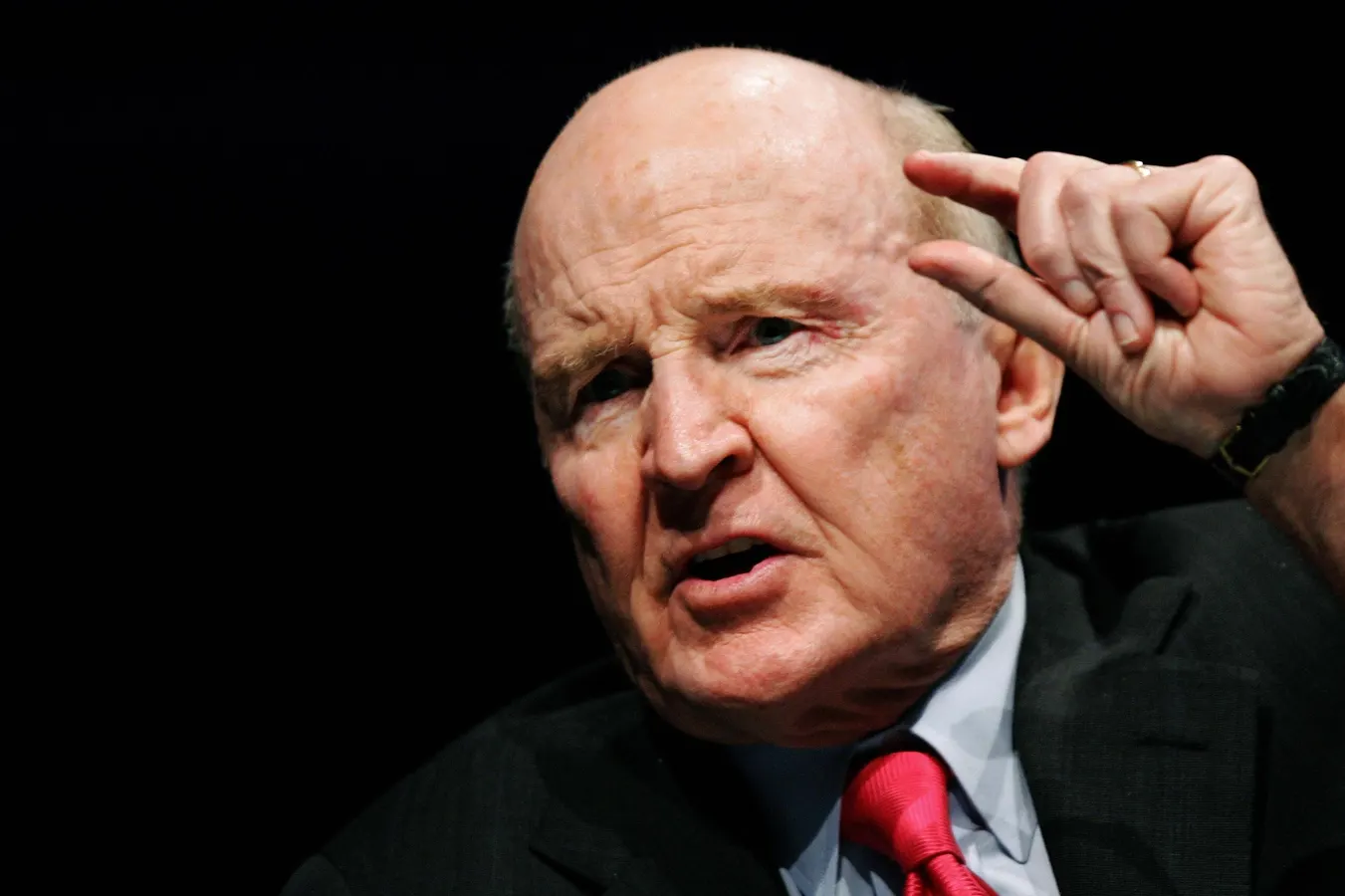
Former GE chairman Jack Welch who called MSV "the dumbest idea in the world" (Photo credit should read THOMAS LOHNES/DDP/AFP via Getty Images)DDP/AFP via Getty ImagesIn the future Museum of Misguided Management Ideas, the June-July 2026 issue of Harvard Business Review deserves a prominent display. Tucked toward the back is an article titled “Bring Back Managing for Value” by Michael Mankins and Matthew Crupi of Bain Consulting. Its core message: “maximizing shareholder value” — the idea even Jack Welch in 2008 called “the dumbest idea in the world” — should once again be the governing objective of business. Stakeholder concerns are reduced to mere “constraints.”Customers, in particular, are not human beings who deserved to be served and delighted. They are simply one mechanical constraint among many — something to be monitored via metrics like Net Promoter Score so they don’t fall below a pre-specified level. The goal is shareholder returns. Everything else is a boundary condition.This is not progress. It is a regression.The Intellectual Sleight of HandThe authors acknowledge the intellectual roots in Milton Friedman and Michael Jensen. They propose a “disciplined” model rooted in linear programming: keep value maximization as the maximand, but treat stakeholder commitments as hard or soft constraints.Hard constraints must be “measurable and monitorable” and “specified as absolutes.” Examples include “no decline in customer Net Promoter Scores.” The subtext is clear: don’t aim to truly delight customers — just make sure the customer score doesn’t drop.MORE FOR YOUThis is precisely the trap British economist Charles Goodhart warned about decades ago: “When a measure becomes a target, it ceases to be a good measure.” Turning a customer satisfaction score into a floor to protect shareholder returns guarantees the metric will be gamed. It dehumanizes the customer, dehumanizing as a mere variable in a financial optimization problem. What the Business Roundtable Actually ShowedIn 2019, the Business Roundtable issued a statement seemingly rejecting shareholder primacy. Yet careful analysis by Lucian Bebchuk and colleagues at Harvard Law School showed almost no real change. Most signatories kept the same governance, incentives, and practices. Rhetoric shifted; behavior did not.As Eric Ries powerfully argues in his recent book Incorruptible, “financial gravity” — the relentless pressure of short-term shareholder value — continues to bend organizations away from their stated missions. Success itself becomes the problem.Evidence From The Real WorldThe HBR article cites Costco and BP as examples. This is telling. Costco has long been a Value Creator — it genuinely and publicly obsesses over customers and employees: superior long-term shareholder returns are the result, not the goal. BP, by contrast, has repeatedly prioritized financial returns with disastrous consequences for customers, employees, and the environment. Its 10-year total shareholder return significantly lags the S&P 500: 110% vs 264%.10year total shareholder returms BP vs S&P500Seeking AlphaAround 30% of public firms (and perhaps 70% of small firms) operate as genuine Value Creators. They prioritize customer value while sustaining their own viability. Leaders like Satya Nadella, Jensen Huang, Reed Hastings, and Tarang Amin demonstrate that this approach delivers superior TSR and ROIC.The majority — roughly 60% — are Self-Dealers. They use stakeholder language but retain extractive incentives. Another 10% are outright Value-Extractors. The remaining firms Oscillate under pressure.A Better Path: Creating Value WinsThe alternative is not stakeholder balancing or purpose-washing. It is a clear commitment to creating value for customers as the primary goal, with sustainable returns as a necessary outcome. This is not soft idealism. It is hard-nosed strategy backed by decades of multi-dimensional evidence.In an era of AI and rapid change, treating customers as mere constraints is a recipe for irrelevance. The winners are those organizations that obsess over customer value, empower employees, and resist financial gravity through strong mission lock and ethical governance.The pendulum never really swung away from maximizing shareholder value. It simply hid behind better rhetoric. It is time to move beyond it entirely.
Harvard Business Review Brings Back The World’s Dumbest Idea
HBR revives “maximizing shareholder value”—the dumbest idea in the world—treating customers as mere constraints. True value creation for customers, not metrics, wins long-term.
641 words~3 min read