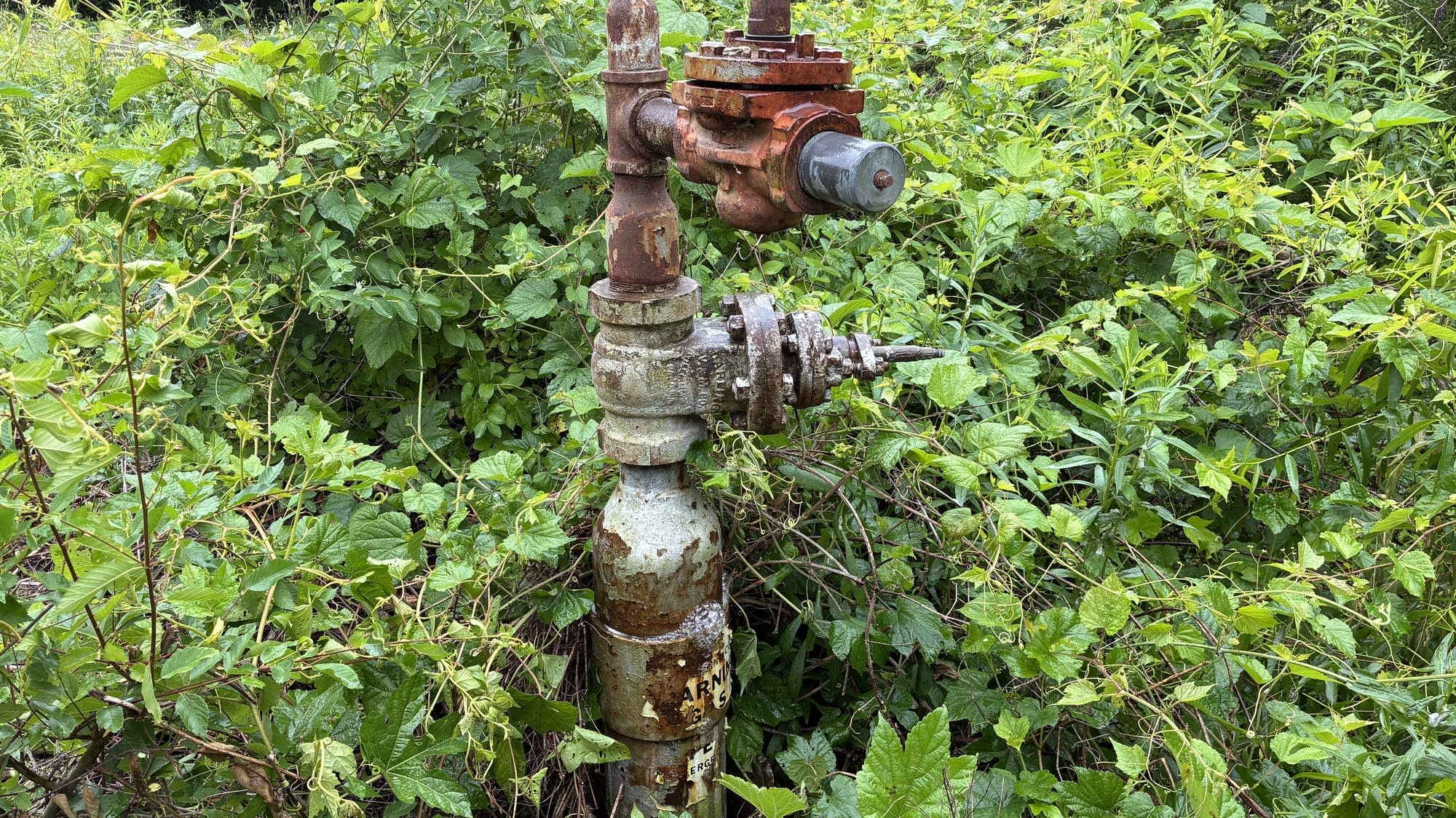
On a suburban side road about 15 minutes from the center of Charleston, West Virginia, there’s a quiet hissing sound, almost completely masked by traffic noise coming from Interstate 64.The orphaned oil well is hard to find. But David McMahon has heard old oil wells make this sound before. “It's the sound of the gas escaping,” he said.McMahon, a lawyer and co-founder of the West Virginia Surface Owners’ Rights Organization, waded through a mess of wild grape vines and Virginia Creeper, lamenting that he didn’t bring a machete to cut through it all to Ted Boettner, a senior researcher at the Ohio River Valley Institute.As they got closer, the smell hit.“I smelled it just now. Smells like sulfur, rotten eggs,” Boettner said. He’d just written a report on orphaned oil wells. They pulled back vines to reveal an old, unassuming, four-foot-tall, metal structure. It looked like a scuba tank, topped with some metal connector pieces. It was an oil well from 1939. It likely stopped being useful decades ago, but it never got plugged. It’s “orphaned” because the company in charge of it is long gone. So now it’s the state’s problem.By law, operators are required to plug old wells, but enforcement was lax for decades. Today, the state has one inspector for every 6,700 wells.The Ohio River Valley Institute just put out a report that estimates there are a couple hundred thousand old oil wells in the state that need to get plugged. And most of them haven’t even been recorded.The leaking methane is invisible, but dousing the machinery in soapy water reveals where the gas is leaking.Caleigh Wells/MarketplaceWhen wells like this one sit unplugged, hissing and smelling, they cause a whole host of problems.“Methane leaks out of them into the atmosphere, but also oil and water can leak out of them onto a farmer's land,” McMahon said.Methane is a potent planet-warming gas, and a major player in climate change. Leaks on farm land poison soil and water, harming crops and livestock.They can also penetrate coal seams, which is problematic because if a coal miner runs into an oil well, it can explode, or leak and poison the people working down there.“The methane can go down into people's groundwater. I've seen people light their faucet in their sinks,” McMahon said.The state hasn’t plugged this well yet, in part because it’s really expensive to do. Boettner estimated it costs $100,000-$125,000 on average. His report stated that West Virginia has roughly $5 billion dollars of plugging to do.“The older the well is, the harder it is to fish everything out and clean it out and get to the bottom,” he said.Most wells in the state are undocumented, but the number the state knows about has been going up.And that’s actually a good thing.“The availability of federal funding to assist states with this cleanup process has increased the incentive for states to undertake this costly effort to go out and document their orphan wells,” said Sarah Armitage, a Boston University professor who’s researched the oil drilling industry.That’s because step one to solving the orphaned well problem is figuring out how big the problem is, she said. Step two is getting the money to plug the wells.“And so if the well becomes orphaned, the funds available to the state to cover plugging costs are only a fraction of the actual costs incurred,” Armitage said.McMahon has been trying to get a bill passed in West Virginia that’ll help fix that. Lawmakers introduced the bill in February. It would force drillers of new wells to set aside money in a bank account that’ll cover the cost of plugging them later.”I'd say there is some hope,” he said. “But getting anything through the legislature that portions of the oil and gas industry oppose is not going to be easy.”
Abandoned oil wells are polluting West Virginia. Plugging them won't be easy.
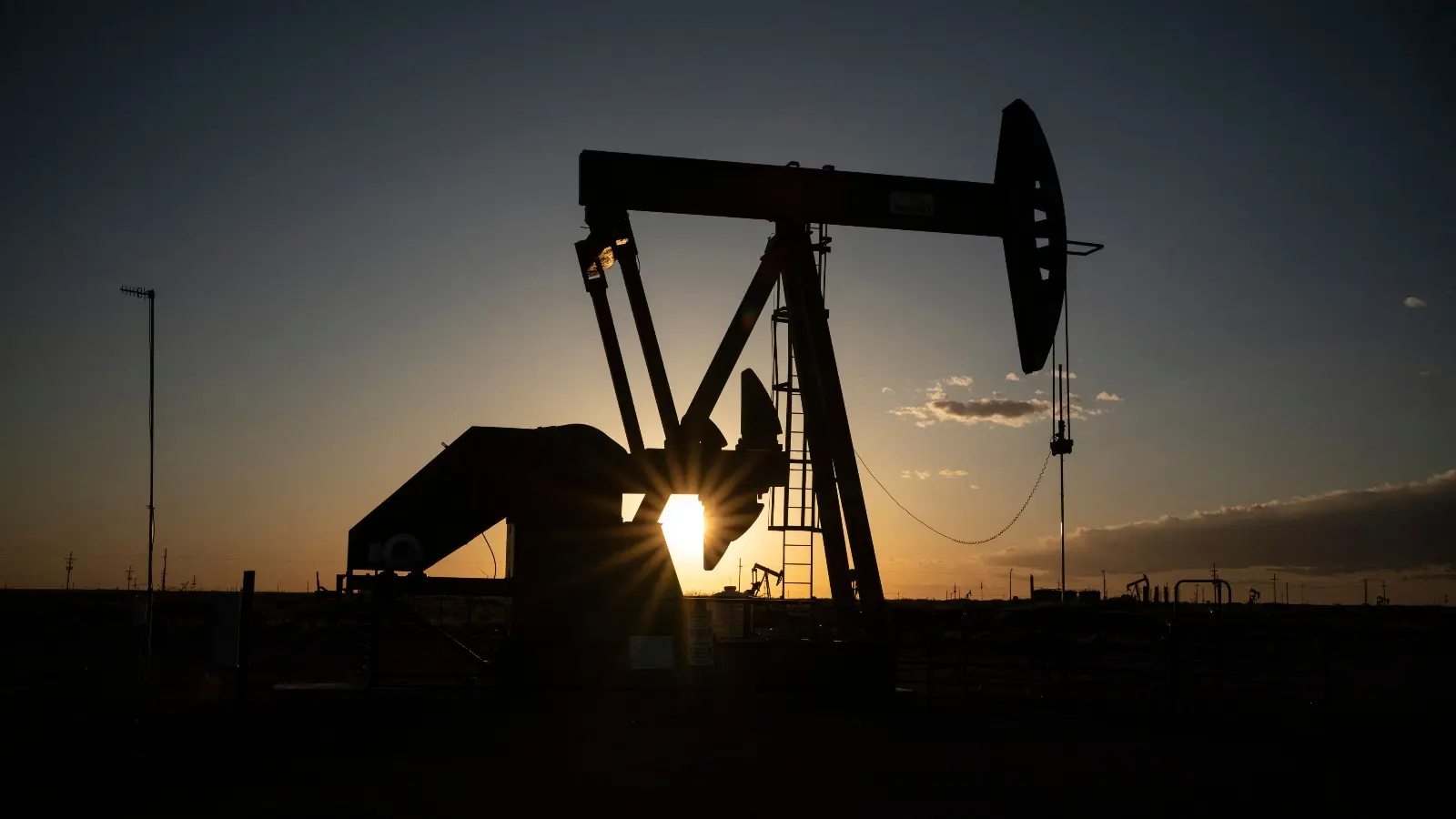
Oil well operators are required by law to plug wells once they’re finished using them, in order to prevent leaks. But yet, there are likely millions nationwide that haven’t been plugged.
633 words~3 min read