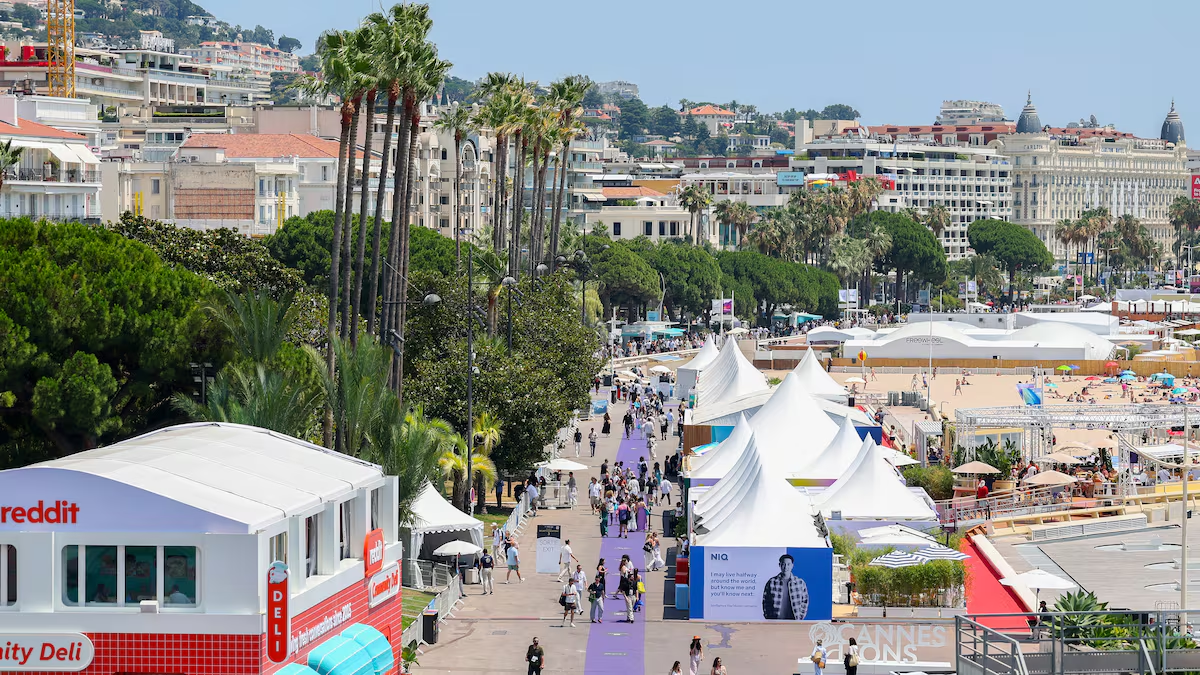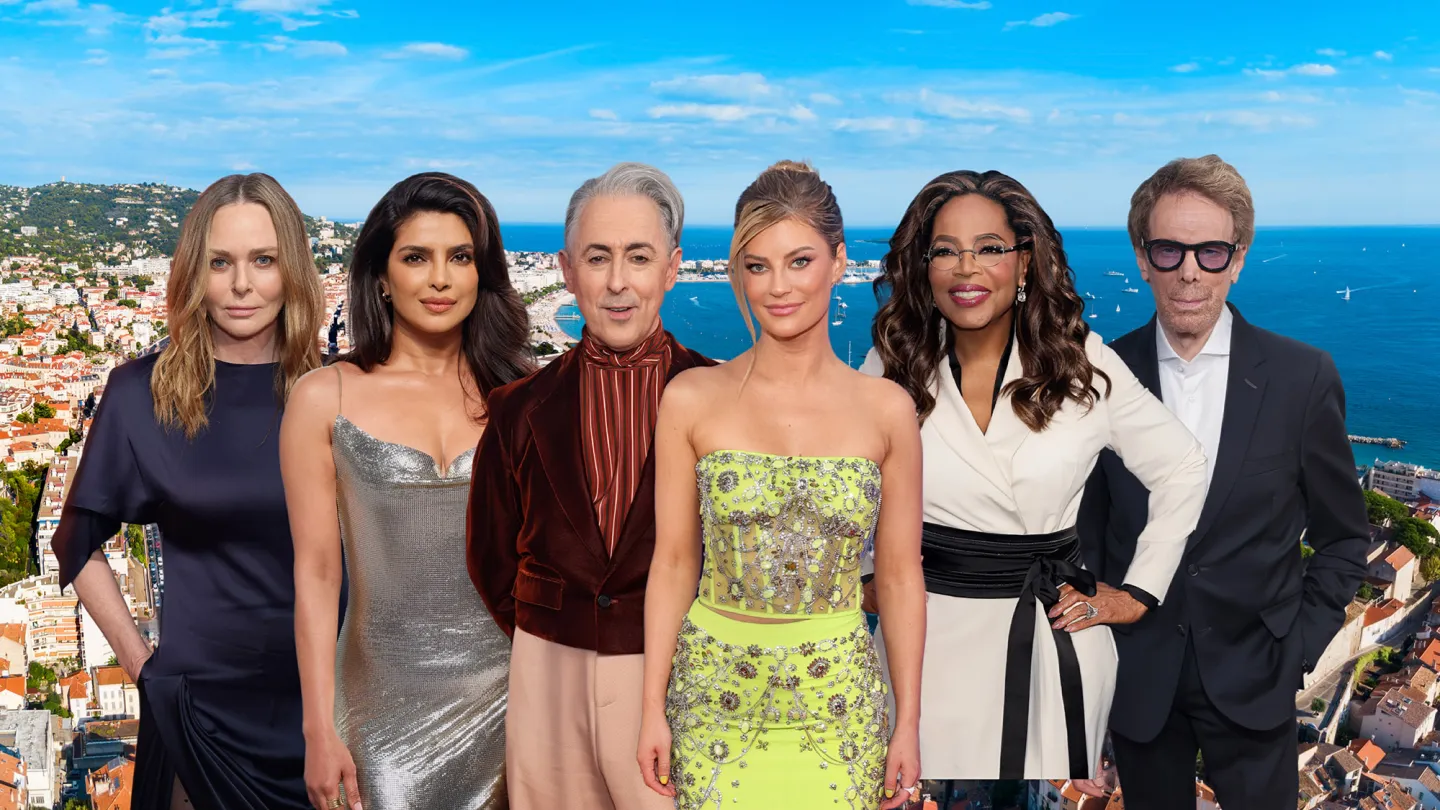
AI will once again be nearly impossible to avoid at the Cannes Lions International Festival of Creativity. Yet this year, simply putting AI in a slide presentation won’t cut it.When the advertising industry descends on Cannes from June 22 through June 26, healthcare marketers can expect the AI conversation to move decisively beyond speculation. After several years of panels debating what the technology could eventually do, brands and agencies will arrive under more pressure to show what they have actually built, where it worked and, perhaps more revealingly, where it did not.“The receipts are going to be in,” Amanda DeVito, chief marketing officer at Butler/Till, said. “We’re past the demo phase.”AI practicality in focus That shift could be particularly consequential for pharma, where AI adoption comes bundled with questions about regulatory oversight, patient privacy, medical accuracy and accountability. DeVito expects the discussion to turn from AI as a creative novelty toward the less glamorous mechanics of deploying it inside a regulated business.“Who’s accountable? What is it going to look like? How do you govern a system that’s optimizing in real time inside an FDA-regulated environment?” she asked. “These questions are going to continue to pop up.”In other words, pharma marketers should expect less time marveling at what AI has generated and more time asking how, and why, a human was kept in the loop.Eric Weisberg, global chief creative officer at Havas Health Network and former jury president for the Health & Wellness Lions in 2025, described the broader shift as the AI “hype cycle” that becomes a “reality cycle.” The efficiency promises have not disappeared, but the industry is beginning to sort through where the technology genuinely improves creative and production work versus where it risks flattening the human insights healthcare advertising depends on.Authenticity versus synthetic optionsFor Chinkara Singh, chief production officer at Havas Health Network, the benchmark for successful AI-assisted work will be whether audiences notice the story rather than the tool.“I want to see it and not feel it,” Singh said.Singh added she will be looking closely at how agencies are building AI into the architecture of production, rather than attaching it to a campaign as a final flourish. That could include using the technology behind the scenes while preserving traditional filmmaking, performances by real people and the craft that keeps a piece of work feeling authentic.Real patient stories have long been central to healthcare advertising, particularly as trust in pharmaceutical companies, government agencies and health information has eroded. Synthetic people may be cheaper or easier to produce, but they also raise a difficult question for brands trying to establish credibility.“At what point does a brand no longer seem authentic when it moves from authentic stories to synthetic people?” Weisberg said.Klick Health’s chief creative officer Rich Levy described a similar tension that may be on display at this year’s festival.“The best creative work taps into a shared human experience, and by default, AI does not have that,” Levy said.Andrea Lillis, SVP and executive creative director at Klick Health and a member of this year’s Pharma Lions jury, added that “humanity is unexpected.”Lillis said that as she reviewed hundreds of case films ahead of judging, “educational entertainment” emerged as one of the most noticeable themes. The challenge for pharma brands will be creating something more compelling than another extended patient profile while also resisting any temptation to turn serious health subjects into hollow entertainment.Is pharma funny?Humor will also continue to make its way into the category, though Lillis cautioned that pharma’s attempts at lightness can quickly become cheesy. She hopes this year’s entries deliver the kind of “wow moments” that push the category forward after several years in which the work has started to plateau.That may require healthcare marketers to look beyond other drug campaigns for inspiration. Lillis pointed to the film and entertainment industries as examples of how to explore disease, caregiving and identity without losing emotional honesty.Levy said that, in an era when brands can measure nearly every click and interaction, he remains surprised by how much healthcare advertising is effectively invisible. Standing out could come through humor, empathy, production, storytelling or a sharp cultural insight. It probably will not come from another slow-motion beach walk spot.“Has anyone chosen a pharmaceutical product for their health because the umbrellas were teal?” Levy asked.Creativity will also be under scrutiny alongside credibility. Cannes now requires entrants to submit proof of impact backed by verifiable evidence, along with formal approval from senior executives at the brand and entrant company. Levy welcomed the heightened standards, which could reduce the perennial speculation about whether an award-winning campaign was a real, sustained piece of work or a fleeting stunt engineered primarily for the jury room.The Oprah effectThe push for proof builds on DeVito’s expectation that the most valuable Cannes conversations may involve failure as much as success. Pharma marketers tend to be understandably cautious about publicly discussing experiments that fell short, but several agency leaders interviewed for this preview said the most useful exchanges often happen away from the main stage panels.Singh said she hopes attendees will be willing to share the breakdowns that eventually produced breakthroughs. DeVito similarly looks forward to the hallway and side-street conversations where marketers can speak candidly about what they are “messing up on” and what they learned.For attendees trying to navigate a festival spanning hundreds of sessions, activations, meetings and parties, DeVito offered a simple strategy: “Go deep, not wide.”The expanding role of indie agencies will be another thread to watch. Both DeVito and Levy said independents are no longer arriving at Cannes as peripheral players or “underdogs.”Levy predicted that these agencies will “come out swinging,” both in the awards and in the conversations surrounding them, after a year dominated by discussion of holding-company mergers and consolidation.And then, of course, there’s Oprah.Winfrey, who will receive the 2026 Cannes LionHeart award, is scheduled to speak at the Palais on June 23. Her appearance came up independently in multiple interviews, suggesting attendees may need to arrive considerably earlier than they would for the average seminar.Still, the celebrity appearances, yachts and rosé remain secondary to Cannes’ primary value: Providing a global temperature check on where creativity is heading in the year to come.This story first appeared on MM+M.
When they arrive at Cannes, pharma companies will be ready to show AI receipts
Healthcare marketers heading to the Croisette can expect fewer theoretical promises around AI, more scrutiny of what actually works and a renewed mandate for human-centered storytelling.
1,037 words~5 min read