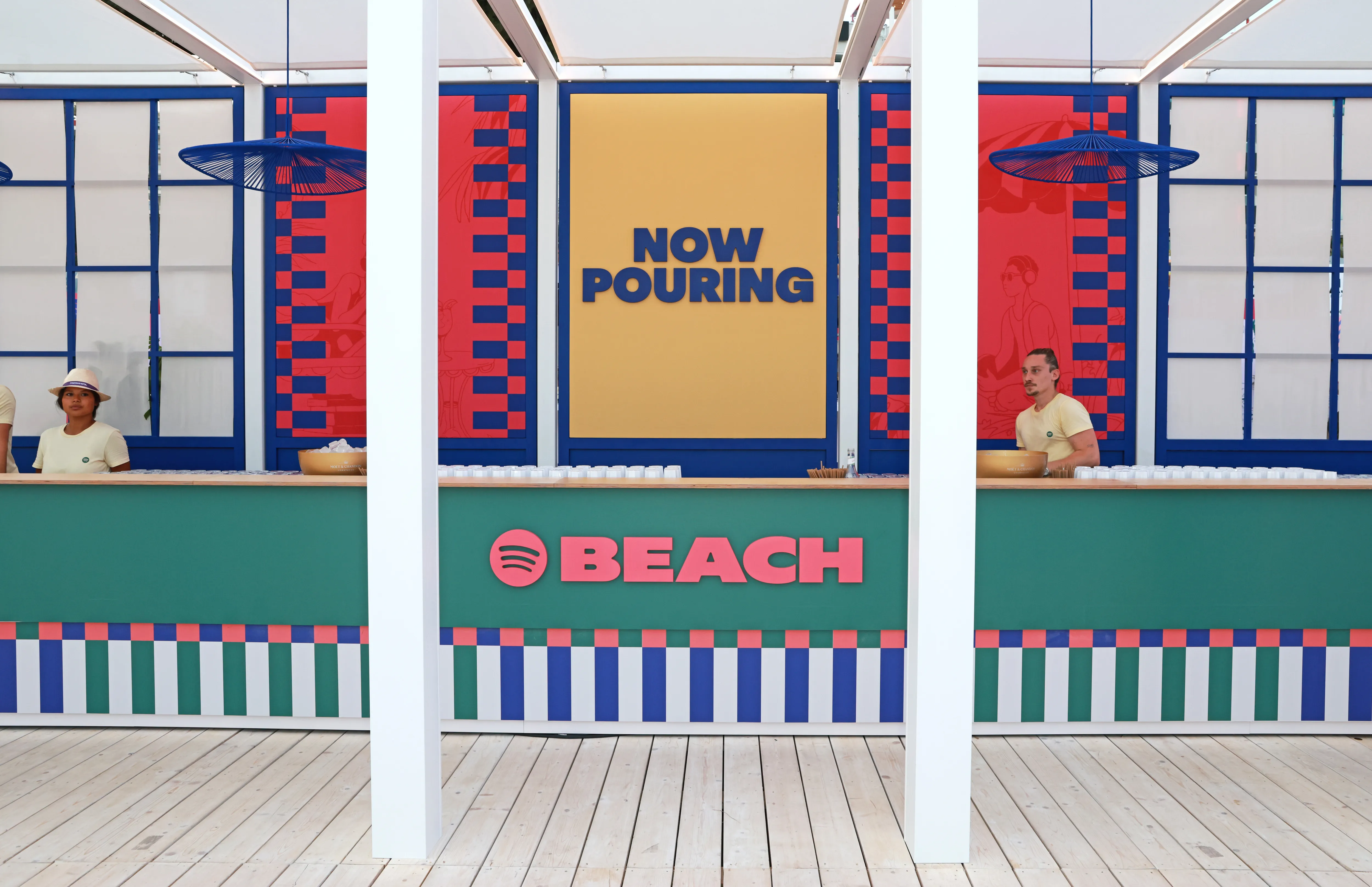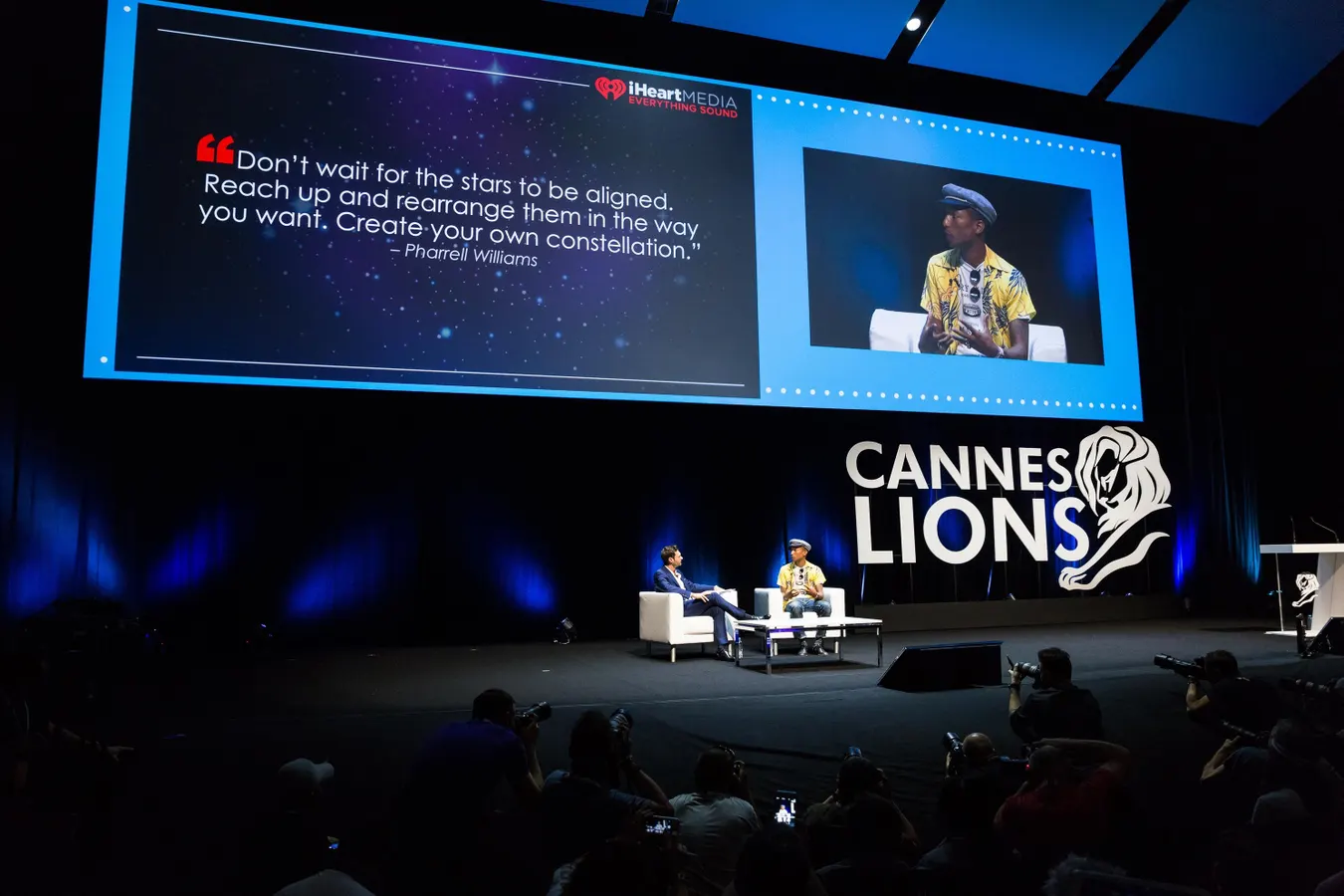
More than 13,000 leaders gathered for the Cannes Lions International Festival of Creativity.StockByM/iStock/modified by K. Calhoun By C200 Member Katie Calhoun Two weeks ago, more than 13,000 leaders gathered for the Cannes Lions International Festival of Creativity in the south of France, the world’s largest gathering of marketing and advertising executives. The event was vibrant, surprising, and optimistic, but its most important message extended well beyond marketing: as AI becomes more powerful, human judgment becomes more valuable. A year ago, the dominant narrative at Cannes centered on unbounded enthusiasm for AI and its potential to reduce costs, accelerate production, and automate work. This year, the tone was more balanced. The conversation shifted toward the importance of real-life leadership in guiding AI systems—keeping humans in the driver’s seat, not just “in the loop.” Across sessions, a consistent theme emerged: AI is most effective when it amplifies human strategy, creativity, and connection.The festival itself reinforced this point. Despite record-setting heat, thousands of attendees gathered in person across the Palais, Croisette promenade and surrounding venues, underscoring the continued power of IRL interaction over the whirr of personal fans. The energy and insights generated through face-to-face exchange are truly impossible to replicate in virtual environments.Human Strategy First, AI SecondSpeakers repeatedly emphasized that AI systems are only as strong as the human strategies behind them. Brand strategy, after all, must be driven by values and nuanced emotional resonance—two concepts that are rarely associated with AI. So human-directed strategy must come first. AI can scale and optimize execution, but it cannot define relevance, meaning, or personal connection. Across Cannes, many presenters noted that recent experimentation with “AI-first” approaches to strategy, content creation, and consumer engagement has contributed to a glut of content, leaving consumers overwhelmed and often apathetic.MORE FOR YOUThis sentiment was supported by Havas’ Science of Desire study, introduced at the festival, which found that 84% of brands now suffer from consumer indifference: audiences may recognize brands but do not meaningfully connect with many of them. As the study notes, “being seen is not the same as being wanted.”At PMG’s AI & Tech Sandbox, Gina Igwe, Vice President of Brand, Creative and Consumer Marketing at DoorDash, reinforced this point, noting that brand strategy must remain fundamentally human-led and cannot be delegated to machines. Once a strong strategic foundation is in place, AI can act as a powerful force multiplier, particularly in scaling personalization and execution. Dynamic personalization still needs to be approached carefully and grounded in proven strategy. Speaking at FQ Beach, Thea Hayden, Chief Marketing Officer of Cognizant Technology Solutions, cautioned that personalization without “soul” or authentic insight can land with consumers as superficial targeting. Using AI for scale won’t fix a weak personalization strategy; it makes it worse. The Limits of Synthetic InsightAnother recurring theme was the importance of human involvement in gathering data and insights, particularly amid growing use of synthetic research tools. These tools rely on artificially generated data, personas and hypotheses to simulate real-world conditions and predict likely consumer behaviors. Like all generative AI models, they are trained on huge amounts of historical data. And they can offer fast and inexpensive alternatives to traditional research. However, practitioners at Cannes warned that overreliance on AI-generated research can create false confidence. Where is the crucial, current human insight? Because of their reliance on historical patterns, synthetic models are not designed to capture rapidly evolving consumer behavior or emerging external dynamics—both critical factors for successful plans. The strongest approach for research starts with lived insights and expertise. Megan Malli, Chief Executive Officer at AnswerLab summarized it well, warning that removing people from the research process does not necessarily create greater efficiency.Creators as the Model for CollaborationCreators emerged as one of the clearest examples of effective human-AI collaboration. These individuals are increasingly shaping culture, building audiences, and partnering with brands at scale. According to eMarketer, nearly 89% of established U.S. companies are expected to invest in influencer marketing this year, with total spend projected to exceed $12 billion. Professionals are responding accordingly: LinkedIn Chief Marketing Officer Jessica Jensen reported a 90% increase in users identifying as Creators in their profiles.Importantly, the creators at Cannes generally don’t view AI as a replacement for creativity, but as an enabler of it—provided it remains grounded in a strong human point of view. That same idea surfaced at the AI & Tech Sandbox, in a Fireside Chat moderated by C200 member Jennifer Quigley-Jones, VP of Strategy & Partnerships at PMG. During the session, Simon Morris, VP of International Marketing at Adobe, and creator Brandon Baum discussed how AI can serve as a creative partner without replacing the imagination, judgment, and lived experience behind the work.With more than 25 million followers, Baum uses AI to extend his creative capabilities while maintaining a distinct narrative voice. Morris made a similar point, encouraging creators and brands to evaluate whether the underlying idea is strong enough to stand on its own. AI may help extend or enhance a concept, but the story still needs to be rooted in real human experience.Gen Alpha and the Demand for AuthenticityThese dynamics are especially relevant for Gen Alpha, a critical audience for marketers and a group frequently discussed at Cannes as the first AI-native generation. Gen Alpha is generally defined as consumers born between 2010 and 2024, and they’re just beginning to flex their economic muscle. According to a study from Numerator.com, this cohort already represents $28 billion in annual direct spending, with billions more through influence on indirect purchasing. So, what does this group think about AI? Research from the marketing agency Razorfish indicates that Gen Alpha embraces AI for efficiency, speed and easy access to information for tasks like homework. And yet they still place a high value on human input—particularly for storytelling, or contexts that involve trust. For example, Razorfish found that 54% of Alphas look to peers and other people for recommendations on what to buy. As Razorfish Chief Executive Officer Dani Mariano summarized: “Gen Alpha will require not just technological fluency [from marketers] but a deeper understanding of when to lead with AI and when to lead with empathy.“ This generation is content-savvy, regularly consuming media across multiple screens, with a strong ability to filter out what feels inauthentic. Speaking at FQ Beach, Rebecca Kent, Head of Global Experiences, Americas at Warner Bros. Discovery, noted that Gen Alpha is very “emotionally intelligent” and seeks brands with depth and complexity. Traditional simplistic narratives, like those that reduce a story to heroes vs. villains, are increasingly insufficient. This raises a challenge: AI is well-suited to optimization and scale, but less capable of producing nuanced, emotionally layered communications. It’s critical for marketers to engage this group with an honest, human voice. Sports as a Case Study in Human Emotion Enhanced by AIThroughout the festival, sports emerged as a powerful illustration of this balance between human emotion and AI-enabled enhancement. Storylines from the early rounds of FIFA Men’s World Cup animated conversations across venues. Evening watch parties spilled out onto the sidewalks and united attendees in a common experience, regardless of their language or allegiance. Behind the scenes, AI played a significant role, offering enhanced analytics, player statistics, and compelling team narratives to engage even the most casual fans. This pattern extends beyond football, of course. Across multiple sports properties, AI is increasingly used to personalize fan experiences and enhance storytelling. Jeff Slack, Managing Director, Commercial & Marketing for Aston Martin and the Aramco Formula One Team, described how the sport leverages AI-driven insights and personalization to ensure fans feel “seen, not segmented.” In that case, the technology serves to engage and amplify the stories unfolding on the track, field or pitch. It can galvanize a new audience through precise use of fan data and split-second analytics. And yet, Slack echoed many speakers from Cannes when describing live sports itself as “anti-AI,” a phenomenon that is grounded in human drama, unpredictable developments, miraculous triumphs and heartbreaking defeats. Animated by waves of passionate fans, it all leads to defining cultural moments. Artificial intelligence can enhance the emotional experience of sports, but certainly cannot replace it. Closing Perspective: The Enduring Value of Human PresenceIf there was any remaining doubt about the importance of human presence in an AI-driven world, it was dispelled by a surprise appearance from Oprah Winfrey at FQ Beach on the third morning of the festival. Speaking to an ecstatic audience, her message resonated broadly: “You want to be the light in the world,” she told the audience, emphasizing the enduring power of human connection and intention. For business leaders navigating the next phase of AI transformation, the implication is clear: technology will continue to accelerate capability, but human judgment, creativity, and connection will define meaningful impact.C200 member Katie Calhoun is a Managing Partner of ResonateLab Consulting, a global marketing consultancy that helps organizations develop winning strategies and establish deep connections with their growth opportunity audiences. She previously served as Vice President of Sales and Regional Marketing for the Americas at Getty Images, where she led a 100+ person team and advised the world’s top corporate marketers, media & tech firms, and creative agencies on driving business results through content. She was part of the team that successfully took Getty Images public in 2022 and played a key role in launching its generative AI tool in 2023.
What Cannes Lions 2026 Taught Marketers About AI And Human Connection
Cannes Lions 2026 reframed the role of AI across creativity, strategy, research, personalization, and human connection.
1,553 words~7 min read