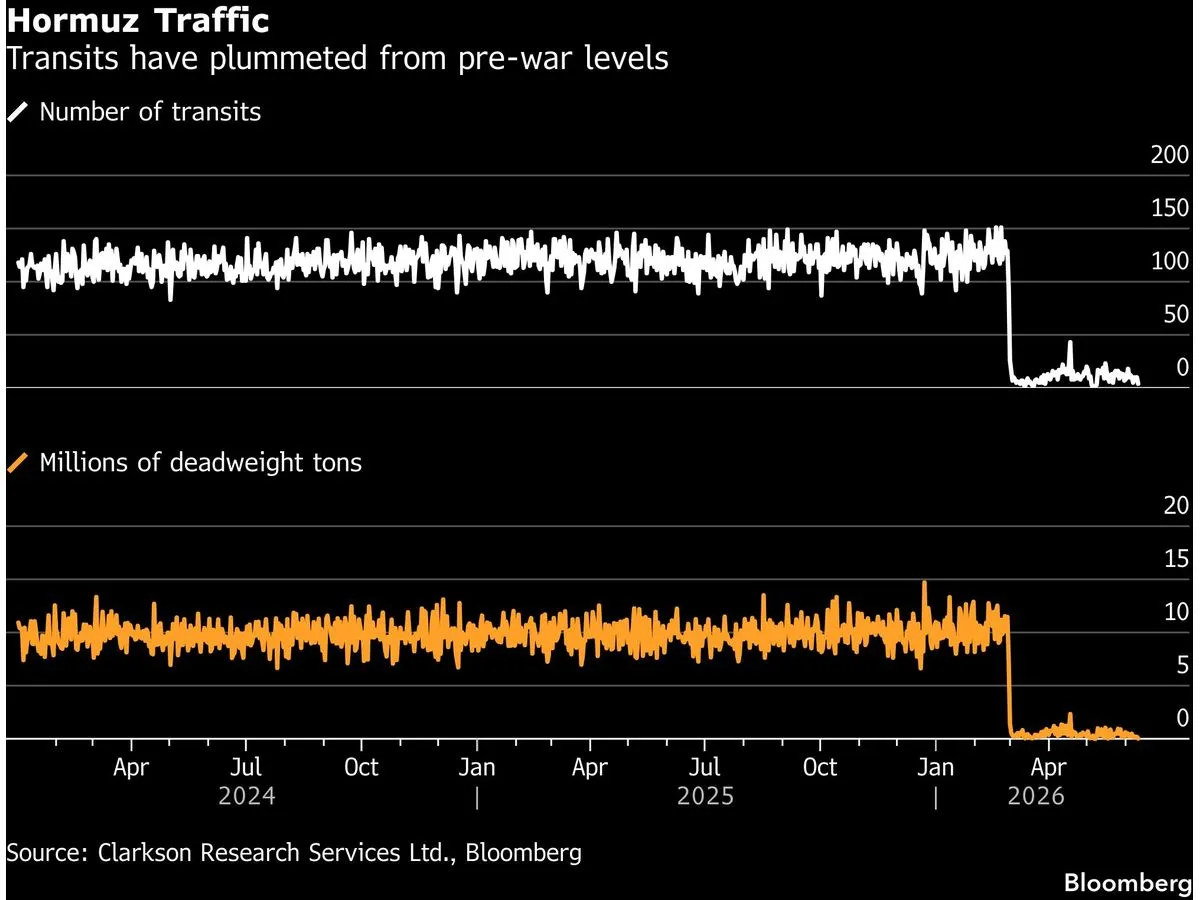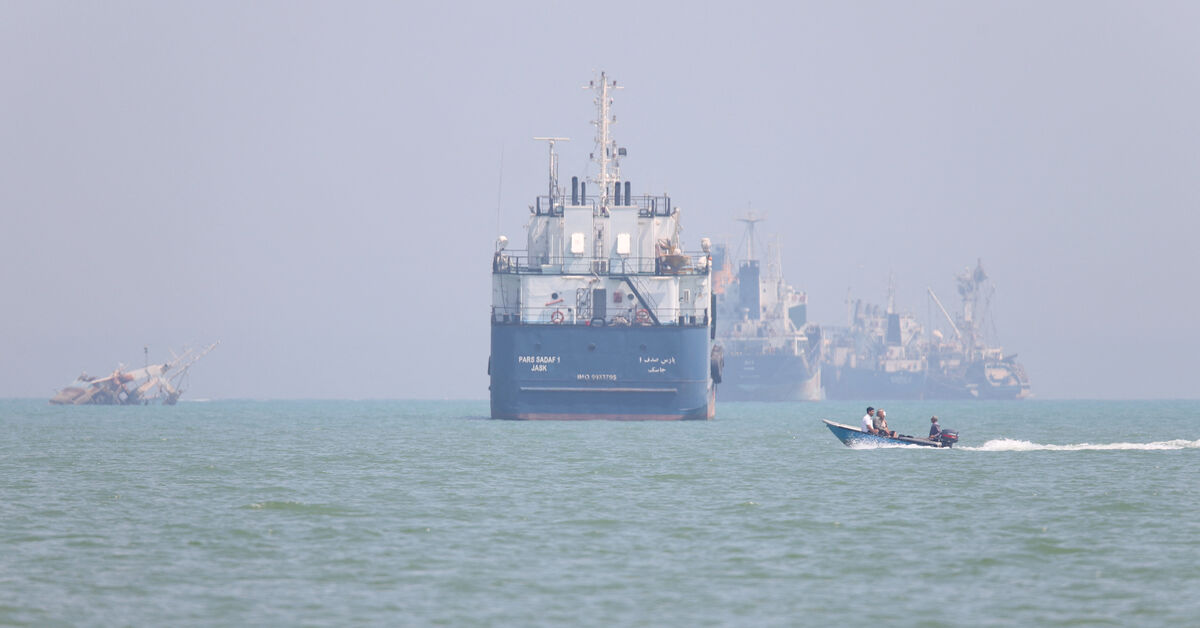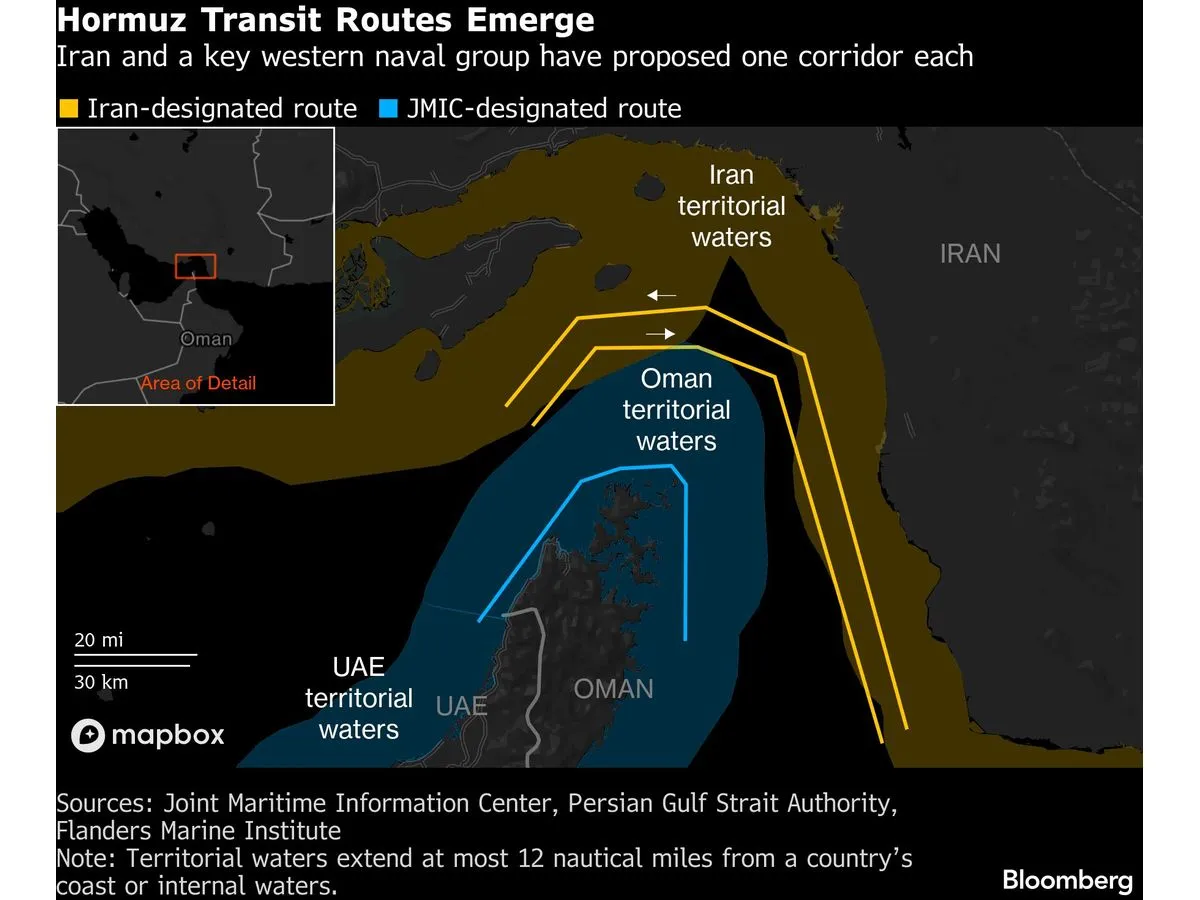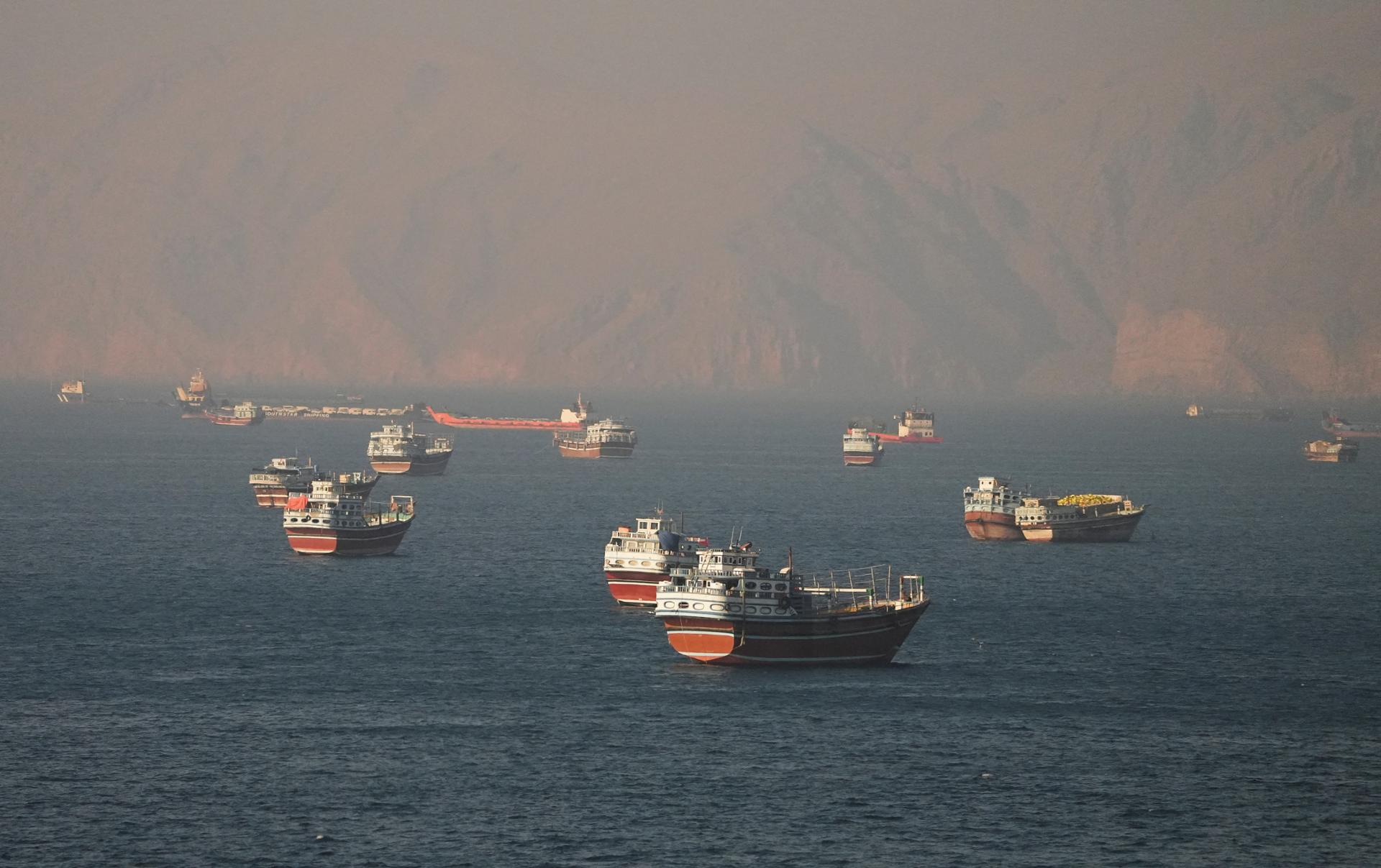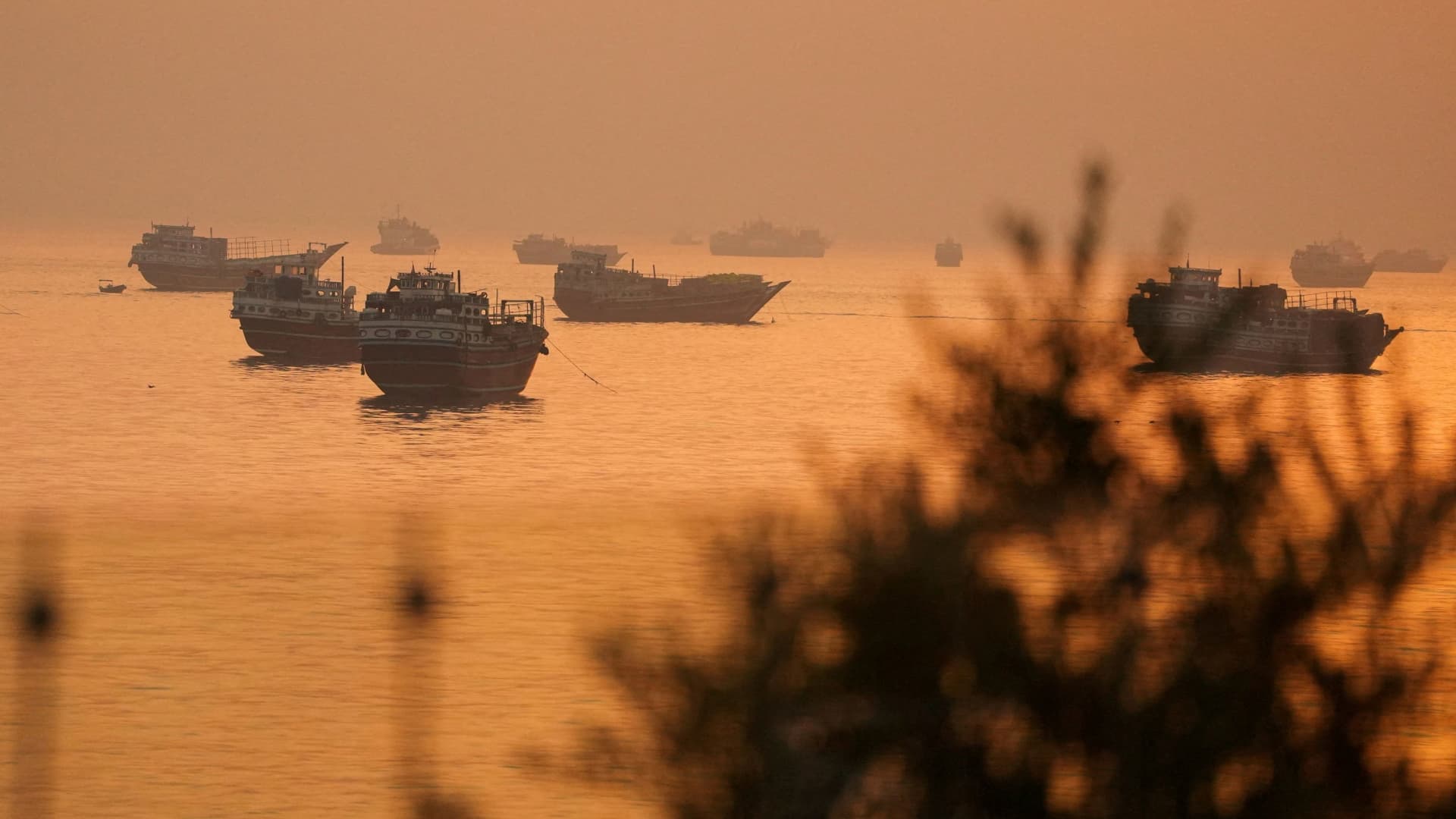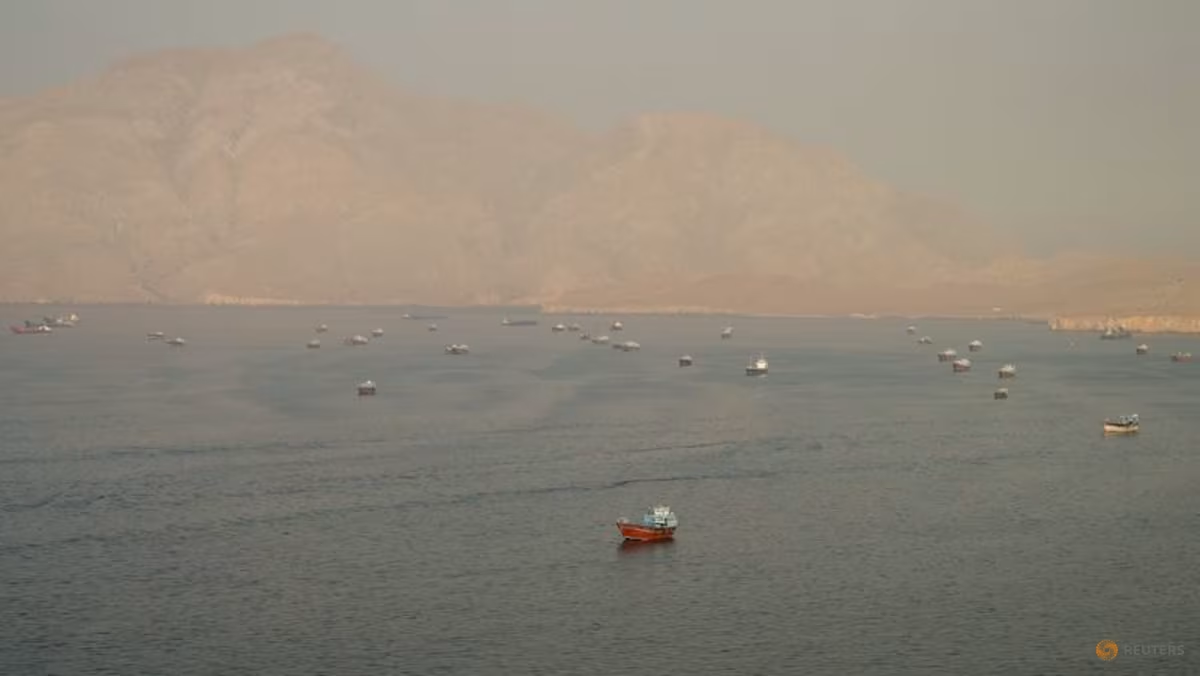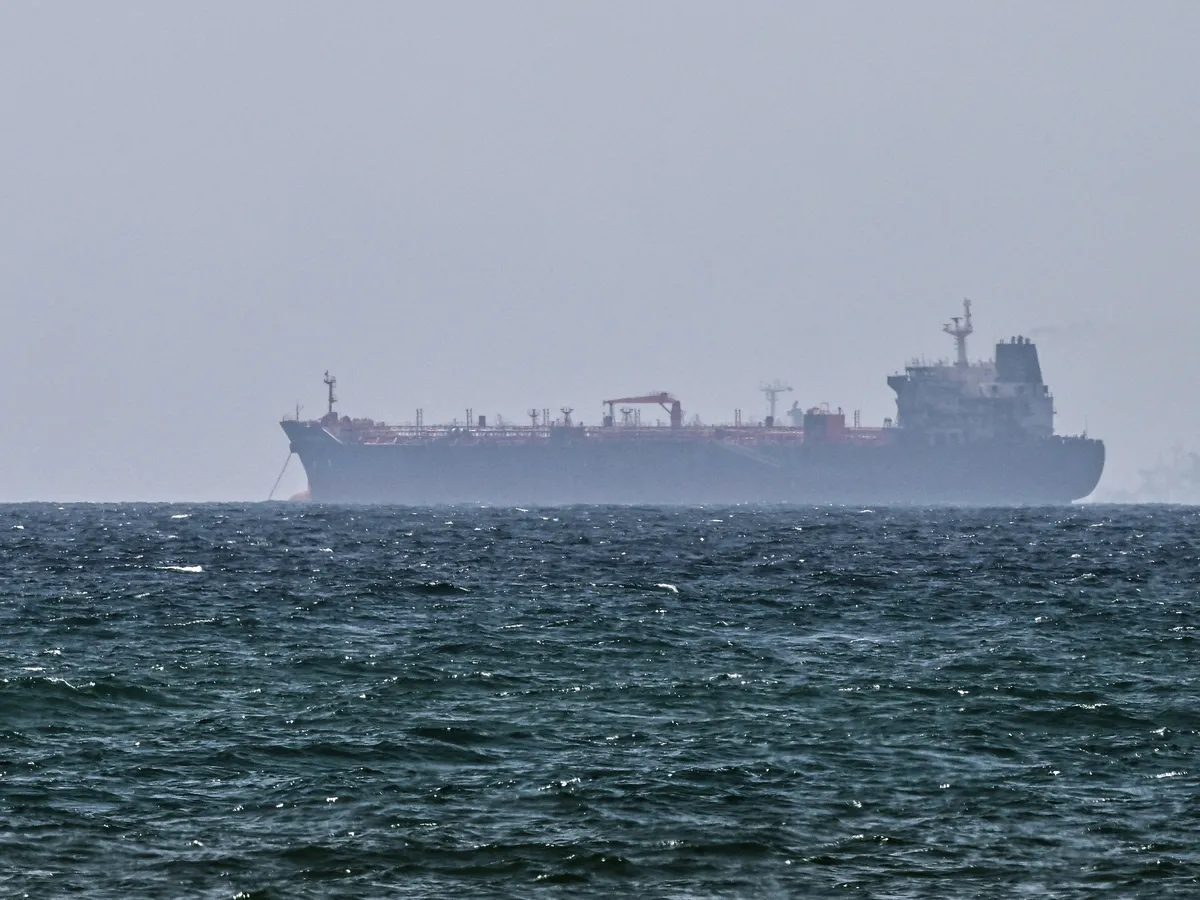
Skip to Content News Archives Economy Energy Oil & Gas Renewables Electric Vehicles Mining Commodities Agriculture Real Estate Mortgages Mortgage Rates Finance Banking Insurance Fintech Cryptocurrency Work Wealth Smart Money Wealth Management Investor Personal Finance Family Finance Retirement Taxes High Net Worth FP Comment Executive Women Puzzmo Newsletters Financial Times Business Essentials More Innovation Information Technology FP500 Podcasts Small Business Lives Told Tails Told Shopping Financial Post Store Obituaries Place a Notice Advertising Advertising With Us Advertising Solutions Postmedia Ad Manager Sponsorship Requests Classifieds Place a Classifieds ad Working Profile Settings My Subscriptions Saved Articles My Offers Newsletters Customer Service FAQ News Economy Energy Mining Real Estate Finance Work Wealth Investor FP Comment Executive Women Puzzmo Newsletters Financial Times Business Essentials HomeNewsEconomyShipowners seek details on Hormuz deal before resuming transitsThe strait’s narrow width raises the risks of vessels colliding if they begin rushing for the exitAuthor of the article:Last updated 1 hour ago You can save this article by registering for free here. Or sign-in if you have an account.In theory, even a temporary peace deal should release millions of barrels of oil that have been trapped for months in the Persian Gulf. Photo by AFP via Getty ImagesA United States-Iran deal intended to reopen the Strait of Hormuz within days has been met with caution by shipowners and traders, with many saying they would need more details in order to assess whether safe transits are possible after months of false starts.Subscribe now to read the latest news in your city and across Canada.Exclusive articles from Barbara Shecter, Joe O'Connor, Gabriel Friedman, and others.Daily content from Financial Times, the world's leading global business publication.Unlimited online access to read articles from Financial Post, National Post and 15 news sites across Canada with one account.National Post ePaper, an electronic replica of the print edition to view on any device, share and comment on.Daily puzzles, including the New York Times Crossword.Subscribe now to read the latest news in your city and across Canada.Exclusive articles from Barbara Shecter, Joe O'Connor, Gabriel Friedman and others.Daily content from Financial Times, the world's leading global business publication.Unlimited online access to read articles from Financial Post, National Post and 15 news sites across Canada with one account.National Post ePaper, an electronic replica of the print edition to view on any device, share and comment on.Daily puzzles, including the New York Times Crossword.Create an account or sign in to continue with your reading experience.Access articles from across Canada with one account.Share your thoughts and join the conversation in the comments.Enjoy additional articles per month.Get email updates from your favourite authors.Create an account or sign in to continue with your reading experience.Access articles from across Canada with one accountShare your thoughts and join the conversation in the commentsEnjoy additional articles per monthGet email updates from your favourite authorsSign In or Create an AccountorA vital conduit for global oil and gas, Hormuz has been at the heart of the conflict from the first days of strikes on Iran, and the urgent need to resume traffic has been a vital theme in months of on-off peace discussions. The disruption has upended the global energy trade, all but cutting off some of the world’s top producers and forcing major players to resort to “dark” transits.News of a long-awaited agreement between the U.S. and Iran and the prospect of ending a double blockade drove Brent oil futures down almost five per cent. But those ferrying crude and gas around the world are still questioning what exactly a reopening — which U.S. President Donald Trump has said will come on Friday — could mean in practice.Get the latest headlines, breaking news and columns.By signing up you consent to receive the above newsletter from Postmedia Network Inc.A welcome email is on its way. If you don't see it, please check your junk folder.The next issue of Top Stories will soon be in your inbox.We encountered an issue signing you up. Please try againIran’s semi-official Fars News Agency said transits will be free for 60 days, after which Tehran will start charging. Future administration of “navigation services” in the strait will be determined by Iran and Oman, it reported. BIMCO, the world’s top trade group for shipowners, cautioned that key details still need clarification before transit can be considered safe.“From the bridge and the engine room where we’re sitting, right now it looks very different to what the headlines may say,” said Angad Banga, chief executive of maritime conglomerate The Caravel Group, which owns Fleet Management Limited, one of the world’s largest ship management companies. It presently has several crews trapped in the Persian Gulf. “We’ve seen positive signals before, and I think ultimately what matters is what holds.”Major Japanese shipping companies, among the first ones to respond to the deal, cautioned that safe navigation would only be possible after details are finalized. Mitsui OSK Lines said close coordination with governments and insurance firms would be essential before it could send ships through the strait again, while Nippon Yusen KK said a normalization of traffic hinges on what’s being laid out in the agreement.There was little activity in the strait in the hours after the news, with the exception of one liquefied natural gas tanker, Disha, testing the waters as it heads into the eastern arm of Hormuz, toward the Gulf of Oman.“Shipowners are on a risk spectrum — the Japanese, Koreans and Chinese are less open to high risk, while the Greeks have a different appetite — so we may see some people gearing up,” said Anoop Singh, global head of shipping research at Oil Brokerage Ltd. “But by and large the rest of the market is still seeking more details and assurance before proceeding.”Traffic through the strait has slowed dramatically since U.S. and Israeli strikes began at the end of February, sinking to a fraction of a pre-war average of about 135 transits daily. Some oil and gas producers have found workarounds to send tankers through, at times with support from the U.S. or through government-to-government negotiations, but total crossings remain way down.Out of the hundreds of vessels idling in the Persian Gulf, nearly 300 are loaded and waiting to cross at a moment’s notice — with around the same number empty on the other side in the Gulf of Oman, waiting to head back to major export terminals, according to Muyu Xu, a senior crude oil analyst at commodity intelligence firm Kpler. Around 250 are ballasting in the Persian Gulf, primed to also start picking up cargoes for any potential outbound journeys. Photo by Majid Saeedi/Getty Images)That exact count of observed vessels may change as ships that have turned off their transponders restart transmission. Electronic interference that has complicated tracking in the area over the past month should also ease.In theory, even a temporary peace deal should release millions of barrels of oil that have been trapped for months in the Persian Gulf. In practice, there will still be a long list of impediments — including prosaic problems like the need to remove barnacles from ship hulls, and to ensure crews are in position and prepared to sail.For now, though, security, remains the primary concern, as purported deals over the past months have ended with Iranian forces firing at ships or seizing vessels.Fars reported that once the 60 days of free transits are over, Iran will begin charging for safety, navigation, environmental and insurance services.BIMCO, the world’s largest direct-membership shipping trade group, said key details of the agreement still need to be clarified before navigation can be considered safe.“Credible assurances from both sides of the conflict must be given before traffic can resume fully to pre-conflict levels,” Jakob Larsen, the organization’s chief safety and security officer, said in a statement. He added that mine clearance remained a critical issue and that the large number of vessels trapped in the Gulf meant departures would need to be carefully coordinated.Brett Erickson, a managing principal at Obsidian Risk Advisors, said security is front of mind for all ships and companies operating in the area.“The maritime industry understands that. Captains understand it. Crews understand it,” he said. “They know that a single miscalculation, a single strike, or a single political decision can inject new friction into the situation and once again place their lives at risk.”Managing a vastly increased flow of traffic through the waterway will be another headache, even once other worries ease.The strait’s narrow width — only 24 miles (39 kilometres) wide at its tightest point, with shipping lanes in each direction merely two miles wide — raises the risks of vessels colliding if they begin rushing for the exit. The picture is complicated by the fact that electronic interference and irregular use of transponders may misrepresent true locations.“During extreme traffic congestion periods, collision and grounding risks may materially increase. Both dimensions must be appropriately addressed in the pre-transit planning,” a guidance document jointly published by major industry groups such as BIMCO, Intertanko and the International Chamber of Shipping last month.“Do not rely on AIS,” it added, referring to the automatic identification system that ships often use for automatic tracking of vessels’ locations.—With assistance from Alaric Nightingale, Serene Cheong, Yasufumi Saito, Koh Yoshida, Yusuke Maekawa, Dana Khraiche and Eltaf Najafizada. Join the Conversation This website uses cookies to personalize your content (including ads), and allows us to analyze our traffic. Read more about cookies here. By continuing to use our site, you agree to our Terms of Use and Privacy Policy.
Shipowners seek details on Hormuz deal before resuming transits
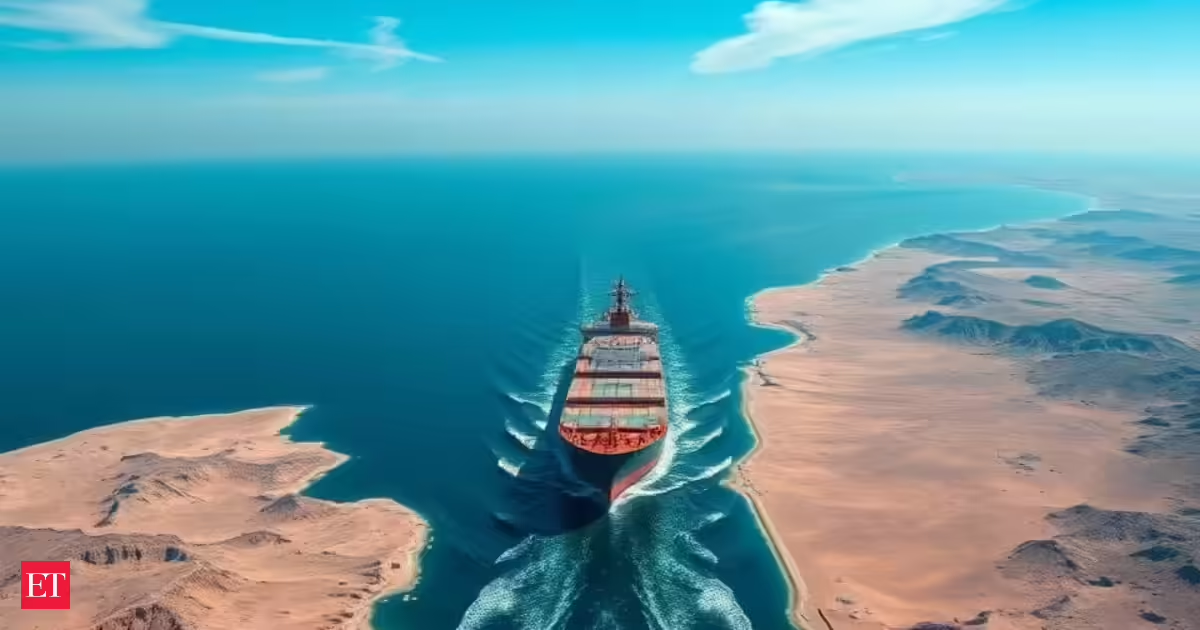
A United States-Iran deal intended to reopen the Strait of Hormuz within days has been met with caution by shipowners and traders. Read here
TL;DRAI
US-Iran Hormuz deal to open within days; shipowners request safety clarity before resuming transits after months of disruption. Supply chain recovery signals geopolitical shift affecting infrastructure costs and IT budget cycles for globally distributed operations.
1,575 words~7 min read