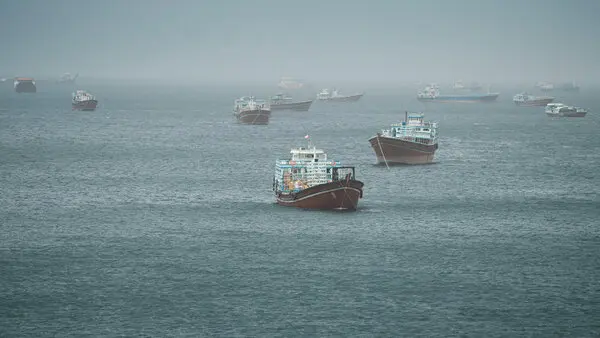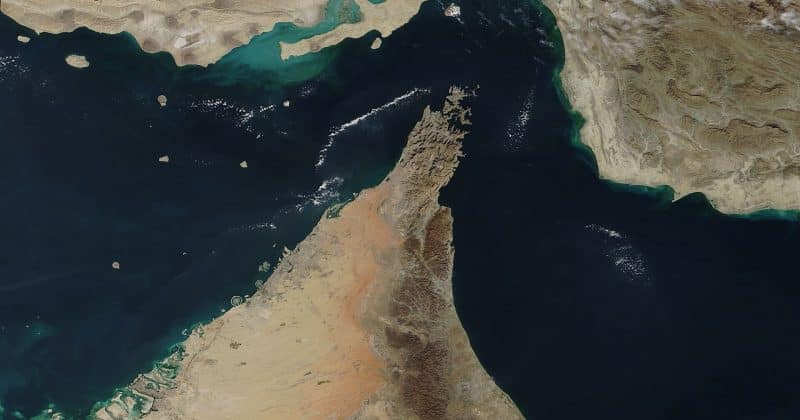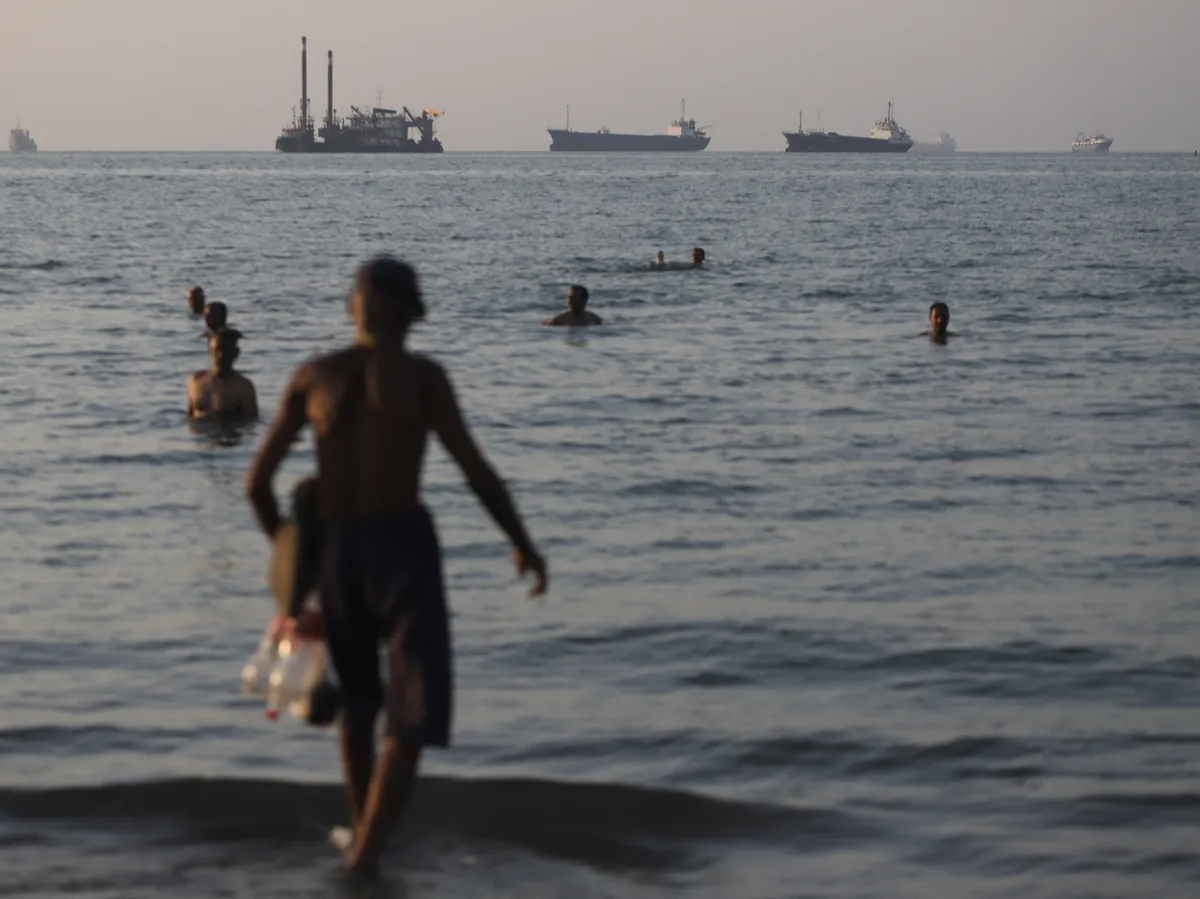
Skip to Content News Archives Economy Energy Oil & Gas Renewables Electric Vehicles Mining Commodities Agriculture Real Estate Mortgages Mortgage Rates Finance Banking Insurance Fintech Cryptocurrency Work Wealth Smart Money Wealth Management Investor Personal Finance Family Finance Retirement Taxes High Net Worth FP Comment Executive Women Puzzmo Newsletters Financial Times Business Essentials More Innovation Information Technology FP500 Podcasts Small Business Lives Told Tails Told Shopping Financial Post Store Obituaries Place a Notice Advertising Advertising With Us Advertising Solutions Postmedia Ad Manager Sponsorship Requests Classifieds Place a Classifieds ad Working Profile Settings My Subscriptions Saved Articles My Offers Newsletters Customer Service FAQ News Economy Energy Mining Real Estate Finance Work Wealth Investor FP Comment Executive Women Puzzmo Newsletters Financial Times Business Essentials HomeCommoditiesEnergyOil & GasU.S. and Iran say they’ve agreed deal to reopen HormuzThe 14-point plan should see the U.S. and Iran extend their ceasefire agreed to on April 8 by two monthsAuthor of the article: You can save this article by registering for free here. Or sign-in if you have an account.In this picture obtained from Iran's ISNA news agency on June 8, 2026, residents take a dip as cargo and commercial vessels lie at anchor in the Strait of Hormuz off Bandar Abbas. Photo by Amirhossein KHORGOOEI / ISNA / AFP via Getty ImagesThe U.S. and Iran said they reached an interim peace agreement to reopen the Strait of Hormuz and move further toward ending a war that’s killed thousands of people across the Middle East.Subscribe now to read the latest news in your city and across Canada.Exclusive articles from Barbara Shecter, Joe O'Connor, Gabriel Friedman, and others.Daily content from Financial Times, the world's leading global business publication.Unlimited online access to read articles from Financial Post, National Post and 15 news sites across Canada with one account.National Post ePaper, an electronic replica of the print edition to view on any device, share and comment on.Daily puzzles, including the New York Times Crossword.Subscribe now to read the latest news in your city and across Canada.Exclusive articles from Barbara Shecter, Joe O'Connor, Gabriel Friedman and others.Daily content from Financial Times, the world's leading global business publication.Unlimited online access to read articles from Financial Post, National Post and 15 news sites across Canada with one account.National Post ePaper, an electronic replica of the print edition to view on any device, share and comment on.Daily puzzles, including the New York Times Crossword.Create an account or sign in to continue with your reading experience.Access articles from across Canada with one account.Share your thoughts and join the conversation in the comments.Enjoy additional articles per month.Get email updates from your favourite authors.Create an account or sign in to continue with your reading experience.Access articles from across Canada with one accountShare your thoughts and join the conversation in the commentsEnjoy additional articles per monthGet email updates from your favourite authorsSign In or Create an AccountorThe development caused equities and bonds to jump at the start of the trading week, while oil and natural gas prices — which soared with the strait’s closure — slumped.U.S. President Donald Trump, under pressure as rising fuel costs hit him and his Republican Party ahead of midterm elections in November, hailed it as a “great deal that will bring peace and security to the whole region.” He pushed Iran for the agreement to be announced on Sunday, this 80th birthday.Yet for all the relief in markets and among Middle Eastern states that got caught up in the conflict, Washington and Tehran still need to decide on the final steps related to what they’re calling a memorandum, set to be signed in Switzerland on Friday. Neither side has released a text.Israel, which started the war alongside the U.S. by bombing Iran, isn’t in favour of the agreement.Qatar, the main mediator along with Pakistan, will host U.S. and Iranian delegations this week to hammer out the details of the signing and plan for a new round of negotiations over Iran’s nuclear program, according to several people familiar with the matter.The 14-point plan should see the U.S. and Iran extend their ceasefire agreed to on April 8 by two months, and begin the new negotiations about restricting Tehran’s enrichment of uranium for around 15 years. They can extend the truce further if they can’t reach a so-called “final agreement” in that timeframe, which many analysts expect will be the case given how complex and technical the discussions will need to be.Immediately once the MOU is signed, Iran is meant to reopen the Hormuz strait and the U.S. to lift its blockade of Iranian ports.Several sticking points have caused the talks to drag on, with the sides continuing to exchange fire and the ceasefire close to breaking down over the past week. The points of contention have included whether the U.S. will agree to unfreeze tens of billions of dollars of frozen Iranian funds held in places such as Qatar, and whether Tehran will relinquish its stockpiles of high-enriched uranium.Israel has not been directly involved in the negotiations and there’s consternation in the country that the deal concedes too much to the Islamic Republic without curbing its development of ballistic missiles. Israelis also fear the accord will force Prime Minister Benjamin Netanyahu’s government to ease its operations against the Iran-backed Hezbollah militant group in Lebanon.Trump told Axios Israeli strikes on Lebanon’s capital of Beirut around midday on Sunday — a response to Hezbollah firing projectiles into northern Israel — had delayed the signing. He claimed he swore at Netanyahu in a call soon after, telling the Israeli leader he had “no judgment” and had almost scuppered the deal.Israel insists it won’t be curtailed in fighting Hezbollah and stopping it launching attacks on its territory.Oil traders will watch closely on Friday whether the signing actually leads to ships having free passage through Hormuz, which Iran effectively closed by firing on vessels when the war erupted on Feb. 28.The interim deal specifies Iran will allow vessels to transit free of charge for only 60 days, Fars news agency reported, citing a person familiar with the accord. Iran plans to generate revenue by charging for safety, navigation, environmental and insurance services after the 60-day period, according to the Fars story.Gulf states such as Saudi Arabia and the United Arab Emirates, as well as Western nations, have balked at the idea of Iran charging any fees for what most of the world views as international waters.The MOU may refer to the chokepoint — through which one fifth of the world’s oil and liquefied natural gas supplies normally flow — needing to be demined as a first step. The U.K .and France are set to lead a multilateral mine-clearing mission if it’s needed.Oil prices fell more than five per cent on Monday. Brent futures traded below US$83 a barrel, down from a high of around US$125 in late April. Since then traders have became more convinced there would be a deal rather than a reversion to all out war.Oil is still up more than 35 per cent since the start of the year and the U.S. and other Western nations will need to rebuild their emergency stockpiles once the strait is open, having drawn them down at a record pace to try to cap prices.U.S. government bond yields also dropped, with investors optimistic the waterway’s opening will ease global inflationary pressures and perhaps ease pressure on the U.S. Federal Reserve to raise interest rates.Nearly 600 vessels are still stuck in the Persian Gulf awaiting departure through the strait, while hundreds more are waiting on the other side, according to data intelligence firm Kpler.The announcement of an agreement came first from Pakistani Prime Minister Shehbaz Sharif, and was followed by Trump and Iranian state media.Iran depicted the deal as a capitulation by the U.S.“The Islamic Republic of Iran succeeded in thwarting the enemy in achieving its strategic goals,” Deputy Foreign Minister Kazem Gharibabadi said. “The enemy was ultimately defeated and forced to request a ceasefire and negotiations. Now, all of Iran’s main positions and demands have been taken into account in the text of the understanding.”Even as he celebrated the deal, Trump told the New York Times if an agreement on Iran’s nuclear program isn’t reached, he could restart military attacks.Both sides were already casting the deal in different lights minutes after it was announced — underscoring how difficult it may be to resolve the outstanding issues. Iran said ships passing through the strait would be regulated by Iran and Oman, suggesting Tehran would seek to retain some control over the waterway.Iran said during the 60 days of negotiations it would seek “the removal of all primary and secondary sanctions.” Any such move may require approval from the U.S. Congress, which imposed some of the most punishing sanctions. It would likely provoke an outcry from Iran hawks who worry Trump will give up leverage over a country that’s been seen as an enemy of Washington since just after its Islamic revolution in 1979.A senior U.S. official who spoke to reporters on Friday said Iran would earn economic rewards each time it met a set of demands. The White House has stressed Iran won’t get any money on the signing of the MOU.The U.S. and Iran remain deeply distrustful of each other, and grave questions persist about their ability to reach a broader accord.With assistance from Dana Khraiche Join the Conversation This website uses cookies to personalize your content (including ads), and allows us to analyze our traffic. Read more about cookies here. By continuing to use our site, you agree to our Terms of Use and Privacy Policy.
U.S. and Iran say they’ve agreed deal to reopen Hormuz
The U.S. and Iran said they reached a peace agreement to reopen the Strait of Hormuz and move further toward ending the war. Read more.
1,596 words~7 min read