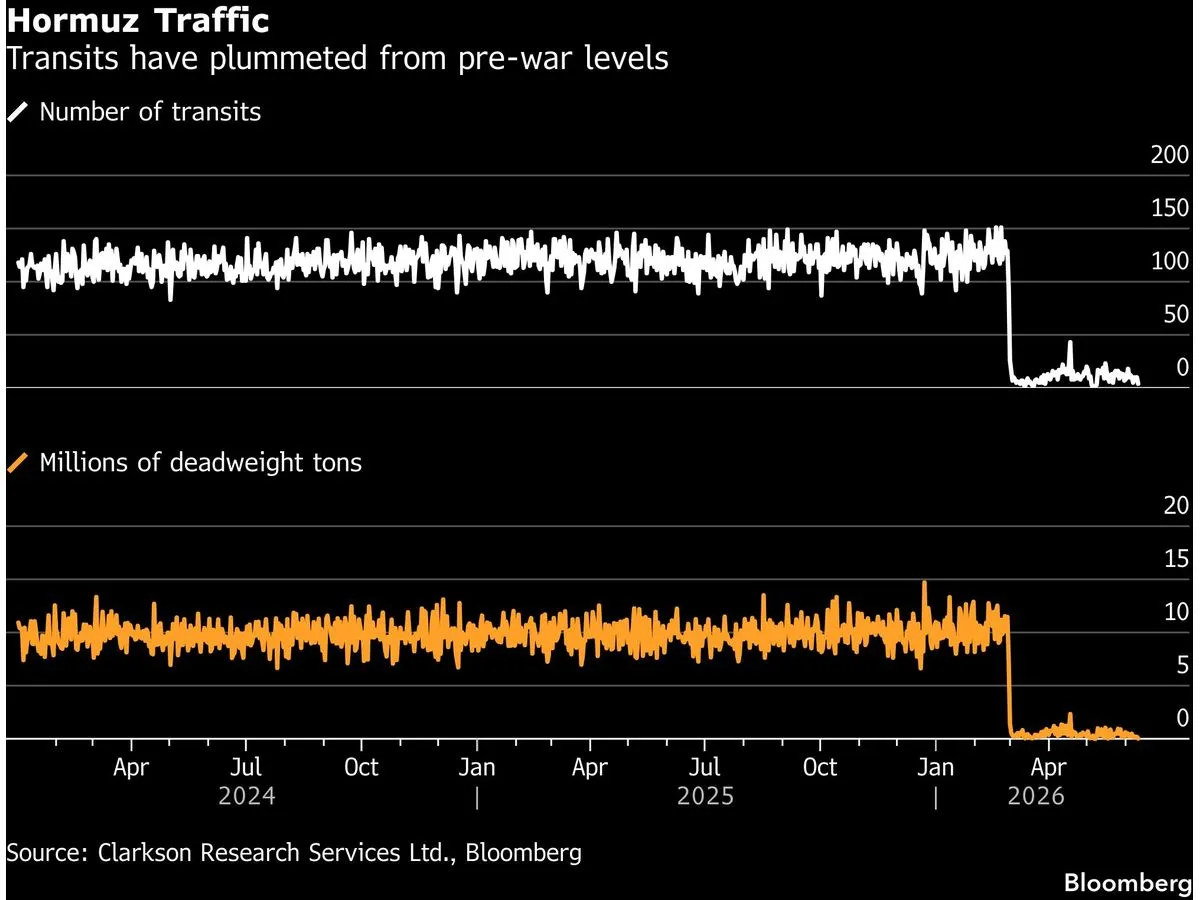
Skip to Content News Archives Economy Energy Oil & Gas Renewables Electric Vehicles Mining Commodities Agriculture Real Estate Mortgages Mortgage Rates Finance Banking Insurance Fintech Cryptocurrency Work Wealth Smart Money Wealth Management Investor Personal Finance Family Finance Retirement Taxes High Net Worth FP Comment Executive Women Puzzmo Newsletters Financial Times Business Essentials More Innovation Information Technology FP500 Podcasts Small Business Lives Told Tails Told Shopping Financial Post Store Obituaries Place a Notice Advertising Advertising With Us Advertising Solutions Postmedia Ad Manager Sponsorship Requests Classifieds Place a Classifieds ad Working Profile Settings My Subscriptions Saved Articles My Offers Newsletters Customer Service FAQ News Economy Energy Mining Real Estate Finance Work Wealth Investor FP Comment Executive Women Puzzmo Newsletters Financial Times Business Essentials HomePMN BusinessShipowners Seek Clarity on Hormuz Deal as 600 Vessels Eye ExitA deal that could reopen the Strait of Hormuz within days has been met with caution among shipowners and traders, with many saying they would wait for more details in order to assess whether safe transits are possible after months of false starts.Author of the article: You can save this article by registering for free here. Or sign-in if you have an account.sndojw6w)wz2qfbdybmn20x1_media_dl_1.png Clarkson Research Services Ltd.,(Bloomberg) — A deal that could reopen the Strait of Hormuz within days has been met with caution among shipowners and traders, with many saying they would wait for more details in order to assess whether safe transits are possible after months of false starts.Subscribe now to read the latest news in your city and across Canada.Exclusive articles from Barbara Shecter, Joe O'Connor, Gabriel Friedman, and others.Daily content from Financial Times, the world's leading global business publication.Unlimited online access to read articles from Financial Post, National Post and 15 news sites across Canada with one account.National Post ePaper, an electronic replica of the print edition to view on any device, share and comment on.Daily puzzles, including the New York Times Crossword.Subscribe now to read the latest news in your city and across Canada.Exclusive articles from Barbara Shecter, Joe O'Connor, Gabriel Friedman and others.Daily content from Financial Times, the world's leading global business publication.Unlimited online access to read articles from Financial Post, National Post and 15 news sites across Canada with one account.National Post ePaper, an electronic replica of the print edition to view on any device, share and comment on.Daily puzzles, including the New York Times Crossword.Create an account or sign in to continue with your reading experience.Access articles from across Canada with one account.Share your thoughts and join the conversation in the comments.Enjoy additional articles per month.Get email updates from your favourite authors.Create an account or sign in to continue with your reading experience.Access articles from across Canada with one accountShare your thoughts and join the conversation in the commentsEnjoy additional articles per monthGet email updates from your favourite authorsSign In or Create an AccountorThe waterway — a vital conduit for global oil and gas — has been at the heart of the conflict from the start, and the urgent need to resume traffic has been a vital theme in peace discussions. Iran’s grip on the strait, combined with a US blockade, has created an unprecedented disruption to the global energy trade, all but cutting off some of the world’s largest producers and forcing even major players to resort to “dark” transits.Even so, a temporary solution announced by the US and Iran — and a declaration from US President Donald Trump that the strait will reopen on Friday, when the agreement is signed — has left the industry questioning what that will mean in practice.Get the latest headlines, breaking news and columns.By signing up you consent to receive the above newsletter from Postmedia Network Inc.A welcome email is on its way. If you don't see it, please check your junk folder.The next issue of Top Stories will soon be in your inbox.We encountered an issue signing you up. Please try againWith limited information so far, there was little activity in the strait in the early hours of Monday as the news rippled out, with the exception of one liquefied natural gas tanker, Disha, testing the waters as it heads toward Hormuz.Nearly 600 vessels are still stuck in the Persian Gulf and primed to exit, while hundreds are also waiting empty on the other side, according to Kpler. While in theory this should unleash millions of barrels of oil, there will still be practical impediments, including prosaic problems like the need to remove barnacles from ship hulls, and competition to actually transit a narrow corridor.The exact count of observed vessels may change as more ships that have turned off their transponders are added to the tally.Security also remains an open question, as purported deals over the past months have ended with Iranian forces firing at ships or seizing vessels. There is then the uncertainty over mines in the strait, making routes and insurance cover crucial.Brett Erickson, a managing principal at Obsidian Risk Advisors, said security was front of mind for all shipowners attempting to understand the situation on the ground.“The maritime industry understands that. Captains understand it. Crews understand it,” he said. “They know that a single miscalculation, a single strike, or a single political decision can inject new friction into the situation and once again place their lives at risk.”Some oil producers have gradually found workarounds to send tankers through, at times with support from the US, but crossings have remained at a fraction of pre-war levels, when an average of 135 tankers crossed daily.Laden vessels will likely be the first to get ready to move out, while empty ships already in the Gulf may start to load cargoes over the coming days. There are currently more than 300 empty vessels waiting in the Gulf of Oman, many of which could transit Hormuz to enter the Persian Gulf once access is restored.Tankers make up the bulk of ships currently stuck inside the Persian Gulf, the data from data intelligence firm Kpler show, a reflection of the highly valuable oil cargoes they carry that have become a focus during the war. Some 98 crude tankers are still stuck inside, while carriers lifting dirty-petroleum products number 88. More risk-tolerant shipowners will be the first to move, said Muyu Xu, a senior crude oil analyst at Kpler.“We may see vessels rushing out once Iran opens the gate,” Xu said. “Although it remains to be seen whether Tehran will impose any control measures.” Join the Conversation This website uses cookies to personalize your content (including ads), and allows us to analyze our traffic. Read more about cookies here. By continuing to use our site, you agree to our Terms of Use and Privacy Policy.
Shipowners Seek Clarity on Hormuz Deal as 600 Vessels Eye Exit
A deal that could reopen the Strait of Hormuz within days has been met with caution among shipowners and traders, with many saying they would wait for more details …
1,109 words~5 min read