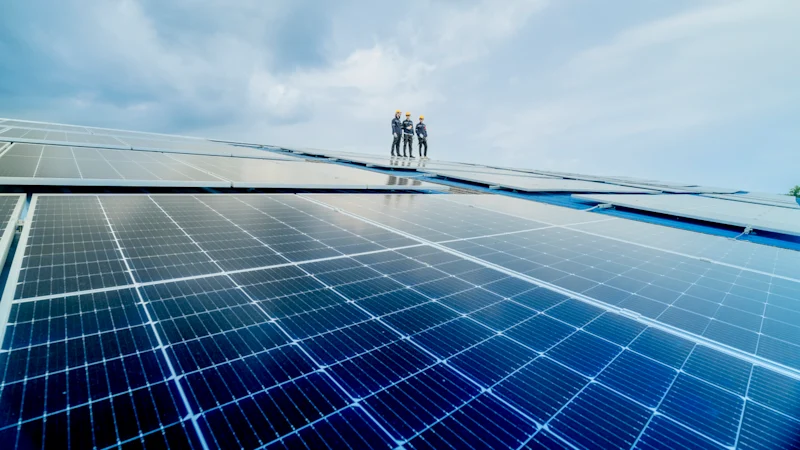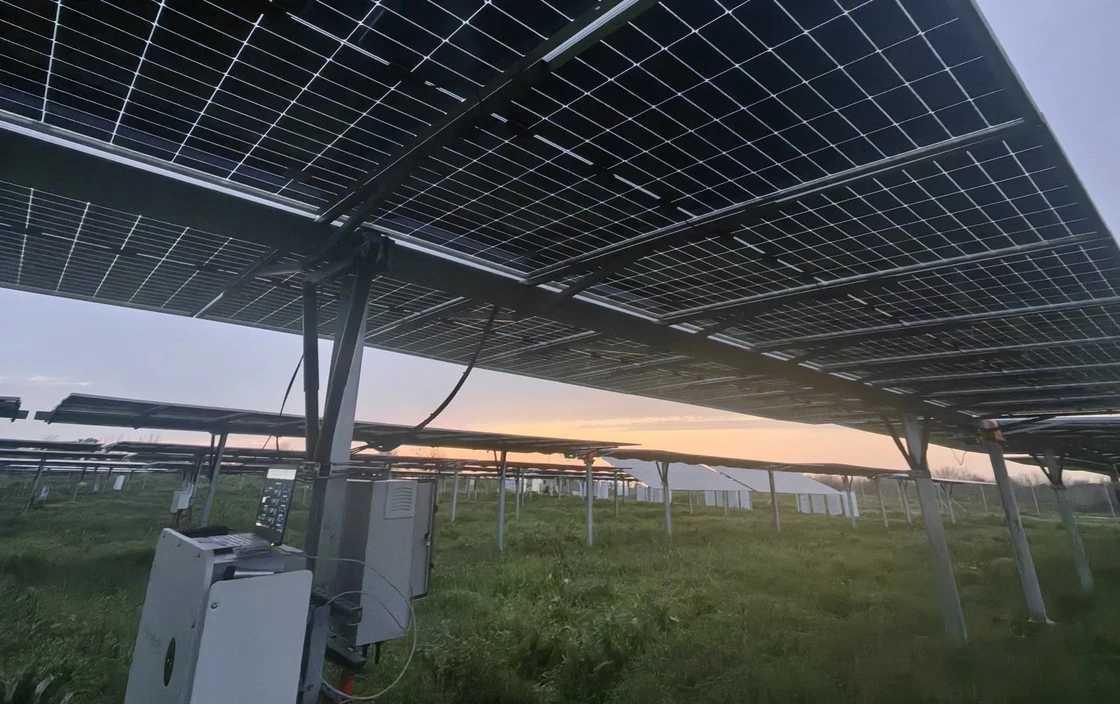
For many organisations, the challenge is no longer simply how to buy energy more cheaply, but how to manage it strategically.Brendan Weinert, AGL’s general manager of sustainable business energy solutions, says the role of energy within Australian businesses has fundamentally changed.“What’s shifted is the combination of volatility, electrification and accountability,” he says.Brendan Weinert, AGL’s general manager of sustainable business energy solutions. “Energy is no longer a predictable operating cost you manage, it directly influences cost certainty, production risk and emissions performance.”He says the implications are particularly visible across manufacturing, where businesses are increasingly reassessing how sites, machinery and infrastructure will interact with evolving energy systems.“For manufacturers, electrification of heat, process equipment and fleets means energy decisions now shape capital planning and infrastructure design, not just operating expenses,” he says.The shift is being felt across a range of sectors.Cold storage operators are reassessing refrigeration systems and peak demand management. Warehousing businesses are evaluating automation and fleet charging requirements. Commercial property owners are rethinking how buildings generate, store and manage power across multiple sites.Most businesses aren’t electrifying their operations overnight. Some are taking a staged approach, looking for ways to improve efficiency, supplement existing systems and create greater certainty around long-term energy costs.Weinert says many businesses are balancing three priorities: price certainty, reliability and sustainability.“The priorities differ depending on the customer,” he says.“Some will prioritise sustainability, while others are focused more heavily on reliability or long-term price certainty, depending on the nature of their business.”He says organisations in hard-to-abate industries may continue using fossil fuels such as natural gas or diesel in some form, while also exploring renewable gas and other lower-emissions options.“What we are seeing is customers looking for solutions around energy efficiency, solar, batteries and fleet electrification, but electrification is still in the early stages for many businesses, and this means taking a staged approach to replacing equipment,” he says.As processes electrify and systems become more interconnected, businesses are also confronting changing energy demand profiles.Weinert says loads are becoming larger and more dynamic as operations integrate new technologies.“We’re seeing peak demand grow, greater sensitivity to peak energy prices and therefore when energy is used, and a stronger need to manage interruption risk,” he says.“That’s why manufacturers are increasingly looking at on-site generation, storage and smarter load management rather than relying solely on grid supply.”Those challenges became increasingly visible for Melbourne-based manufacturer Piber Plastics.The company, which produces plastic packaging products, found rising energy costs were beginning to materially affect margins and long-term planning.“As a manufacturer, energy underpins everything we do – our machinery, our processes, our output,” Piber Plastics business development executive Nisarg Patel says.Piber Plastics business development executive Nisarg Patel. “Rising grid electricity costs began to meaningfully impact our margins, and it became clear that energy needed to be treated as a strategic input, not simply a utility expense.”“Energy costs had become one of our most significant operating expenses, creating pressure on product pricing and limiting our ability to invest in growth areas such as new machinery and increased production capacity,” Patel says.“We needed a solution that offered greater cost control and predictability.”The company partnered with AGL on installing a 351-kilowatt rooftop solar system alongside Piber Plastics’ existing 100-kilowatt system, comprising roughly 800 panels across the site.Under a power purchase arrangement, AGL owns and maintains the system while Piber Plastics pays a fixed rate for the electricity generated.The impact was immediate.“We now generate a significant portion of our own power during production hours, reducing our dependence on the grid and providing greater stability in energy costs,” Patel says.For many organisations, however, implementing new systems is not simply a technical exercise.“The primary concern was avoiding disruption to production,” Patel says.“We operate continuously as many of our customers work on a just-in-time inventory model and therefore we could not afford significant downtime.”The company says implementation needed to occur alongside ongoing operations.“AGL worked around our operational schedule, which made the transition considerably smoother than anticipated,” Patel says.The growing complexity of energy systems is also changing how businesses think about planning and investment.Weinert says many organisations underestimate how interconnected energy, infrastructure and operations have become.“The starting point is understanding where energy is actually consumed across operations today and how that profile will change as equipment electrifies and the business grows,” Weinert says.“That includes load shape, peak demand, reliability requirements and how production may evolve over time.”He says businesses increasingly need to think in longer timeframes.“Electrification isn’t static, it’s something businesses need to plan for over five, 10 or even 15 years,” Weinert says.It means thinking long-term.Rather than replacing entire systems immediately, many businesses are adopting staged approaches designed to balance reliability, operational continuity and long-term flexibility.“A viable pathway can be phased and practical,” Weinert says.“It usually starts with improving visibility and control, then layering in solutions like solar or storage, and scaling as business confidence grows.”He says the focus for businesses is shifting from individual technologies toward co-ordinated energy platforms.“The key is designing systems that support operational energy requirements first,” Weinert says.The broader challenge for organisations is that energy decisions are no longer isolated from wider business strategy.Facilities, fleet management, automation, production systems and infrastructure planning are increasingly connected through energy demand.That is pushing energy further into executive and board-level discussions, alongside growth, risk and investment decisions.Businesses are now weighing not only cost and sustainability targets, but also resilience, operational risk and future flexibility.For businesses with growing energy needs, the ability to secure reliable supply and manage demand over time could be a competitive advantage.Weinert says businesses are increasingly recognising that energy systems must continue evolving alongside operations.“Businesses often underestimate how interconnected energy, operations and infrastructure have become,” he says.“We support customers by helping them plan holistically, from advisory and system design through installation and long-term asset optimisation so energy systems continue to perform as operations evolve.”For Piber Plastics, the benefits are already clear. “The most significant benefit has been cost predictability and the ability to redirect capital,” Patel says.“The PPA model required no upfront outlay, allowing us to continue investing in machinery and capacity.”Looking back, the company believes the shift could have happened earlier.“In hindsight, we would have moved sooner,” Patel says.As Australian businesses navigate a more complex energy landscape, one thing is becoming clearer: energy is increasingly shaping how businesses grow.To find out more, please visit AGL.
Why electrification is becoming a business decision
Energy used to sit quietly in the background of many Australian businesses. It was a procurement task, a cost to manage, negotiate and absorb.
TL;DRAI
Piber Plastics deployed 351-kW solar to offset grid electricity costs eroding manufacturing margins. For tech managers, electrification is infrastructure strategy: 5–15-year capital planning now requires storage, smart load management, grid independence.
1,045 words~5 min read