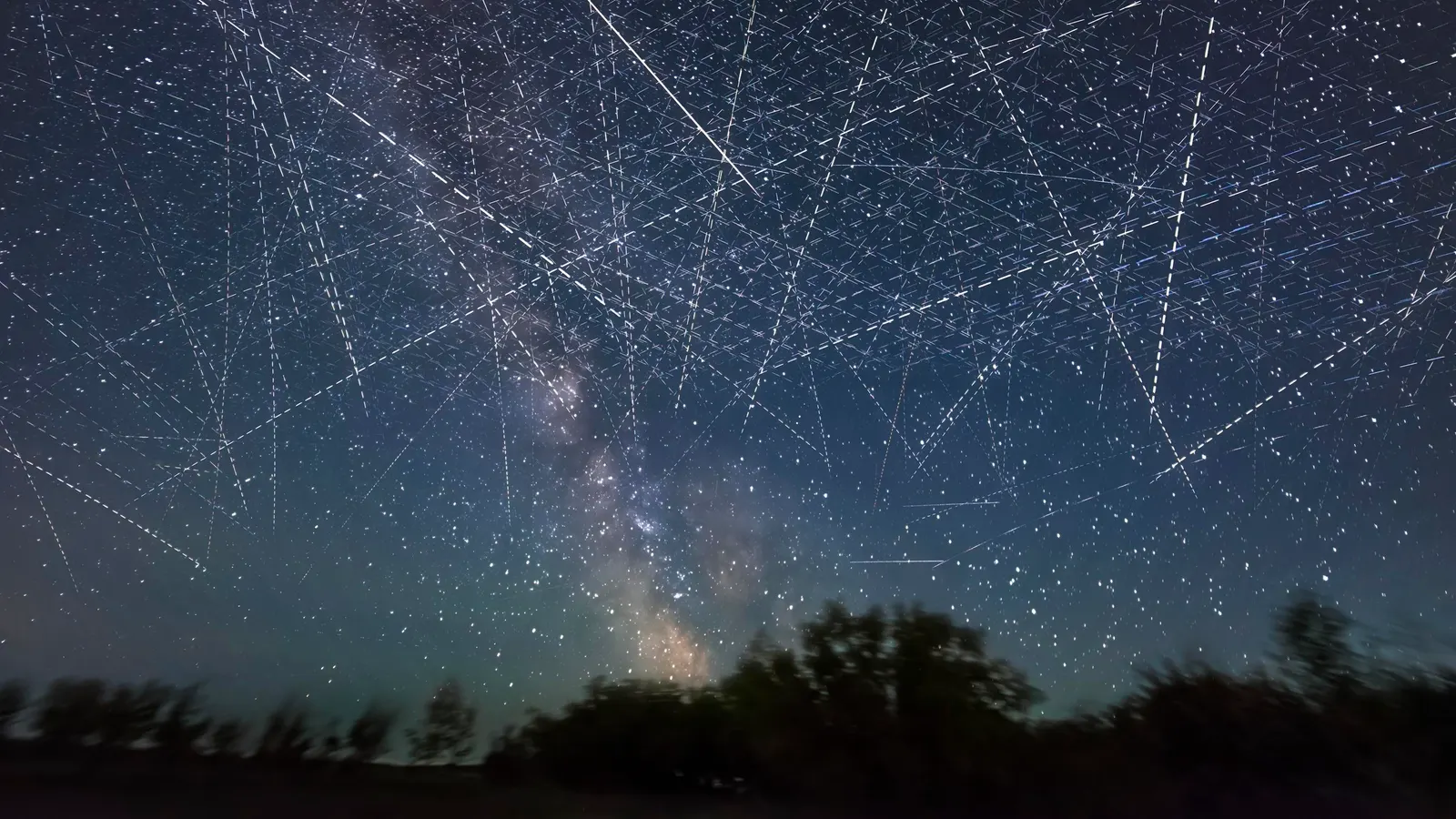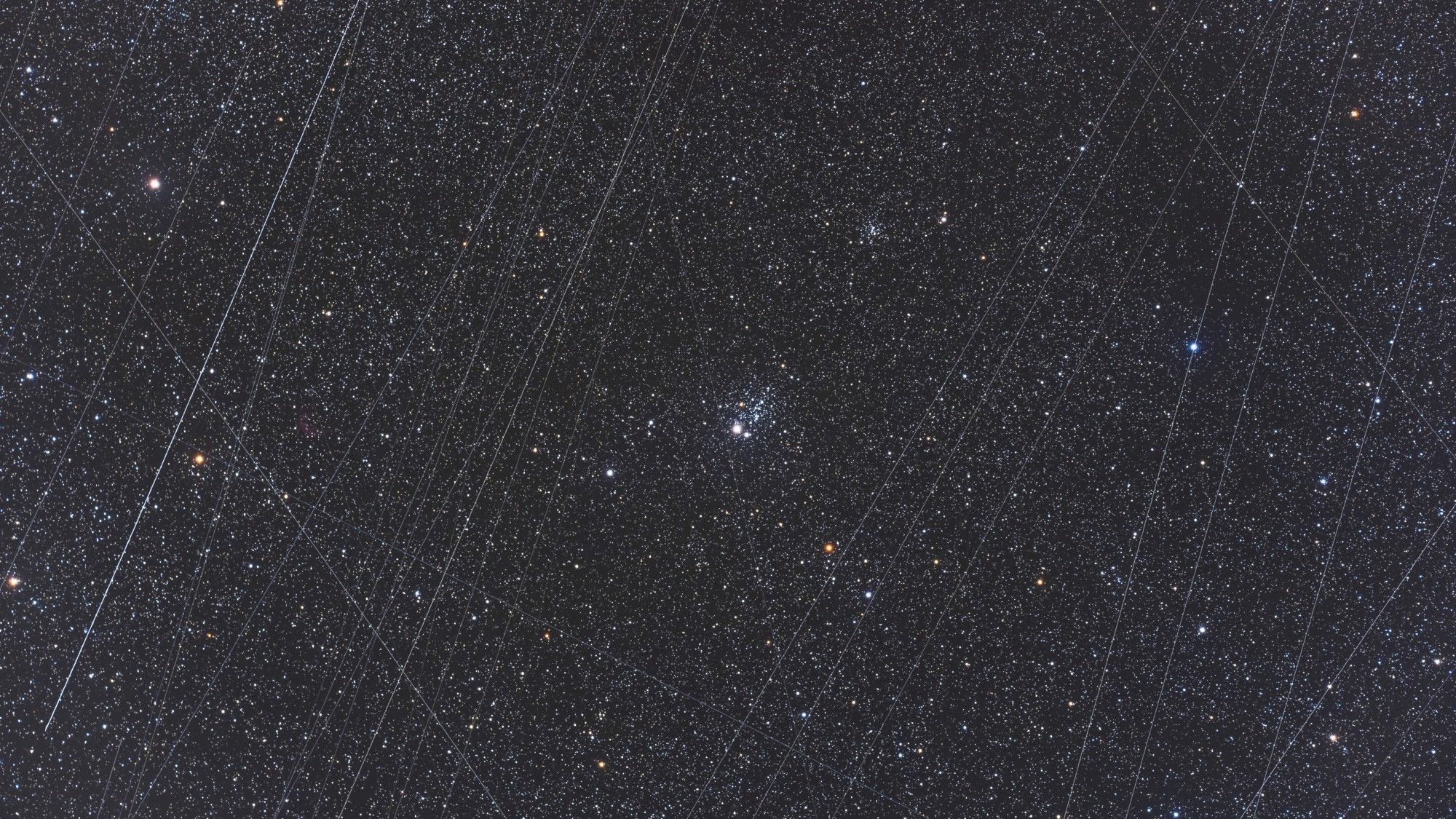
The starry night sky has always anchored humanity’s sense of place in a vast universe. It’s a map guiding travelers, a calendar for migrations and harvests, a wellspring of stories. But a surge of commercial satellite launches into the upper fringes of Earth’s atmosphere threatens the relationship between people and the celestial commons by crowding the night sky and polluting the atmosphere, scientists warn.
Research shows potential impacts on Earth’s climate, including a 2025 paper led by a NASA scientist that found accumulations of metal particles from satellites disintegrating in the upper atmosphere can alter temperatures and wind flows, with ripple effects on surface climate patterns.
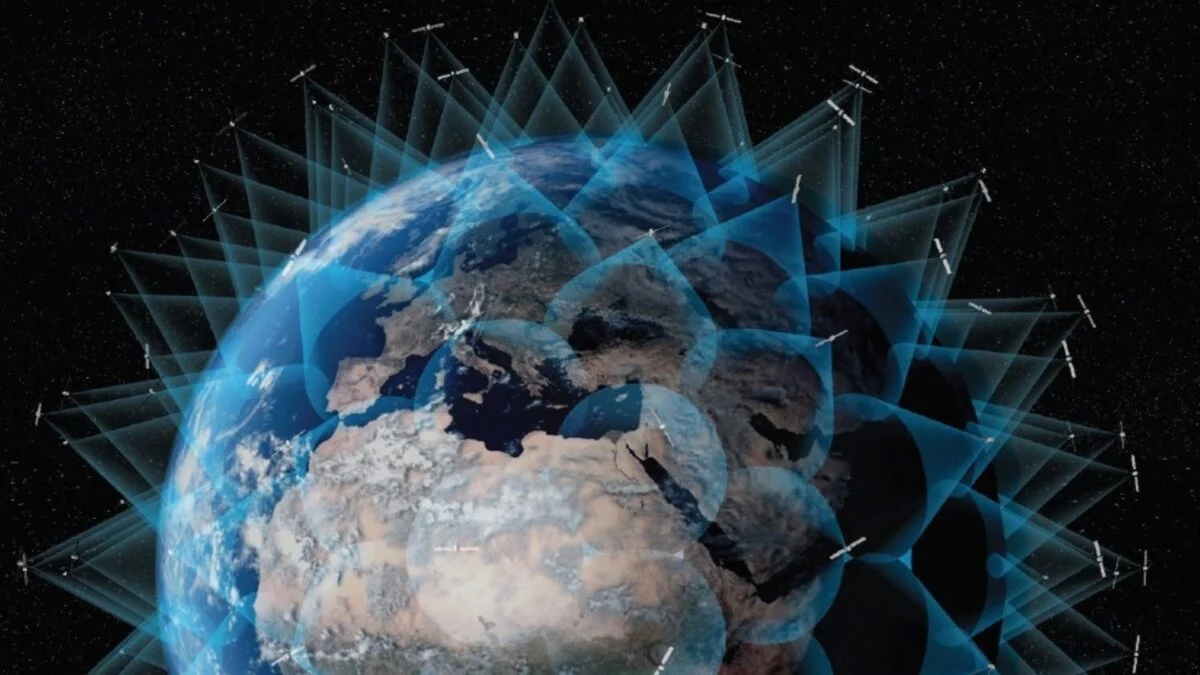
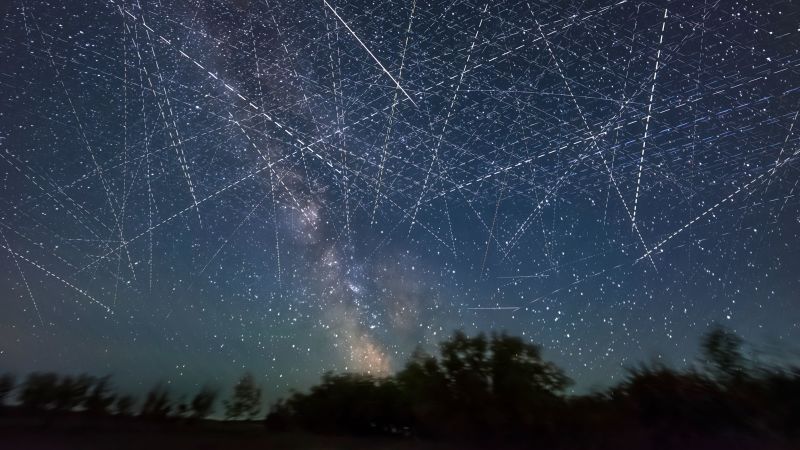
More than 15,000 active and inactive satellites orbit Earth, up from under 1,000 at the start of the century, and scientists estimate that hundreds of them are overhead at any given hour over North America and Europe. Now several companies want to launch huge fleets of satellites over the next 10 to 20 years, pending regulatory approval and financing.
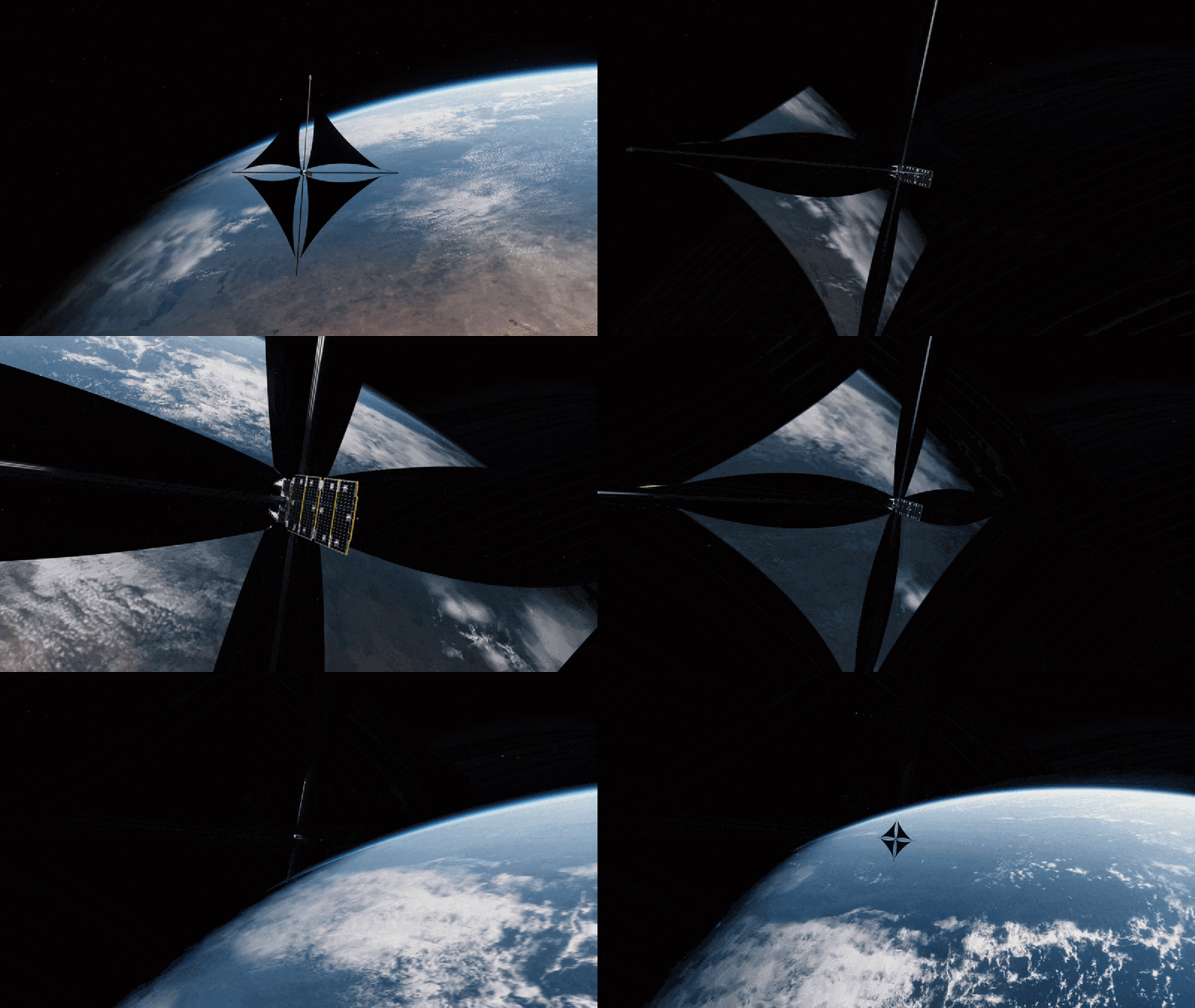
Four companies are pursuing Federal Communications Commission licensing: Reflect Orbital wants to launch mirrored satellites to sell strips of sunlight on Earth. Blue Origin, Starcloud and SpaceX propose deploying hundreds of thousands of data-processing satellites, pushing the AI race into near-Earth orbit. All that, plus the ongoing space tourism industry, with some rides to space costing millions of dollars, and this week’s first public sale of SpaceX stock, shows that commercial space activity is part of a tech investment bubble subject to markets and quarterly earnings expectations.