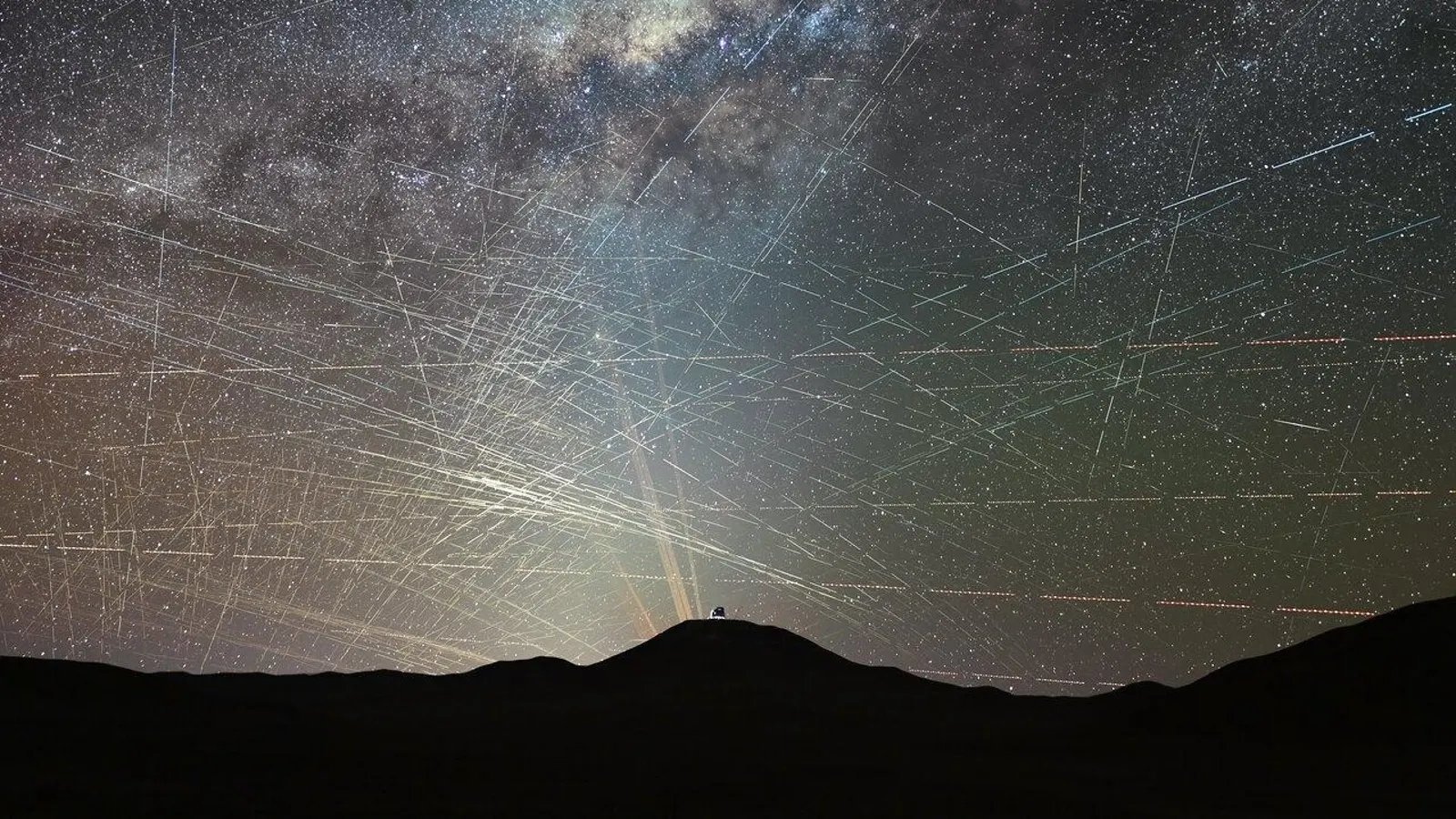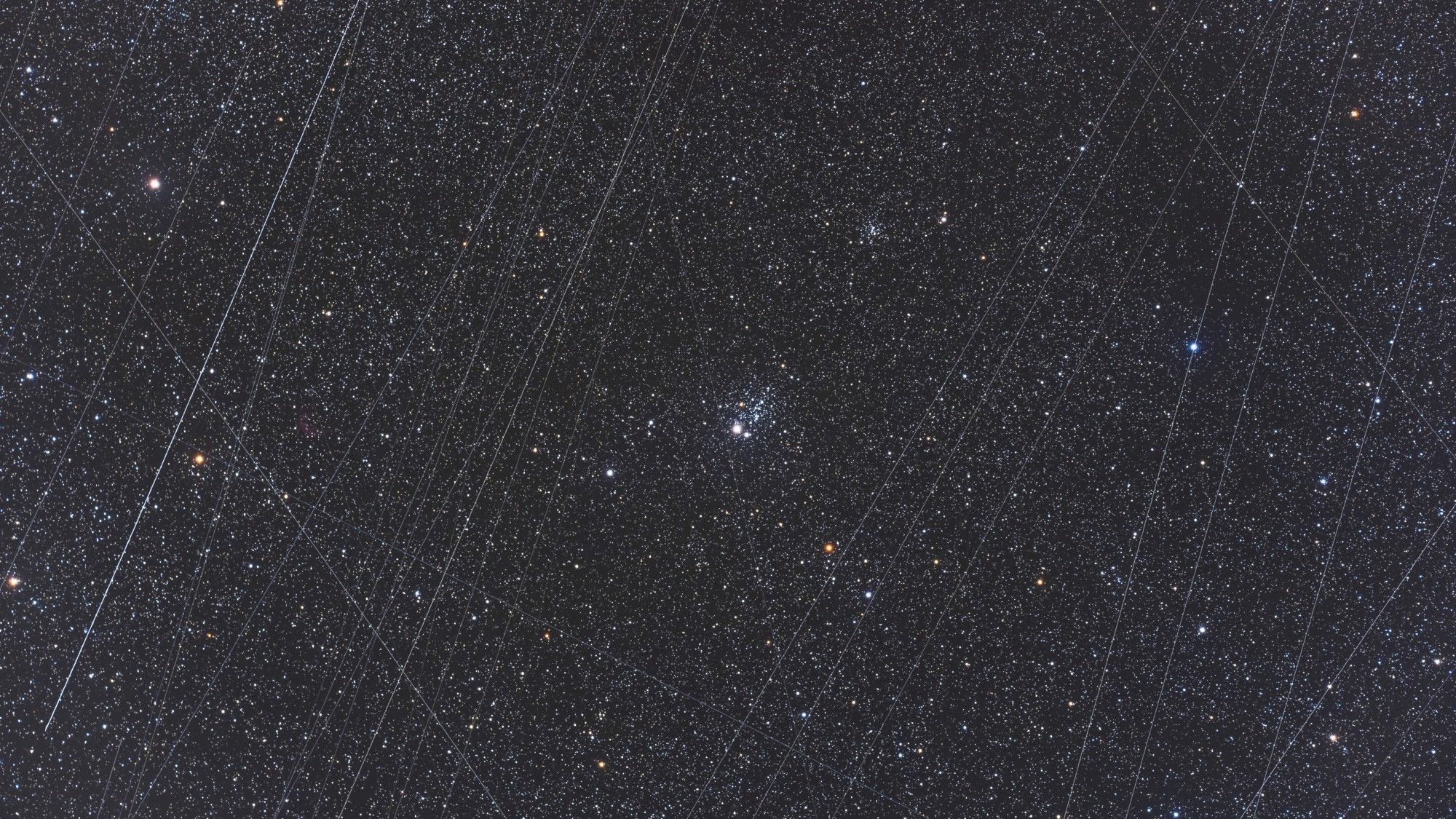
Satellite trails in front of NGC 457, or the Owl Cluster.
(Image credit: Alan Dyer/VW Pics/Universal Images Group via Getty Images)
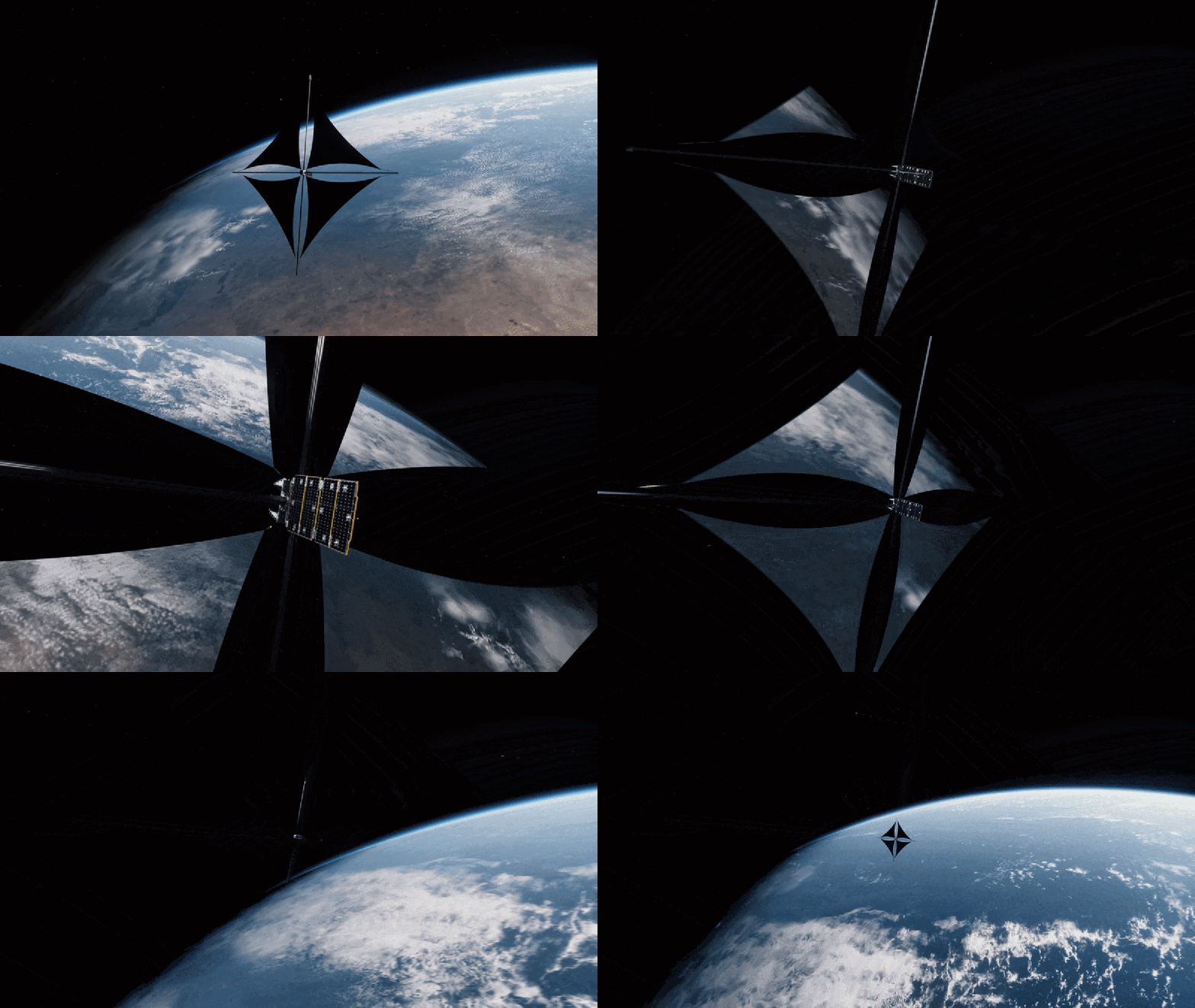
The U.S. Federal Communications Commission (FCC) can single-handedly green-light massive spaceflight projects that could completely change the view of the night sky for the entire world. Despite the outcry these projects have caused, space law experts say there is very little other nations and the international community can do to thwart them if the FCC were to grant them licenses.On July 10, the FCC approved an application by California-based Reflect Orbital to launch a 59-by-59-foot (18-by-18 meters) space mirror to test how to reflect sunlight onto solar farms on Earth after dusk. The decision has sparked outcry among astronomers and environmentalists who are concerned about the impact on global light pollution levels that Reflect Orbital's plans might have.Opponents see the FCC's approval, despite hundreds of objections filed in response to the application, as an indication that the agency might eventually grant Reflect Orbital a license to fly an entire constellation of 50,000 such sun-reflecting mirrors. On top of Reflect Orbital's plans, companies including SpaceX, Blue Origin and Starcloud are awaiting the FCC's decisions on respective applications to deploy their own massive fleets of orbiting data centers and internet-beaming satellites. If all those projects come to fruition, the view of the night sky could change beyond recognition all over the world."The technology is outpacing the regulatory environment."The United Nations' Outer Space Treaty conceived in the late 1960s lays down the international framework for the use and exploration of outer space. The document states that approvals for satellite projects are the domain of the nation in which those satellites are registered."The U.N. Treaty for Uses of Outer Space very well specifies that how many satellites are shot into space and how they are registered is a prerogative of the country in which they are registered," a source familiar with the operations of the United Nations Office of Outer Space Affairs (UNOOSA), who didn't wish to be named, told Space.com.The states from which they launch, however, are responsible for any damage the satellites registered under their flags cause to other countries. But Ruskin Hartley, the CEO and Executive Director of the advocacy group DarkSky International, told Space.com that this liability provision only covers physical damage such as satellites colliding in space or spacecraft crashing down on Earth and damaging property."It hasn't been tested at all but most people don't think this damage extends to optical interference," Hartley said. "It would have to be physical damage. If a satellite reflects sunlight down and damages someone's observatory, that probably doesn't count as damage under the Outer Space Treaty."In its Article I, the Outer Space Treaty states that "the exploration and use of outer space, including the moon and other celestial bodies, shall be carried out for the benefit and in the interests of all countries." But what exactly that means and what could be done if there is no consensus about those benefits is not clear at all.The anonymous source told Space.com that UNOOSA and the UN-wide Committee on the Peaceful Uses of Outer Space (COPUOS) may discuss the issue, but despite the global consequences, are unlikely to come up with a mechanism to stop the corporations from doing what they want if the FCC backs them."These UN institutions were all started in the last century and are very slow," the source said. "They require unanimous consensus to pass anything and that obviously hardly ever happens. So nothing gets passed. By the time UN COPUOS and UNOOSA are done discussing anything, SpaceX will have launched another thousands satellites."