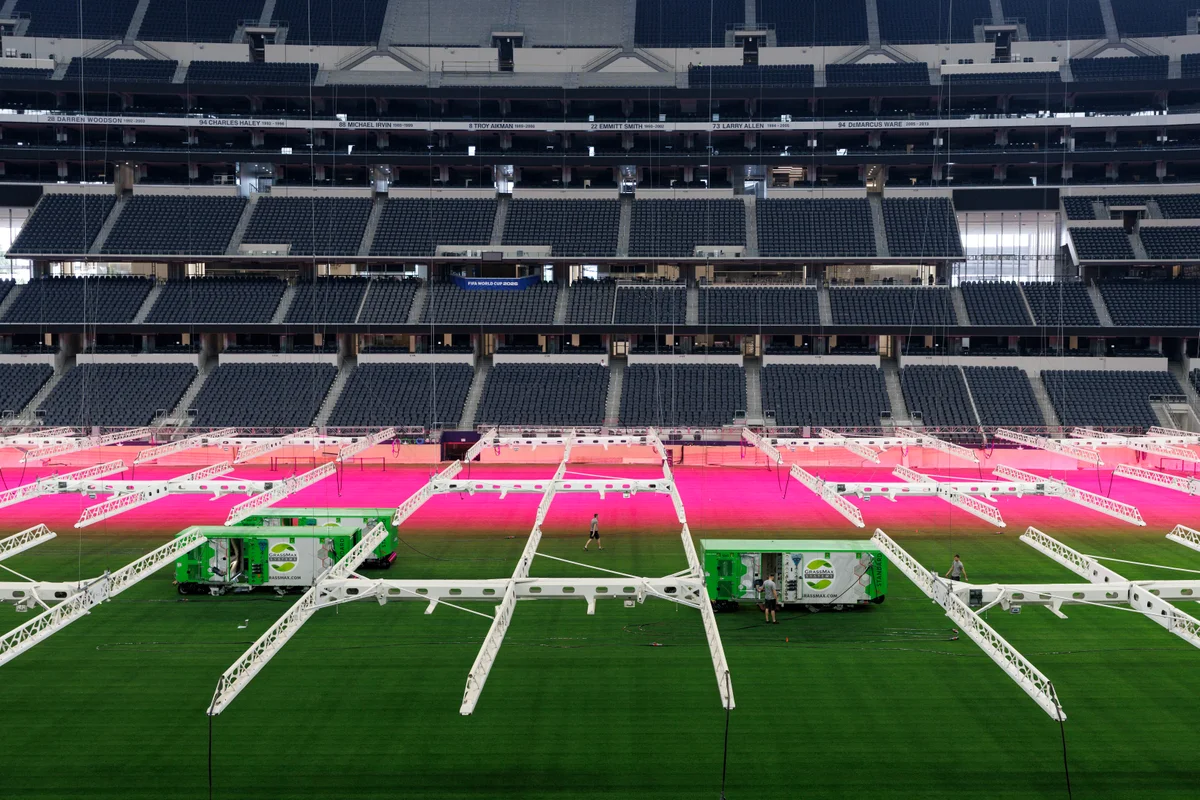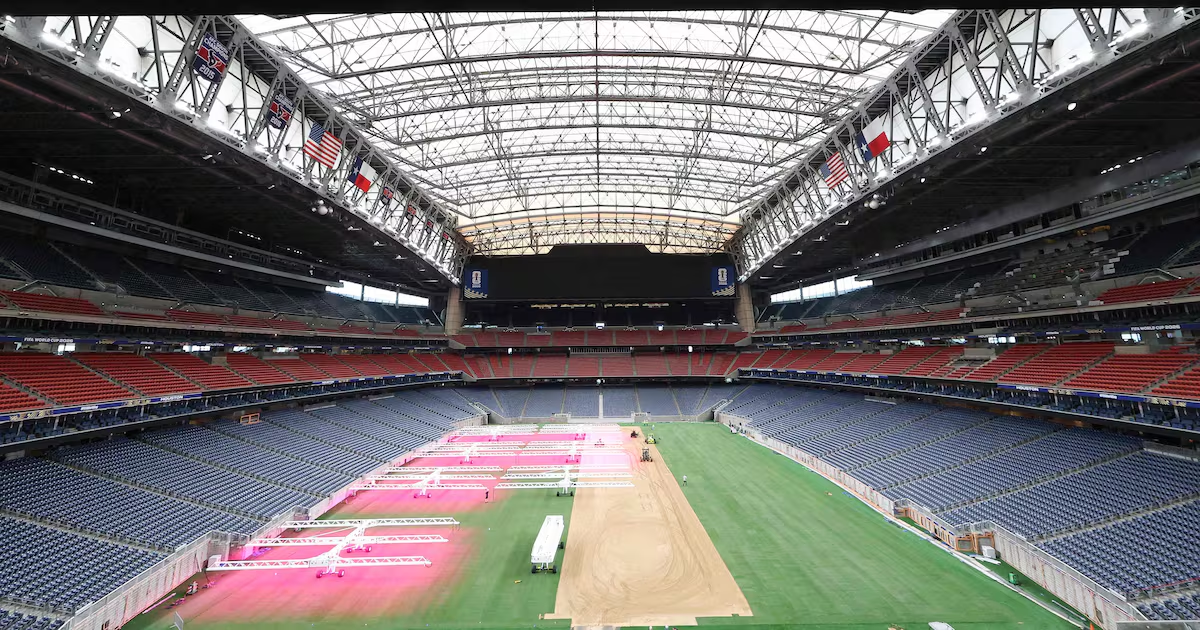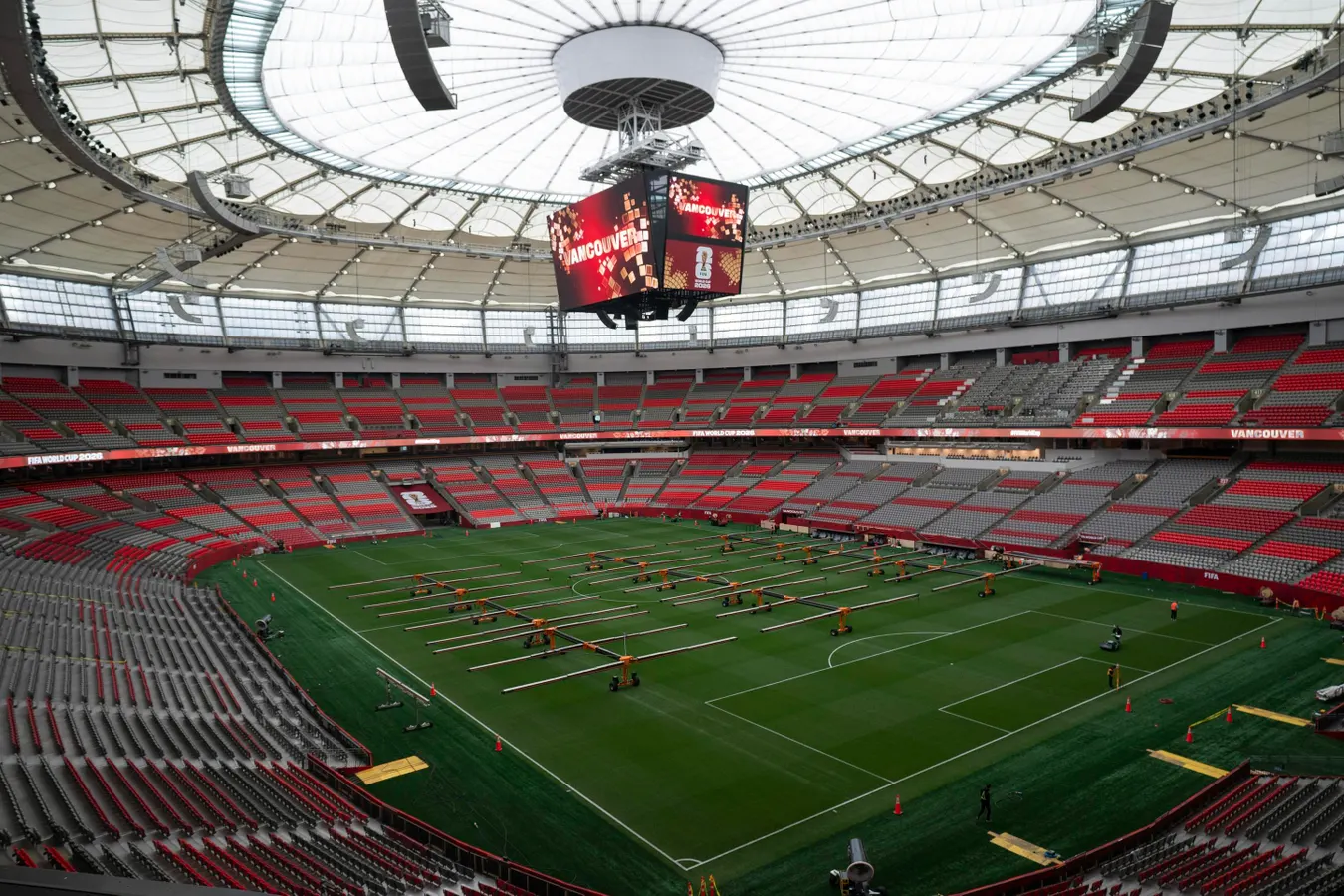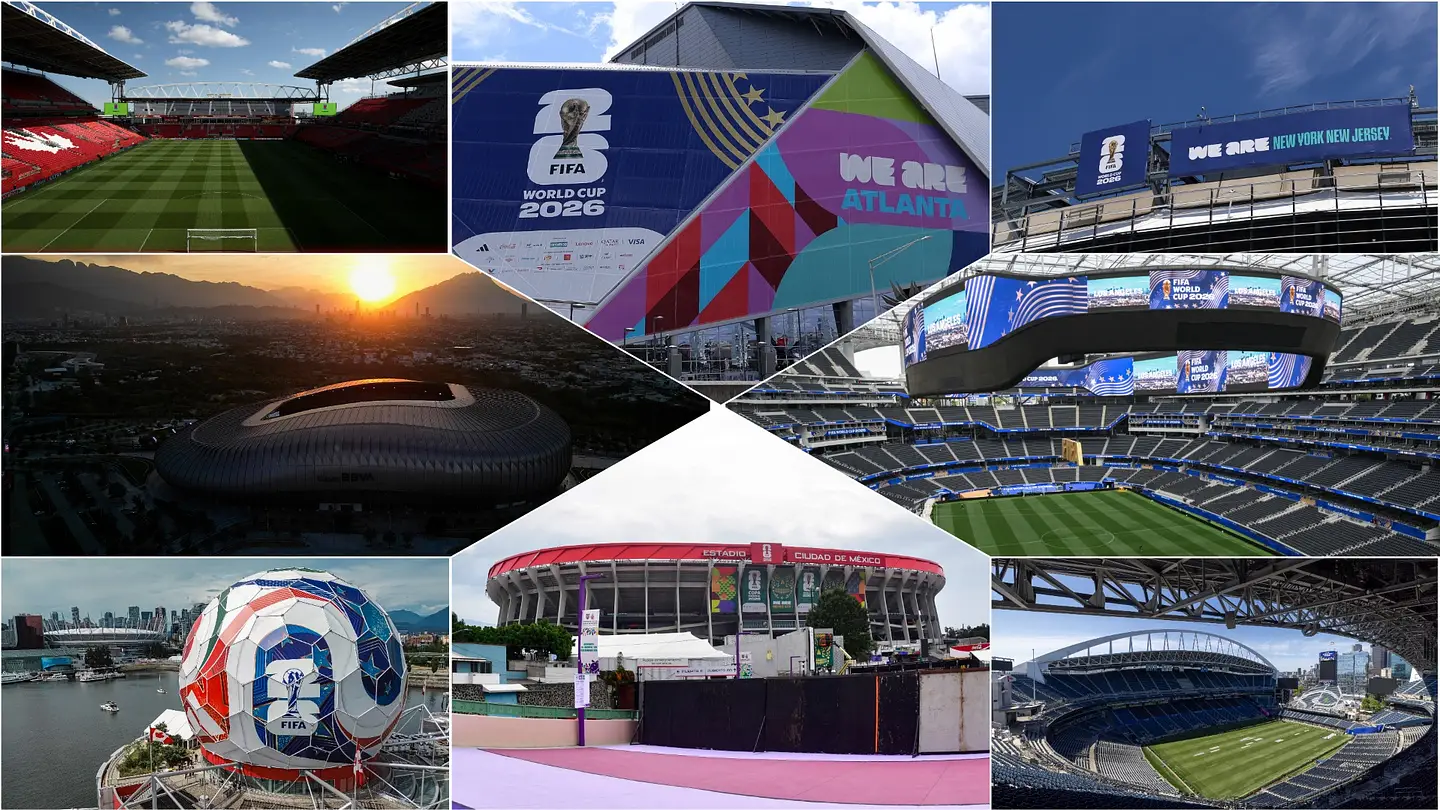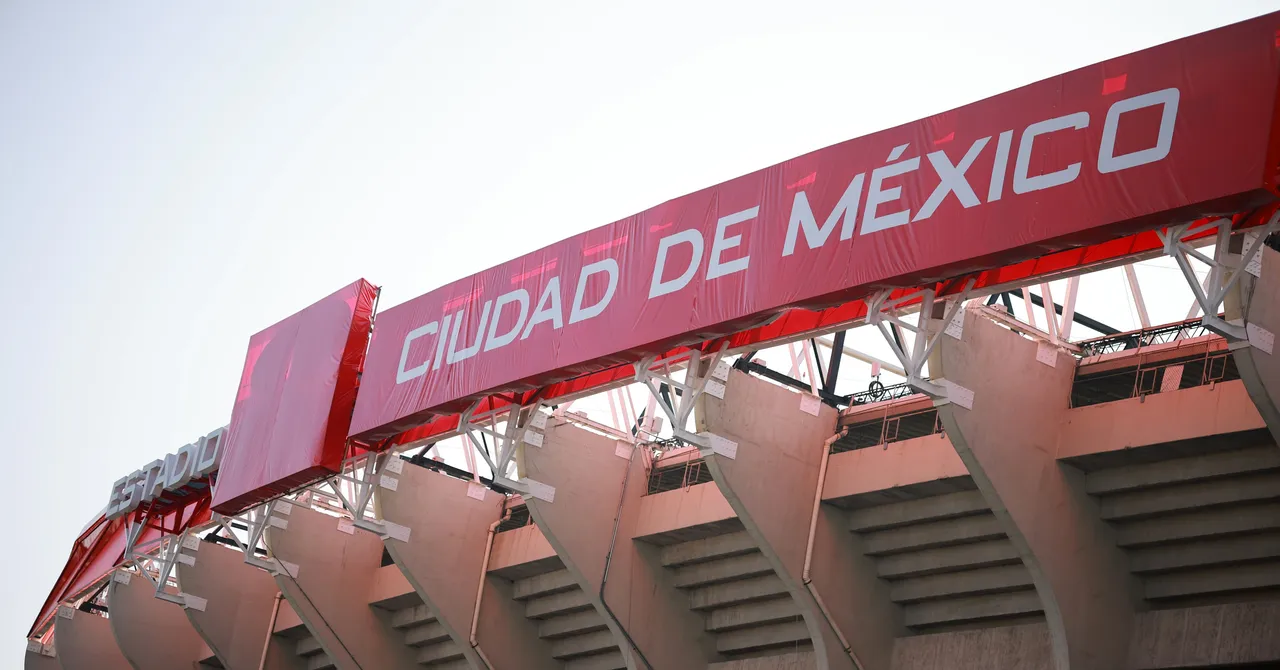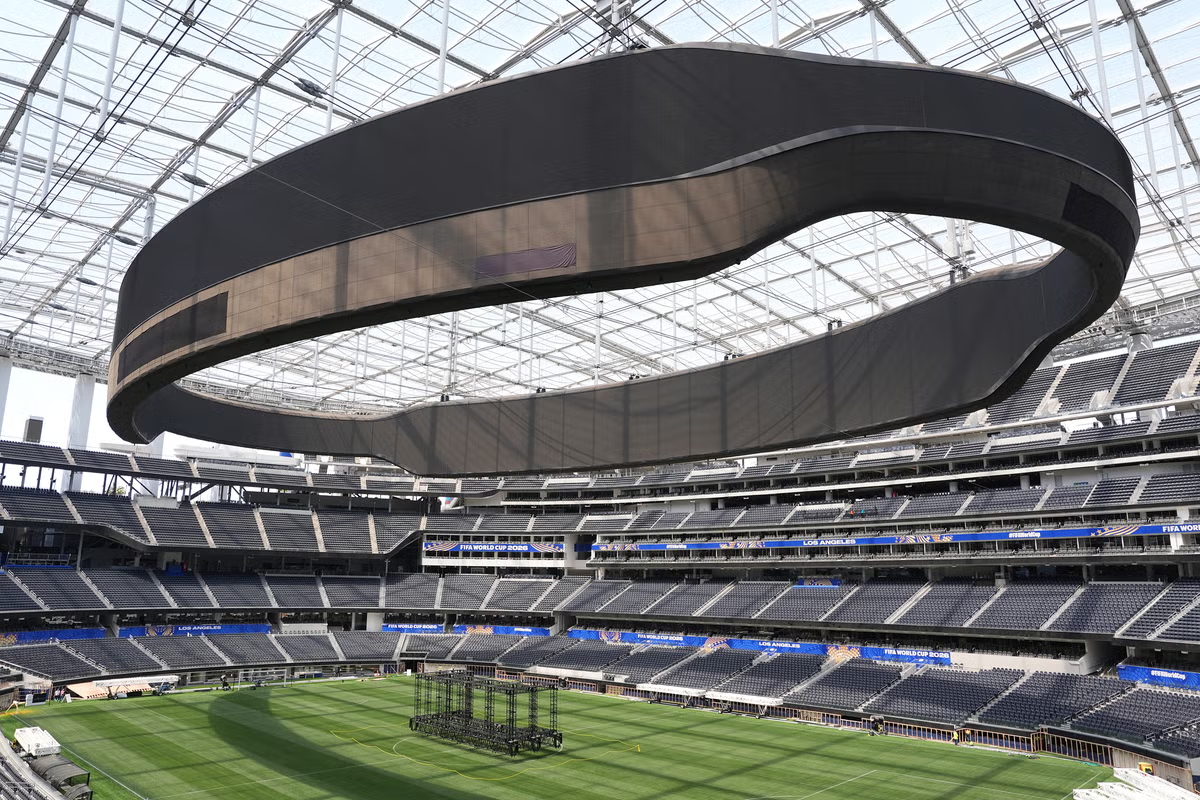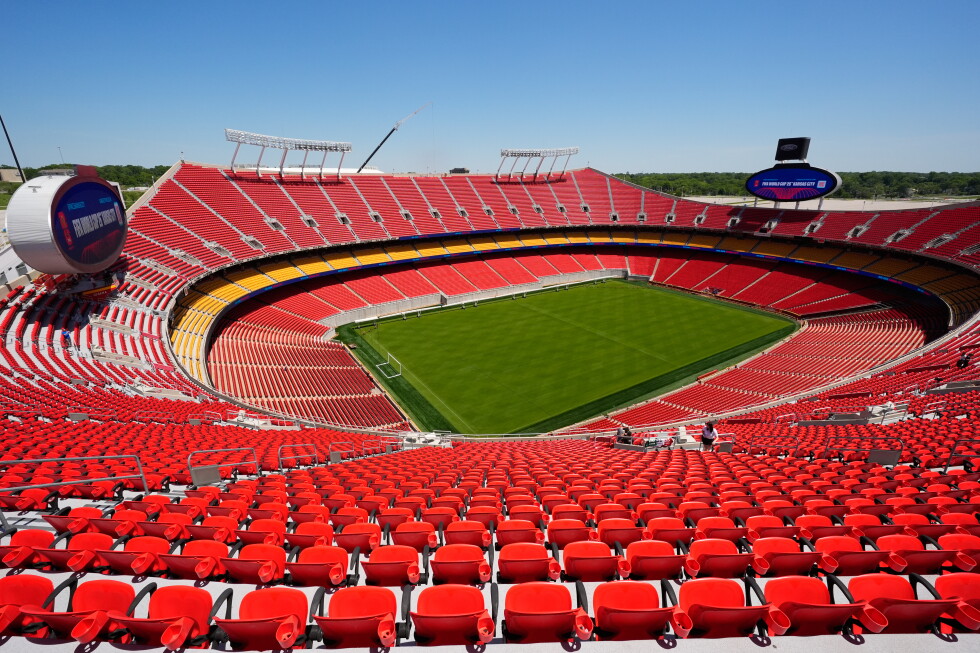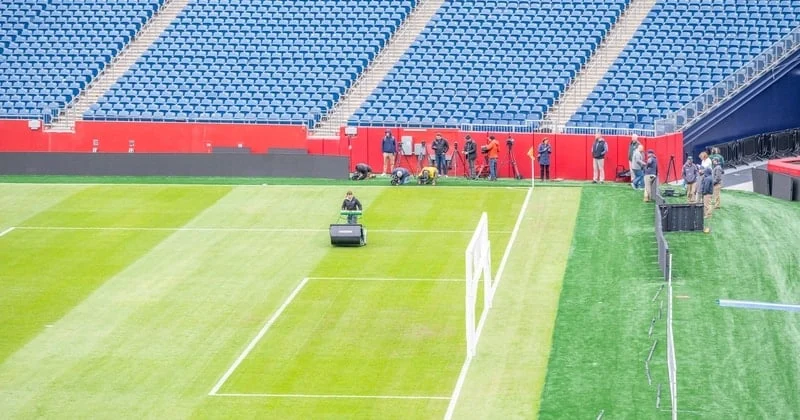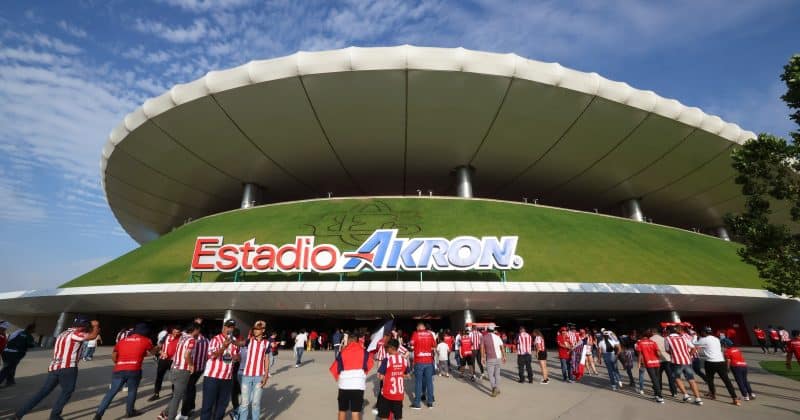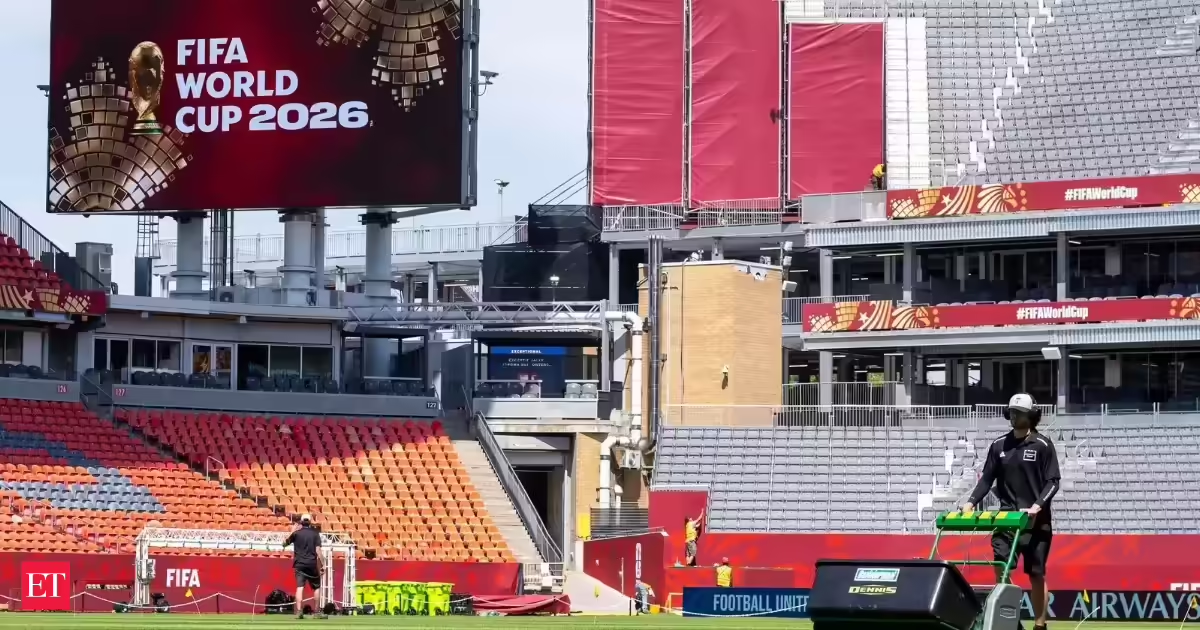
The 2026 FIFA World Cup will be played across three countries, multiple climate zones, and 16 stadiums that currently have very little in common when it comes to what’s under players’ feet. FIFA’s solution: rip it all out and start from scratch with custom-built hybrid grass pitches tailored to each venue’s specific environment.
Eight of the 16 stadiums primarily host American football and currently sit on artificial turf, meaning they need a complete surface transformation before a single World Cup match kicks off.
The science of growing a World Cup pitch
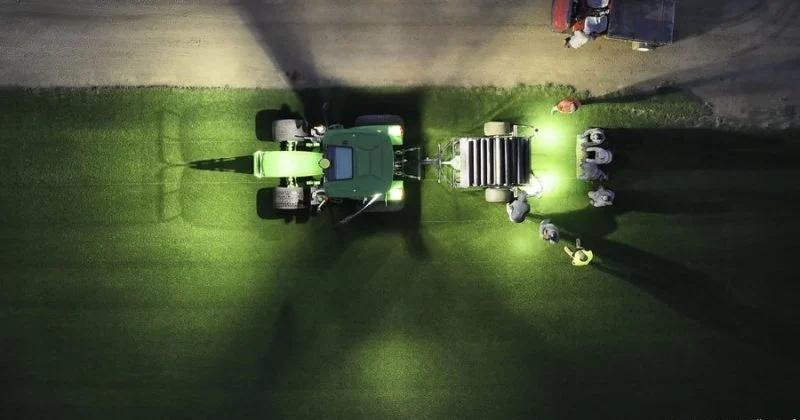
The hybrid pitches being installed are composed of approximately 95% natural grass reinforced with synthetic fibers. The synthetic component provides structural integrity and durability, while the living grass offers the ball roll, traction, and playing characteristics that professional soccer demands.
FIFA is deploying different grass varieties depending on where each stadium sits on the map. Bermuda grass, which thrives in heat and humidity, gets the nod for warmer southern venues. Kentucky bluegrass blended with perennial ryegrass handles the cooler northern locations.