“But as organisations have got more serious about the way they want to use AI in the business, they’ve taken the time to bring their data together, get that data clean and consolidated so the AI can run much more effectively on top of that.”Adam Beavis, vice president and country manager for Australia and New Zealand at Databricks. Increasingly, organisations are embedding AI into operational workflows, from software development and analytics to reporting, forecasting and customer-facing processes. Rather than treating AI as a standalone technology initiative, many are integrating it into the systems and decisions that drive day-to-day performance.That evolution is exposing a challenge that many organisations underestimated at the outset. While AI tools may be relatively easy to deploy, scaling them responsibly and effectively requires strong data foundations.“This is probably the number one thing,” Beavis says. “If you haven’t got really good data foundations and solid governance, trying to put AI successfully on top of them is really, really hard.”Databricks’ research found organisations that have invested in governing and consolidating their data are releasing significantly more AI projects than organisations still operating in fragmented environments.“Until you go through those hard yards, you’re always chasing your tail because you’re putting AI on point solutions,” Beavis says. “That unified data platform is just critical.”For Great Southern Bank, establishing those foundations became a strategic priority several years ago.Matt Cammack, head of customer technology, data and AI at Great Southern Bank, says the organisation recognised their disparate data systems were making it harder for teams to access information and make timely decisions.“In 2021 we recognised that our data environment was making it harder for teams to access insights quickly, make confident decisions and deliver better customer outcomes,” Cammack says.Matt Cammack, head of customer technology, data and AI at Great Southern Bank. The bank consolidated and modernised its data landscape into a unified, secure and resilient platform, embedding governance and automation to unlock advanced analytics and future-ready capability. The impact has extended well beyond technology.“With that unified data foundation in place, teams are now spending less time checking numbers and more time supporting our customers and acting on insights,” Cammack says.Reporting tasks that previously took days can now be completed in hours, while automation has supported faster strategic analysis, better customer outcomes and higher-impact initiatives.For decades, employees often relied on specialist analysts to retrieve information, prepare reports and answer business questions. AI-powered tools are increasingly changing that relationship by allowing employees to interact directly with trusted data sources using natural language.“The best way to describe that is you can just talk to the data,” Beavis says.“So if you think about workers traditionally, you needed to get information, you’d have to go to a business analyst. They could take time to do that. Workers can now just talk to the data, get the question they want and move on.”Higher-value tasksThat capability is altering the relationship between business teams and technical specialists. Analysts continue to play an important role, but increasingly focus on higher-value interpretation and problem-solving rather than responding to routine information requests.Developers are also seeing significant productivity gains through AI-assisted coding tools. Beavis says the technology is helping employees complete tasks more efficiently while allowing them to concentrate on more complex work.“It’s augmenting the humans with these tools,” he says.At Great Southern Bank, similar changes are emerging across the organisation.“The biggest shift has been that more teams can now use data to make decisions directly,” Cammack says.“Tools like Databricks Genie allow teams to work with trusted data, build insights and visualise results themselves, with some work that once took days now taking minutes.”The result is not simply faster processes but broader access to decision-making capability.“This has not only improved efficiency, it has also unlocked better decision-making by removing barriers to accessing data and insights,” Cammack says.Yet technology alone does not create an effective augmented workforce. Organisations must also ensure employees understand how to use these tools, interpret results and integrate them into everyday work.Beavis says workforce capability and organisational culture have become central considerations for organisations seeking to realise meaningful value from AI investments.“You can train all the engineers and analysts up,” he says. “But if the business hasn’t been trained on how to use the tools and what questions to ask the data, you don’t get those efficiencies.”Successful organisations increasingly focus on organisational alignment, bringing business users, analysts and engineers together to identify use cases, develop solutions and embed new ways of working across the organisation.“The whole idea of building a great data and AI platform without bringing the business on the journey, you might as well not do it,” Beavis says.The demand for those skills continues to grow. Databricks is preparing to invest in training 100,000 people across Australia and New Zealand, reflecting what the company sees as increasing demand for data and AI capability throughout the workforce.Productivity gainsCammack sees substantial productivity gains arising from eliminating obstacles.“One of the biggest lessons for us has been that efficiency is less about working harder and more about removing friction,” he says.“Too much time is often spent searching for information or navigating complexity instead of focusing on customers.”As Australian organisations move beyond experimentation and embed AI more deeply into operations, the focus is shifting from technology adoption to organisational transformation.The businesses achieving the greatest progress are not necessarily deploying the most AI tools. They are building the data foundations, governance structures, skills and organisational alignment needed to turn those tools into everyday capability for team members.In that sense, the future of AI may be less about automation alone and more about creating a workforce that can access information faster, make better decisions and focus more of its energy on creating value.Join the Virtual Experience at Data + AI Summit – the premier event for the global data, analytics, apps and AI community.
How AI is enhancing the nation’s workforce
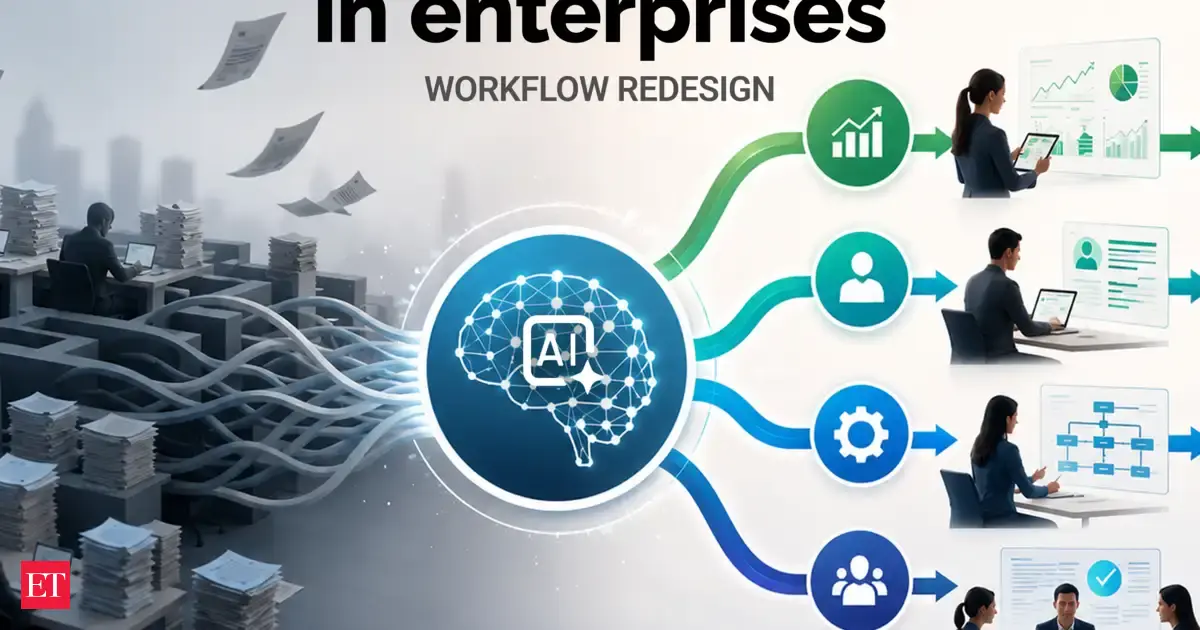
Organisations are increasingly focused on embedding AI into core workflows and everyday operations.
TL;DRAI
Data governance and consolidation are critical for AI scaling: unified platforms yield more deployments than fragmented systems. Natural language access shifts analysts from routine queries to high-value work; Great Southern Bank cut reporting from days to hours.
967 words~4 min read