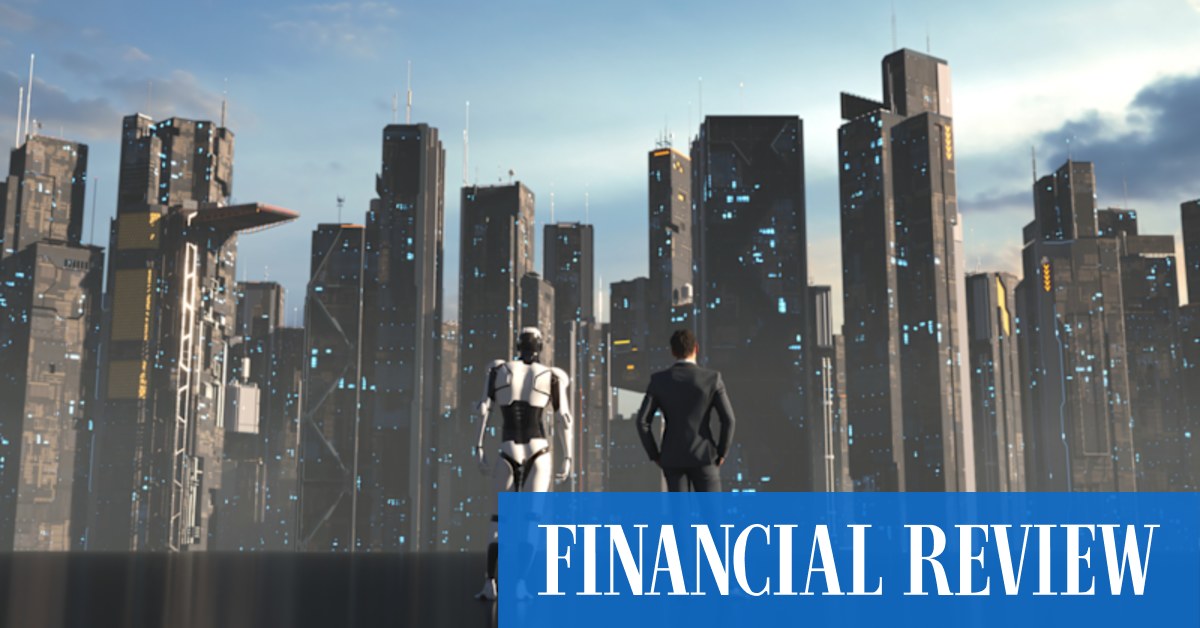
“It’s harnessing AI in a very practical way to complement the advice our team provides every day and extending that into a digital experience, providing more options to interact with us,” Schneider says.“Being the first retailer in Australia to launch agentic AI on the Gemini platform with Buddy underscores our accelerated use of data and AI to improve customer experiences. That’s something we’ll soon build on by joining the first wave of local retailers offering agentic commerce direct from Google’s app and browser.”Early results have been striking: Bunnings says Buddy has more than doubled conversion rates and is driving higher-value baskets as customers shop for entire projects rather than individual items.From DIY aisles to complex financial decisionsIn financial services, the same logic is being applied to more complex decisions.Commonwealth Bank, Australia’s largest bank, sees opportunities to apply AI across its 18 million customer base, particularly through personalised services delivered at scale. But it is the bank’s institutional division, where clients are large corporations, governments and financial institutions, and where customer needs are complex, that is driving the development of advanced AI applications.“In the Institutional Banking & Markets business that I run, one of the biggest impacts of AI has been supporting the ability to rapidly synthesise market, performance and risk data, in some cases turning hours of work into minutes,” says Commonwealth Bank Institutional Banking & Markets division group executive Sinead Taylor.From corporate to retail, many industries are employing AI to improve efficiencies, not replace human judgement. iStockOne example of this is a new bond recommendation tool the bank’s AI team developed for the corporate bond market. It helps analyse and glean insights from CBA’s Fixed Income Credit customer flows to help bankers better anticipate which securities clients may be interested in.“What that gives my team is something simple but powerful – a clearer picture of how our clients trade, both recently and over time, helping us understand their preferences, patterns and turning points at a detail and scale we couldn’t before,” Taylor says.For client relationship managers, it means they can spend less time searching for information and more time having informed, thoughtful conversations with clients, using insights from past activity to help tailor their service.For clients, it helps lift the consistency and quality of the service they receive, regardless of which salesperson they’re working with.Enhancing rather than replacing human judgementBut the two applications of AI are not identical. In retail, AI can help become the front door, while in institutional banking, the dynamics are different.“In our world, AI sharpens the person leading the relationship, it doesn’t replace them,” Taylor explains. “The judgement calls our clients rely on, our view on risk or a read on the shifting market, still require human accountability.”This insight resonates across industries. AI is most valuable when it helps carry the weight of expertise so that people, whether team members in an aisle or bankers on a trading floor, can focus on the moments where human judgement counts.Taylor believes that future gains will likely come from those moments. As AI is increasingly used to support routine work such as onboarding, documentation and approvals, the interactions that remain will likely be higher stakes and more consequential.“AI is helping make us faster and sharper, but it hasn’t changed what support our clients are looking for,” she says. “They’re looking for judgement that is built on trust. The technology just means we can bring more of that to more clients.”
From Bunnings to banking: How AI is helping organisations scale expertise across channels
From Bunnings to CBA, corporate Australia is embedding AI into workflows to bridge the gap between staff and customers.
572 words~3 min read