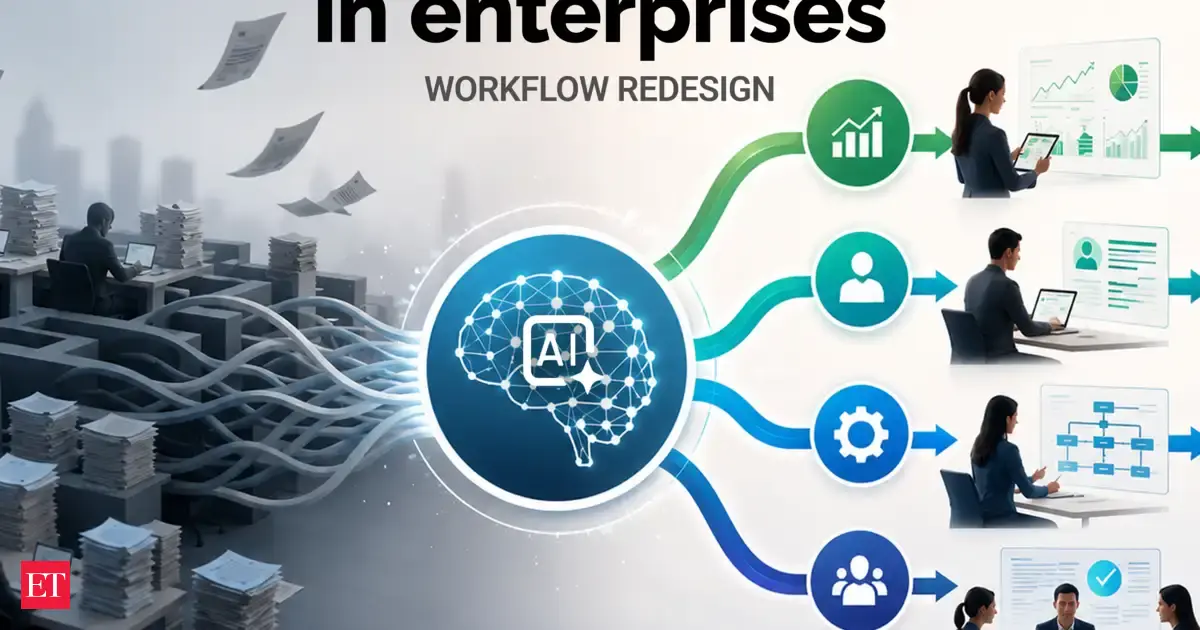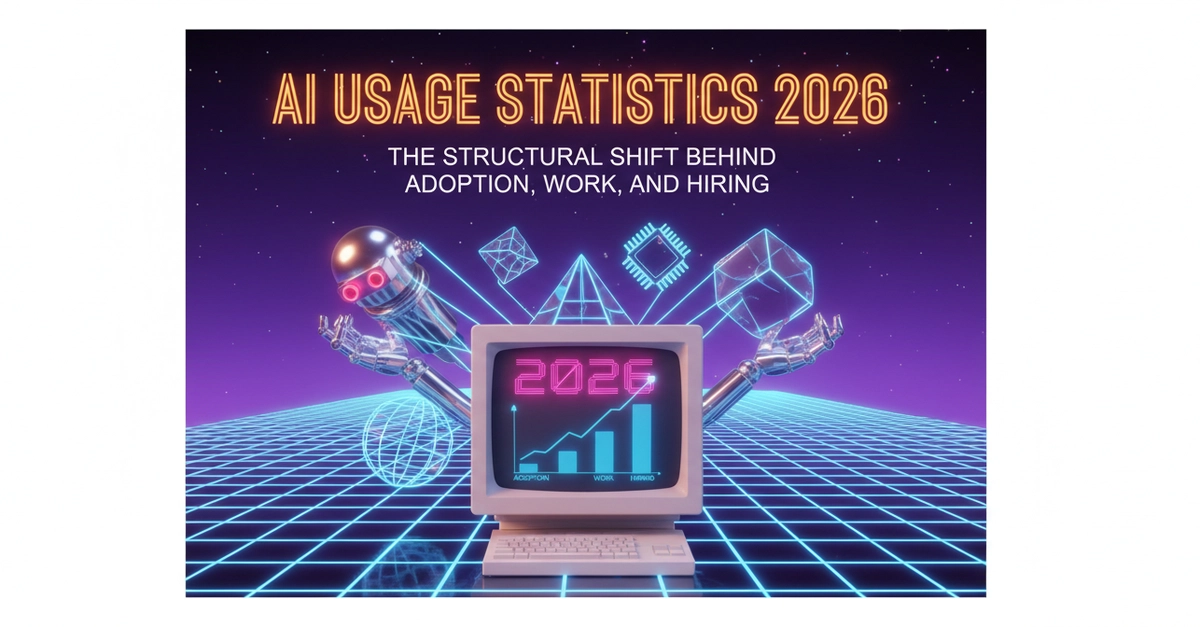
AI in 2026 is no longer best understood as a technology trend. It has become a structural layer inside organizations, quietly reshaping how work is distributed, how decisions are made, and how companies hire new talent.
What stands out most in the current data is not sudden disruption, but uneven integration. AI adoption is accelerating quickly at the organizational level, while workforce-level adoption and structural redesign are lagging behind. That gap is becoming the defining characteristic of this phase.
Adoption is no longer experimental
Across 2026, AI usage has crossed into mainstream territory. Private usage has increased significantly over the past year and now sits at 65%, up from 47% in late 2024. Workplace adoption follows the same trajectory, rising from 26% to 41% within a similar timeframe.
At company level, around 67% of organizations report using AI in some form. However, this does not translate into uniform usage across employees. Daily usage remains limited to a relatively small group, while nearly half of workers still report no AI usage at all in their professional environment.