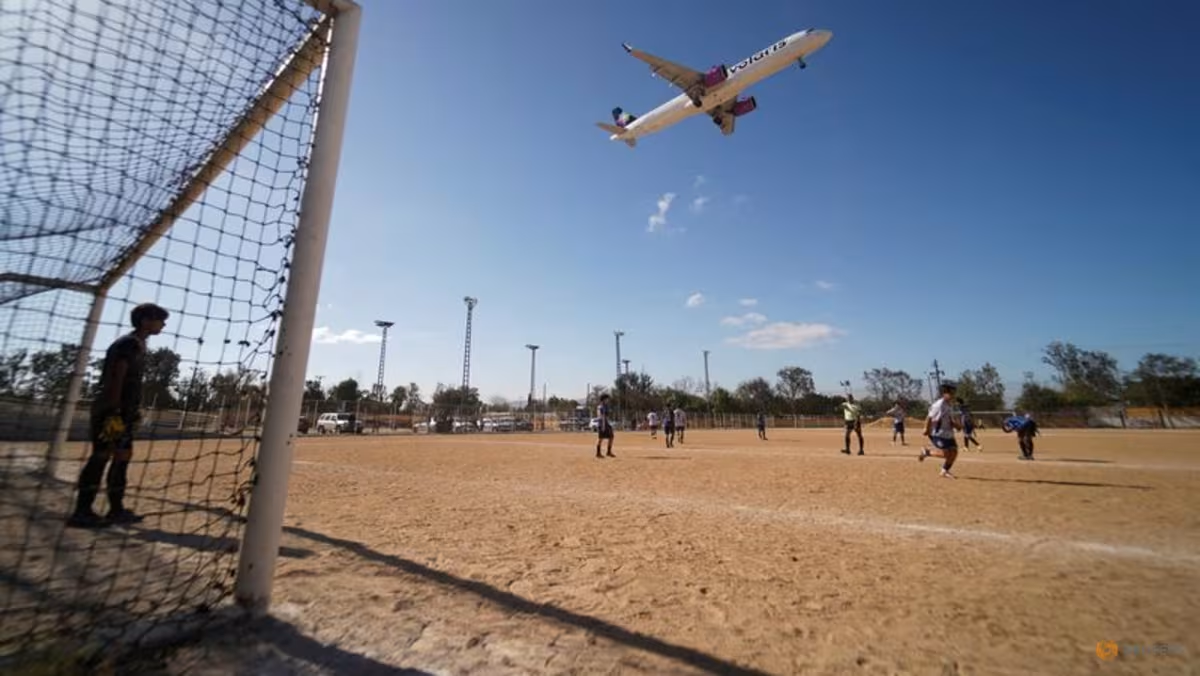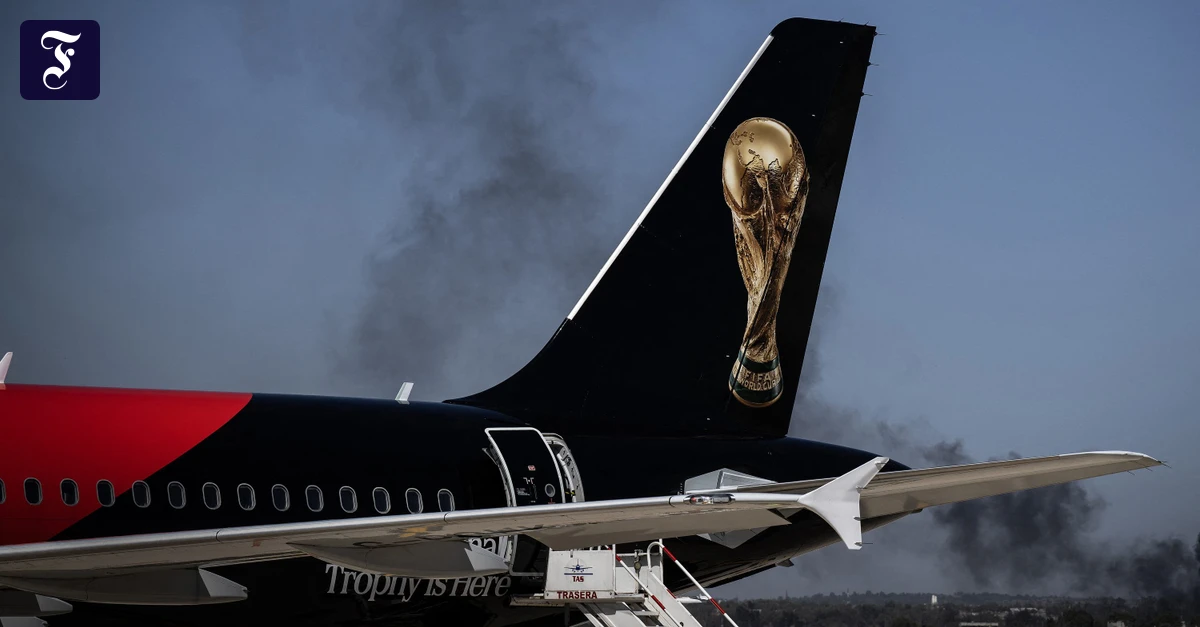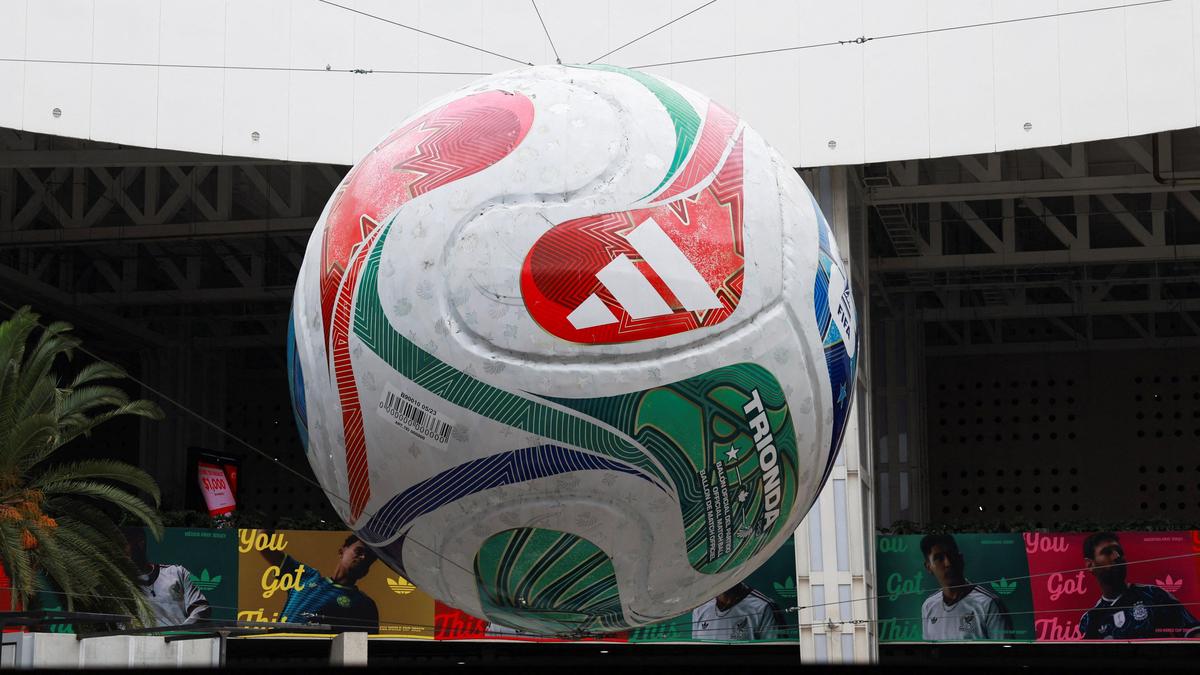
FIFA World Cup- the highest climate impact everFIFAThe 2026 FIFA World Cup will go down in history as the tournament with the highest climate impact – and the one the most impacted by climate change. Here’s why.Researchers from Scientists for Global Responsibility, the Environmental Defense Fund (EDF) and the sports initiative Cool Down estimate that the 2026 World Cup will be the “most polluting” ever, with greenhouse gas emissions of 9m tons of carbon dioxide equivalent, almost double the historical average. Most is from air travel with at least 7.7 million tons – worst case predictions are almost twice that at 13.7 million tons of CO2. Even the low figure is equivalent to the yearly emissions of almost two million cars or a small country. It is also more than double that of the 2022 World Cup in Qatar’s 3.63 million tonnes of CO2e, which was heavily critiziced for energy intensive desalinization of water and air conditioned stadiums - even the grass was for the pitches was flown in from North America in climate-controlled airplanes. Massive travel = massive emissionsThis time is even worse, mainly due to FIFA having chosen three host countries – the US, Canada and Mexico, with a total of 16 venues. This means massive travel, which accounts for about 85% of the Cup’s total emissions, often such long distances that flying is the only alternative. For instance,the team of Algeria will travel 4 800 km from Kansas City to San Francisco and back, the Bosnia and Herzegovina team, fans and families will travel more than 5,000km from Toronto to Los Angeles to Seattle. The accounting platform Greenly estimates emissions to be about 7.8 million metric tons of carbon dioxide, BBC caulculates that England fans following their team through the tournament’s group stages host cities, will generate 3.5 tonnes of CO2 per person. US President Trump and FIFA boss InfantinoOpenMore teams than everIn previous World Cup tournaments, 32 teams participated. For the first time ever, now 48 teams compete, including first timers Cape Verde, Curacao, Jordan and Uzbekistan. This means more travel and more matches; a total of 104 will be played. Even though the venues are alreadey existing and thus not built for the Cup – one of few improvements compared to the 2022 Cup in Qatar, a single match is estimated to cause around 44,000 to 72,000 tonnes of CO2. MORE FOR YOUThe irony: Hard hit by climate changeOften overloooked, heat already kills more people in the U.S. annually than any other extreme weather event. As reported by Forbes, a recent study in the International Journal of Biometeorology shows that the North American World Cup locations are heavily affected by “wet bulb globe temperature”, putting players, referees, workers and fans at risk. An academic study shows that 14 out of 16 host cities are likely to experience temperatures that Fifpro has argued merits possible suspension of the match, while the “Pitches in Peril” report finds that 10 of 16 venues face a “very high risk” of extreme heat stress, aligned with how last summer’s FIFA Club World Cup in the US experienced extreme heat and humidity, thunderstorms and lightning that paused or delayed a half-dozen matches. Leading up to the games, 20 global experts in health, climate and sports performance sent an open letter to FIFA, warning that insufficient adaptation to extreme heat will put players at risk of “heat-related injury.”FIFA pledges but doesn’t deliverFIFA’s boss Infantino ”aimed” to make the 2022 World Cup carbon neutral, and at COP26 in Glasgow, he presented FIFA’s plans to halve its carbon emissions by 2030 and become net-zero by 2040. This is part of the wider UEFA Football Sustainability Strategy, which however fail to take into account the location of the matches or the traveling of the spectators – factors that are key for the overall climate performances. This has led to Carbon Market Watch accusing FIFA of greenwashing and Swiss advertising regulators stopping the green claims, which have not been repeated for the 2026 Cup. The future doesn’t look much better; the 2030 World Cup will for the first time ever take place in Africa, Europe and South America and in 2034 Saudi Arabia is the host. Fossil fuel sponsorsJust as Forbes reported from the 2026 Winter Olympics, the World Cup is dominated by fossll fuel sponsors. Fifa has a multi-year partnership with the Saudi Arabia’s state owned energy company Aramco, the largest corporate greenhouse gas emitter on the planet, alone responsible for over 4% of global emissions since 1965, a deal that was condemned by over 100 professional female soccer players, Other key partners include Qatar Airways, which according to the Danish Institute for Sports Studies initiative Play the Game mean that indirect emissions are a staggering 70 million tonnes.Key FIFA sponsor Aramco is the company in the world responsible for the most emissionsOpenBetter is possible and asked forFootball fans want to see change for the better; the UK-based football agency Rising Ballers found that 72% of Gen Z football fans care about the environment, with 61% asking for football to become more eco-friendly. The initiative “Football for Climate Justice” encourages and help football clubs embrace a climate justice perspective, with concrete climate action initiatives. “Athletes Act Now" and the UN "ActNow" campaign inspire sustainable choices, while clubs like Arsenal FC team up with Planet League for a climate action tournament, as reported here in Forbes. Even at the level of masisve tournaments, positive examples exist, as the men’s 2024 European championship in Germany which included a €29 flat rate train ticket, and free 36-hour local public transport for ticket holders. Nelson Mandela said that “Sport has the power to change the world. It has the power to unite in a way that little else does.” At the 2026 World Cup this power to change is unfortunately not manifested – but it is a great opportunity for all of us to learn from.Mattias Goldmann
FIFA WORLD CUP: Climate Is The Loser - Highest Impact Ever
The FIFA 2026 World Cup in the US, Mexico and Canada has highest climate emissions ever. Here's why - and positive examples on how football and soccer can be greener.
988 words~4 min read