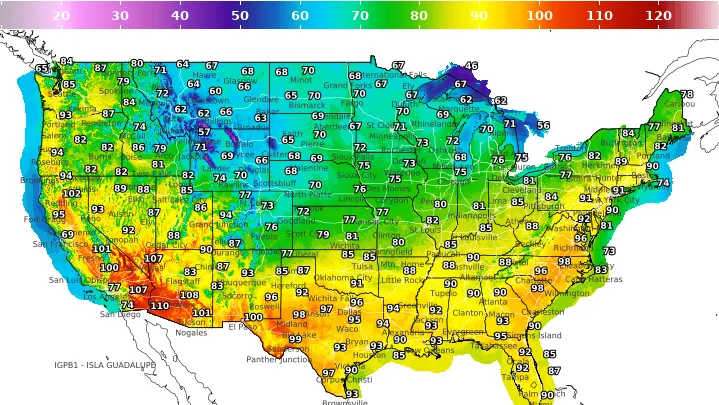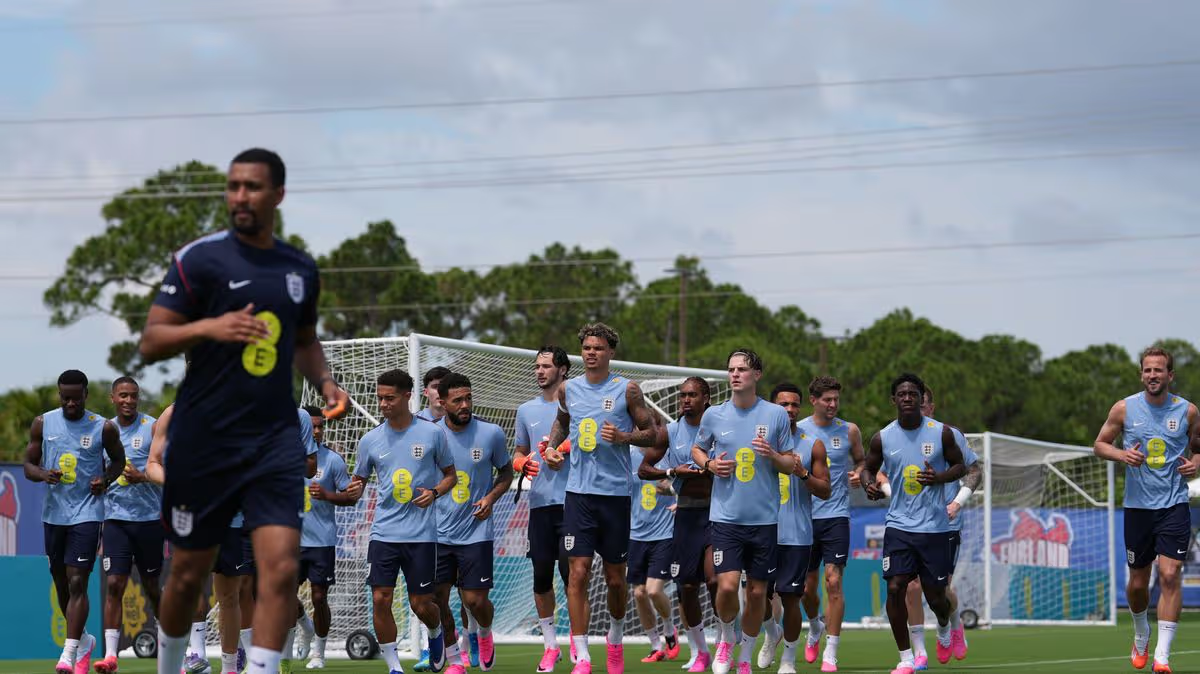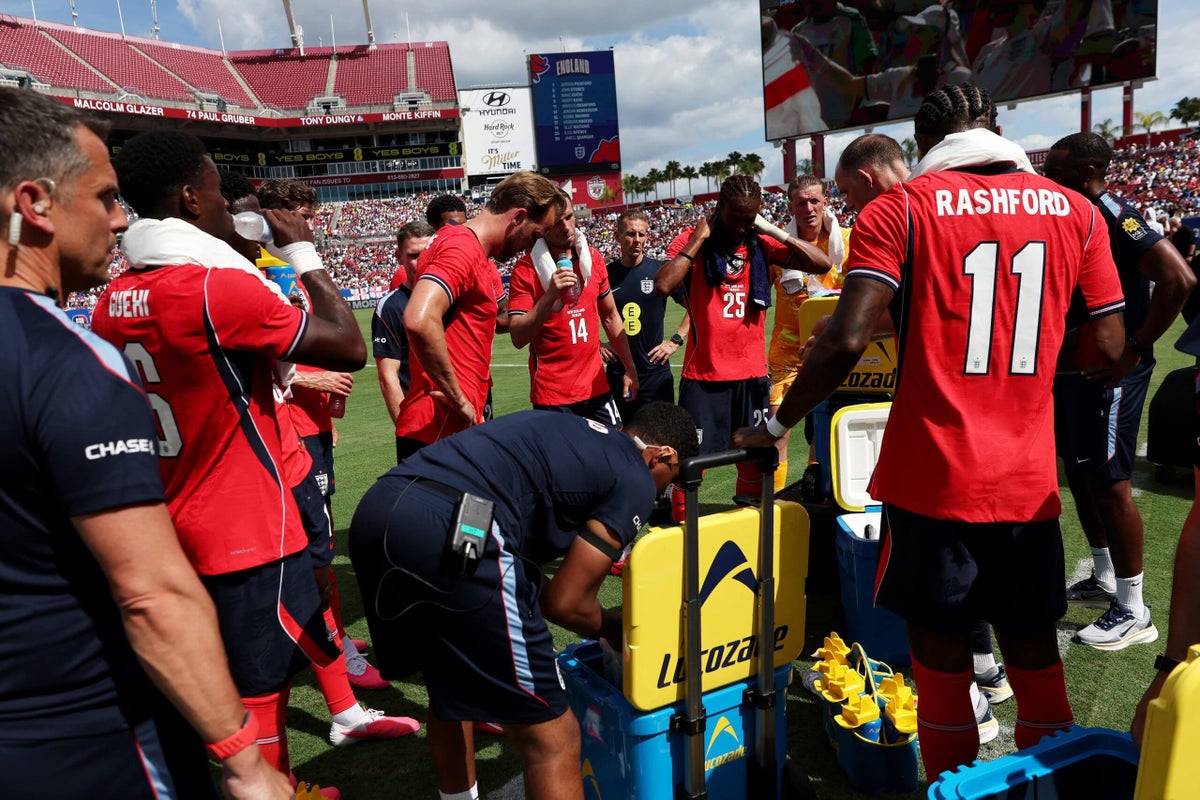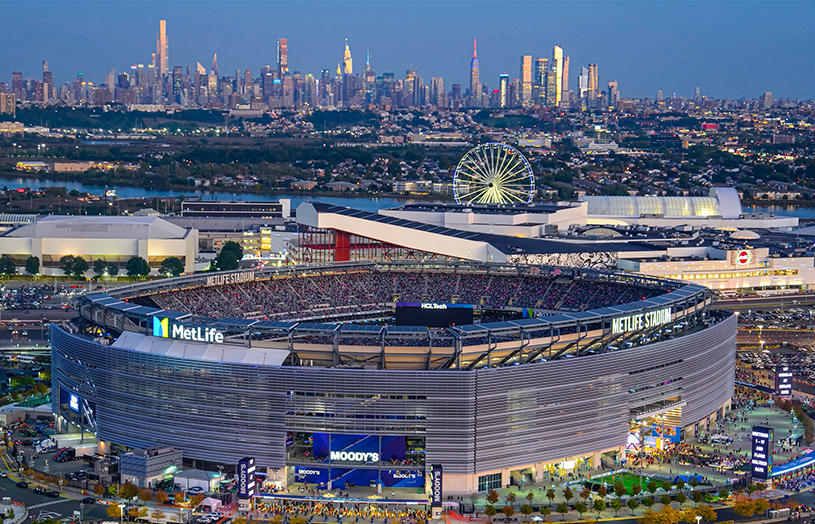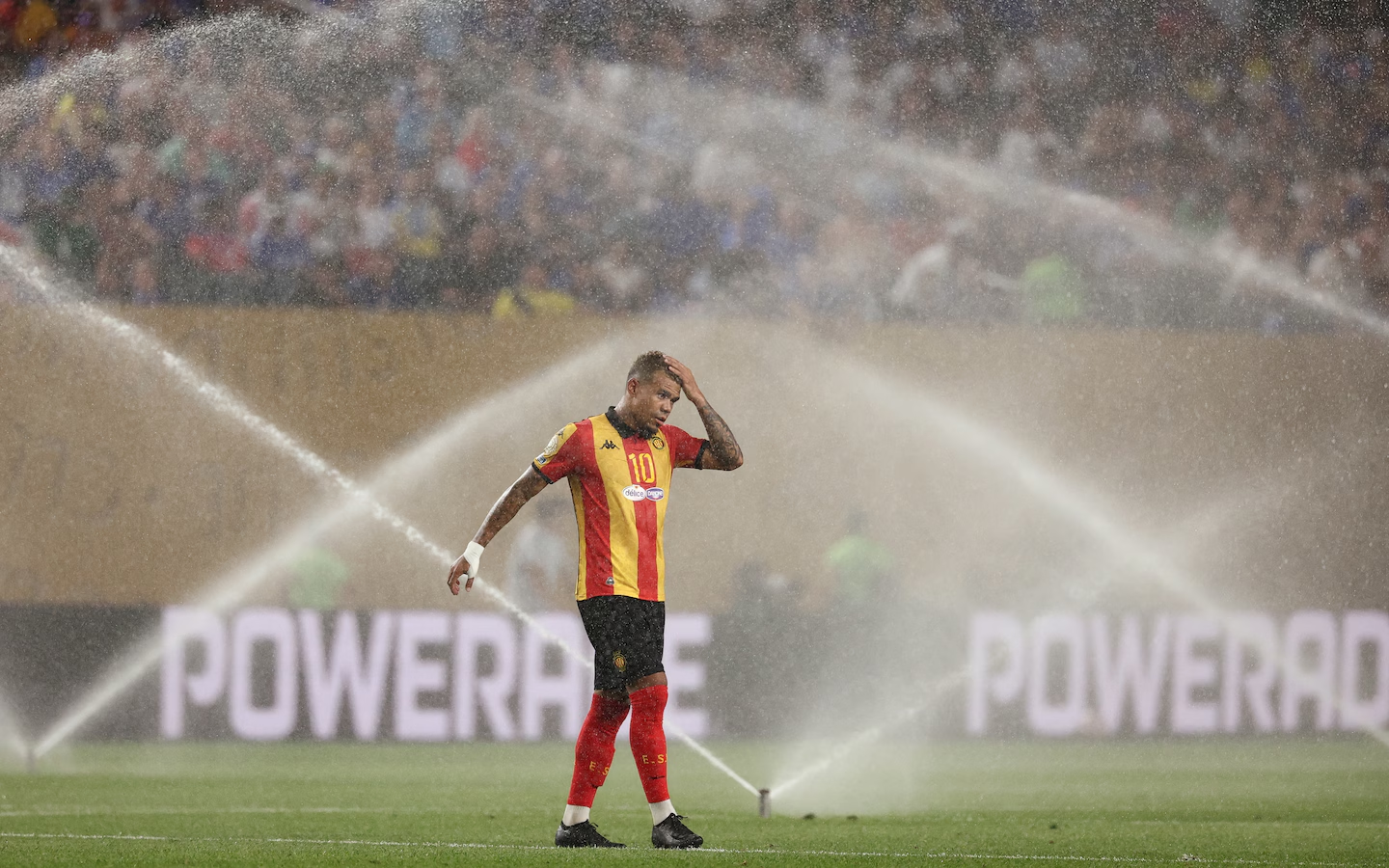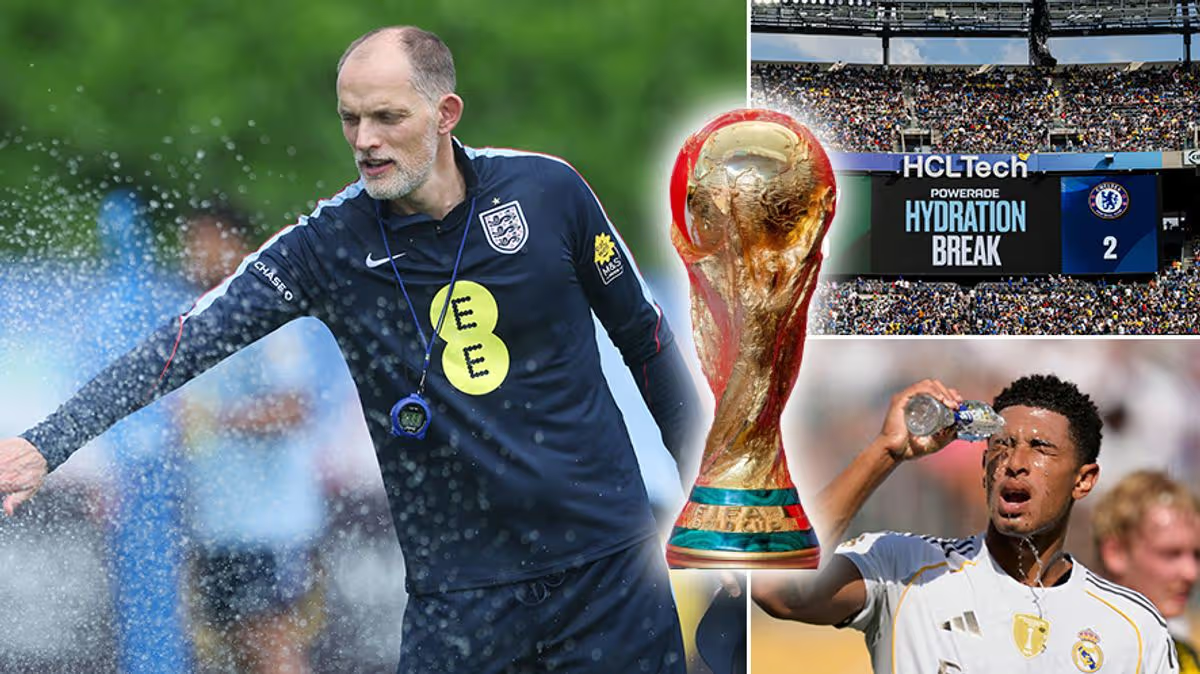
It’s three decades since the International Federation of Association Football (FIFA) World Cup was last held in North America. Since then the burning of fossil fuels has raised Earth’s temperature by more than a degree Fahrenheit. And with that global warming has come much more frequent, longer-lasting and hotter heat waves, posing a major health concern for players, spectators and workers gathering over the next few weeks to watch the beautiful game’s biggest tournament.From June 11 to July 19, the 104 matches of the 2026 World Cup will be held in stadiums across a wide range of climates, from Guadalajara, Mexico, to Vancouver, Philadelphia to Los Angeles. That means the risks will also vary from stadium to stadium. The danger also varies from person to person, depending on factors such as how acclimatized a person is to heat, as well as what medications they take or whether they already have health conditions.To better break down the risks, we looked at the stadiums, host cities and forecasts, pinpointing where might be hottest and how best to keep cool.On supporting science journalismIf you're enjoying this article, consider supporting our award-winning journalism by subscribing. By purchasing a subscription you are helping to ensure the future of impactful stories about the discoveries and ideas shaping our world today.Heat Risk by CityFirst, let’s consider the stadiums and host cities: Nonprofit research group Climate Central analyzed how the number of extremely hot days in each host city has changed over time. The threshold for an extremely hot day is set by local standards, so that threshold is lower in a mild climate like Seattle’s than in a muggy one like Houston’s.The researchers found that nearly all of the host cities see more extremely hot days during June and July now than they did in the past. In particular, Miami, Mexico City and Guadalajara have seen some of the biggest increases. Across the 10 cities in the U.S. and Mexico that previously hosted World Cup matches, the frequency of extremely hot June and July days has tripled, Climate Central found.Amanda Montañez; Source: Climate Central (data)Most forecasts for the tournament’s first matches on Thursday and Friday are looking fairly mild. But beyond a few days, we just don’t know yet what the weather holds in store—it’s likely to be hot, however.Looking across the U.S. as a whole, the average number of summer heat waves has gone from two a year in the 1960s to six per summer today. The average duration of those heat waves has increased from three to four days, and the heat wave season itself has expanded from about 20 days to more than 70 over those 60 years. Several notable heat waves have already hit parts of the U.S. this spring, shattering records.The risk from heat isn’t just a matter of the weather; it also comes down to personal factors.Heat Health RisksExposure to heat, particularly at extreme levels, can cause dehydration and hyperthermia. These can lead to heat exhaustion—which can feature nausea, dizziness and muscle cramps—and, if not treated, to heat stroke and even death. Extreme heat can also cause people to drink too much water, diluting the sodium in their blood to the point where they have hyponatremia, a condition with symptoms that look a lot like heat exhaustion but that can cause seizures, brain swelling and death.The risks rise when humidity also comes into play, because it prevents the evaporation of sweat from skin, which is the body’s natural cooling mechanism. And though everyone has some amount of heat risk, “we have really different tolerances,” says Yale University climate scientist Jennifer Marlon. “There are personal factors, and that means your health and your age and your ability to quickly adapt to heat.”In terms of adaptation, residents from Atlanta are more acclimatized to heat than those from Seattle, for example. Still, children and older people are generally less able to regulate their body temperatures compared with young, healthy adults. Likewise, those on certain medications, such as beta-blockers and antihypertensives, and people with certain heart or lung conditions can be at greater risk.Worryingly, we tend to underestimate our heat risk. Recent research published by Marlon and her colleagues shows that only about 40 percent of people in the U.S. say they are worried about heat. “Everyone is insufficiently worried,” Marlon says. That might be because of a mix of things, from not recognizing the personal limitations that could put you in greater danger from heat to not treating heat as great an emergency as other climate-related disasters.And even where people are worried, “it still doesn’t mean that people know what to do,” Marlon says.How to Stay CoolThe best ways to protect yourself depends on who you are, but there are some general themes everyone can learn from.Let’s start with the players. Soccer matches typically involve two 45-minute halves in which the players run near-constantly. As a result, FIFA is instituting mandatory water breaks for players and has moved some matches to nighttime in the hottest host cities. Three stadiums in cities in the U.S. South—Houston, Dallas and Atlanta—are climate controlled, so that helps reduce risk, too.Players are also generally young and in peak physical shape and have teams of trainers to tend to them, although heat can still hit players who are not used to it. Nearly half the 2026 matches have 50 percent odds of reaching heat levels that could impair player performance, Climate Central found.For workers at the matches, staying cool can be more complicated. This is a more diverse group that includes seasonal workers who may not be acclimatized to heat, and they are also working in three different countries and multiple states and cities, as well as for a mix of public and private employers. That makes uniform regulations for things like breaks, for example, difficult. In general, employers should allow for periods of acclimatization and regular water and rest breaks, particularly for people working outside or doing heavy physical labor, says Andrew Grundstein, who studies climate and health at the University of Georgia and co-wrote a study on the heat risk to World Cup workers.For spectators, particularly fans going to matches in a hotter climate than they’re used to, being aware of the conditions they’re in is crucial. Asking questions such as these can help:What will the temperature and humidity be where you are? Will you be in sun or shade? (You can learn how to interpret various heat measures with our guide.)For gatherings outside stadiums, will you be in a park where trees and other greenery keep temperature cooler or in a hot asphalt parking lot?Once you’ve got some idea of the baseline climate, these are some strategies to stay cool and hydrated at the games:Drink water. FIFA has reversed an initial ban on water bottles, but each stadium has its own rules on what bottles are allowed, so check ahead. And limit (or, better yet, avoid) alcohol consumption.Cold rags or wet washcloths can help keep you cool, as can a hand fan to move air across the skin and aid sweat evaporation.If you or anyone around you is exhibiting any signs of heat exhaustion or other illness, seek emergency medical help.
The 2026 World Cup will bring the heat. Here's how to keep cool
Extreme heat poses a risk to players, spectators and workers—find out where the danger is and how to keep cool
TL;DRAI
Extreme heat has tripled in World Cup 2026 host cities; half of matches face performance-impairing conditions. Climate change is reshaping global event infrastructure—stadiums now require climate control, reshuffling venue decisions and worker safety at scale.
1,194 words~5 min read