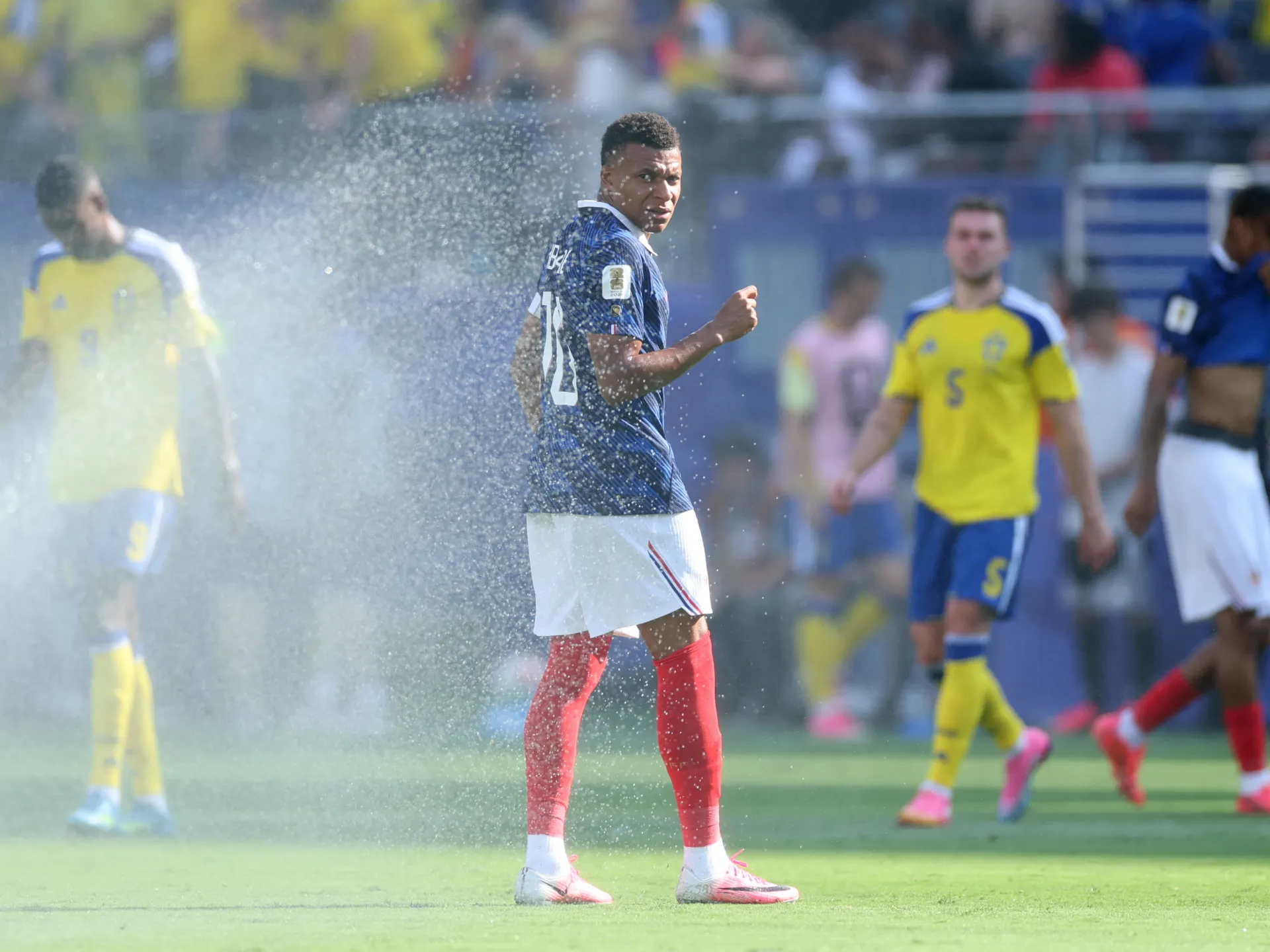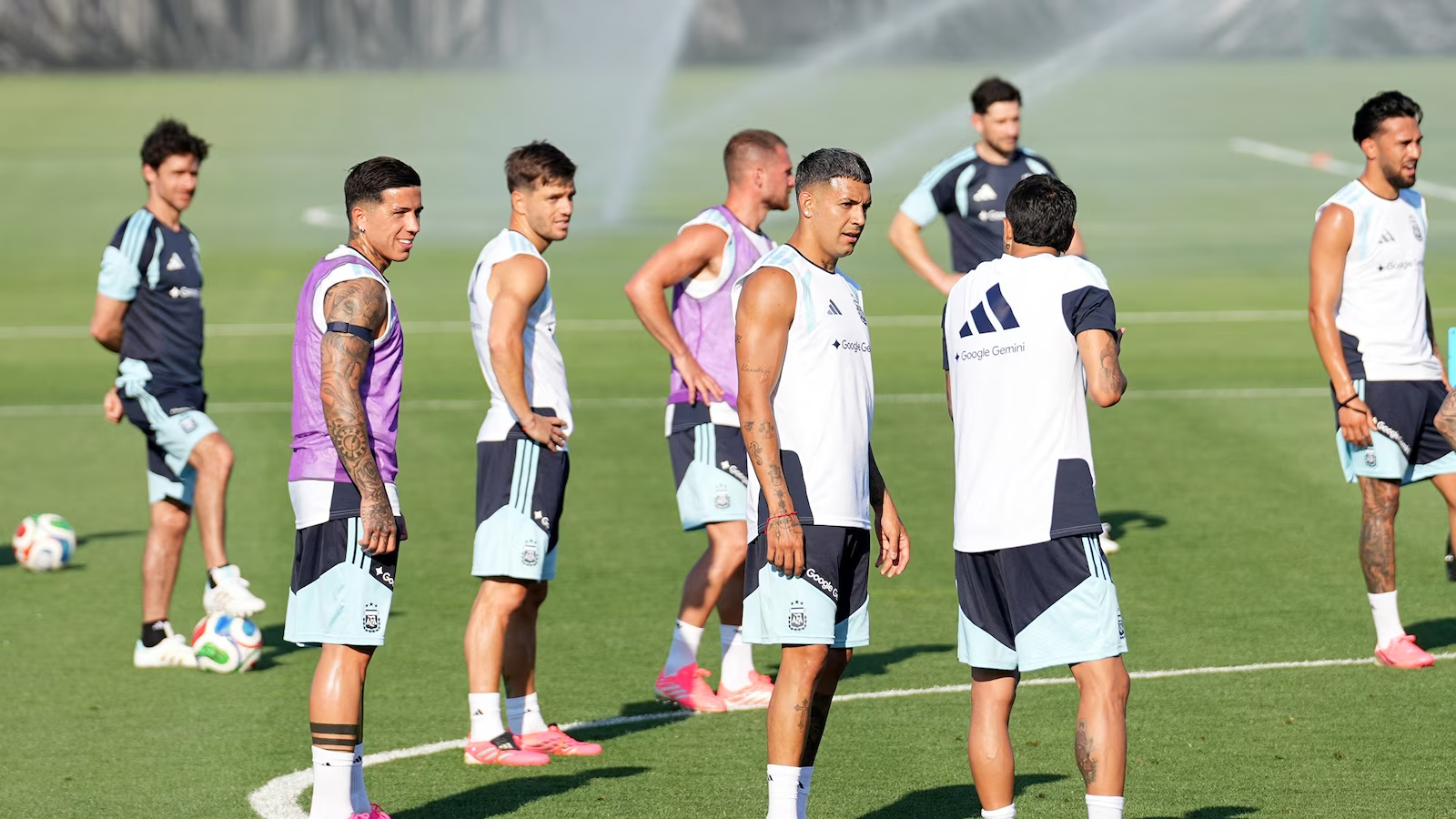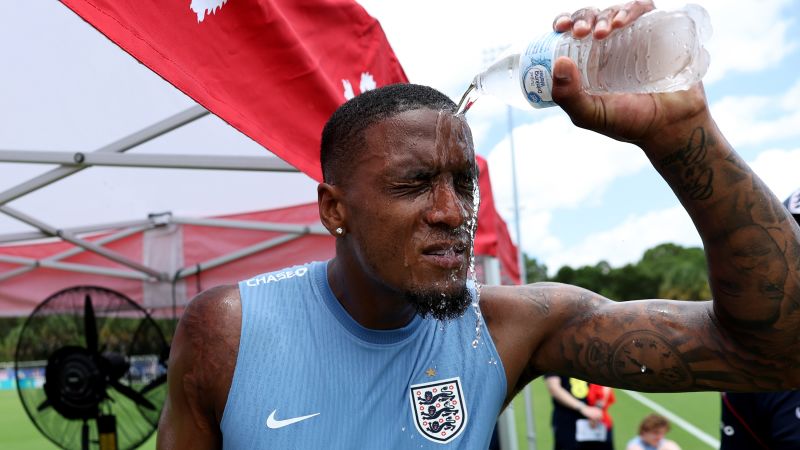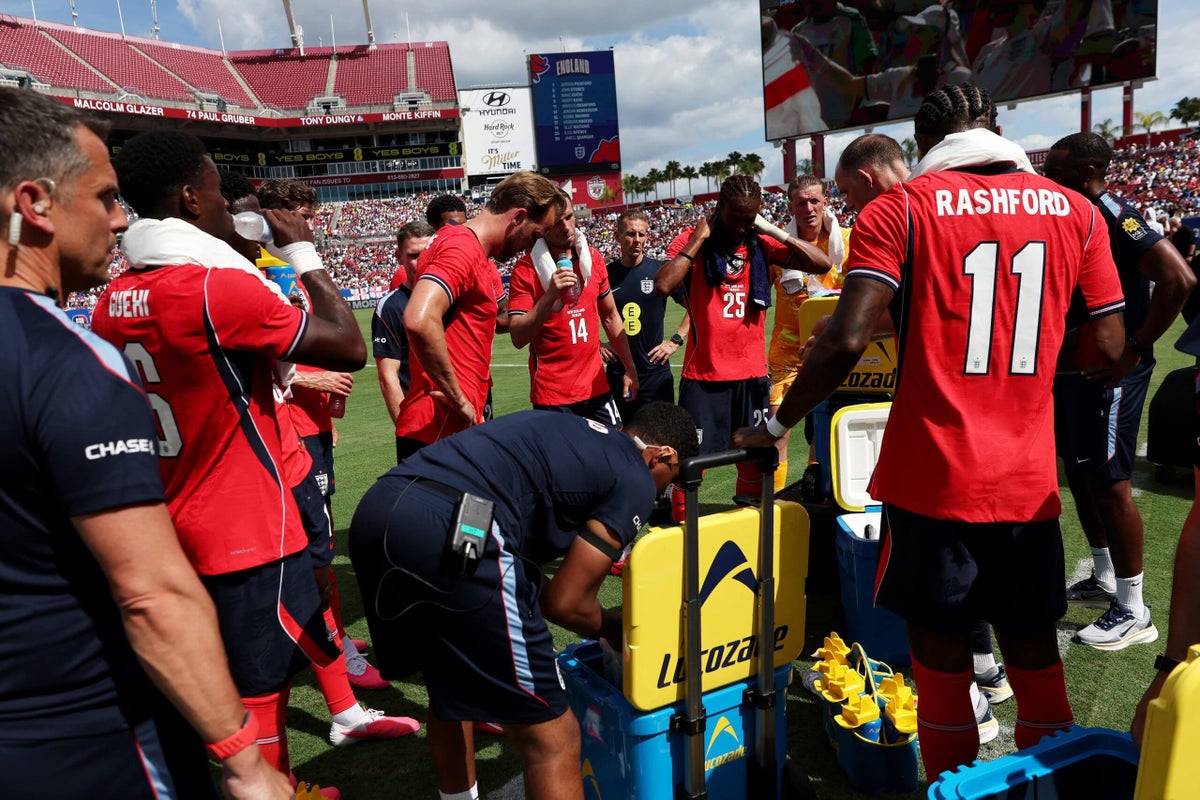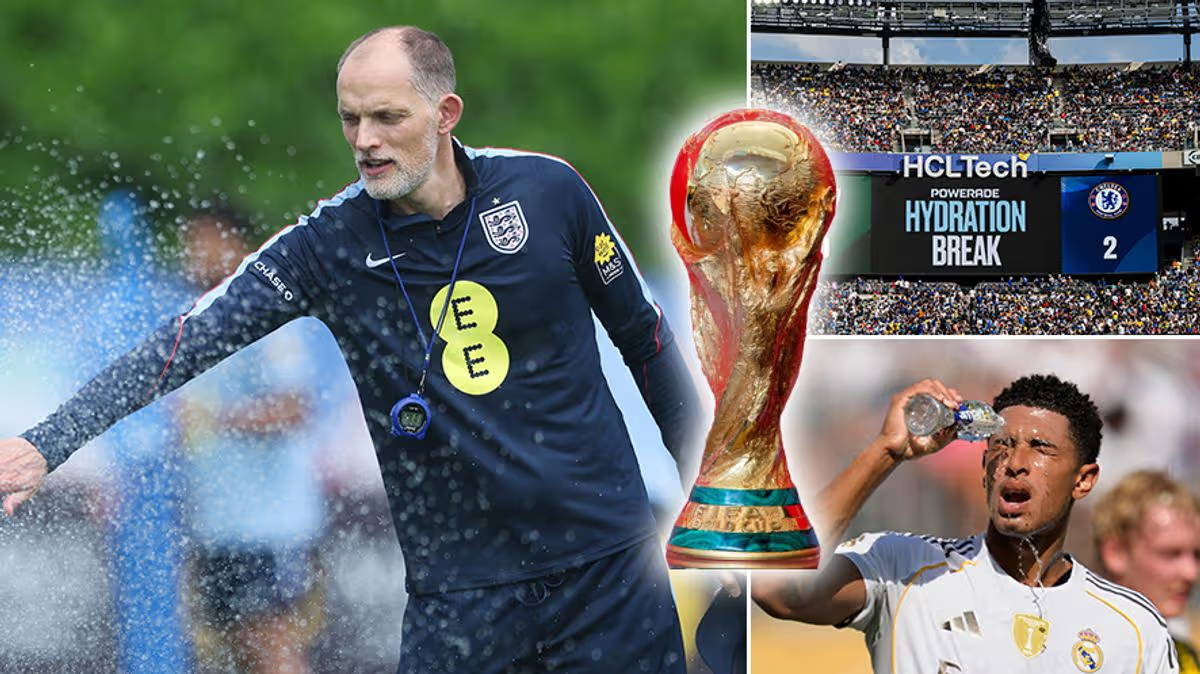
There are multiple factors which combine to shape a World Cup, but this summer the dominant one will be immediately obvious right from the off: the heat.It is something that England manager Thomas Tuchel is rightly taking seriously. “We are not used to being in this kind of heat and humidity,” he said after his squad flew out to Florida for a pre-tournament training and acclimatisation camp. “There will be a lot of challenges in this World Cup. The heat is one of them but we are prepared already.“We know the individual reaction of the players to the heat and we have cooling strategies in place. We’ve had help from Team GB and specialists all over the world to come up with solutions that help the players to adapt.”The other teams at the 2026 World Cup who have the financial capacity will be doing something similar. But even still, the weather will likely be the defining factor, playing a crucial role in the majority of the 108 games across the United States, Canada and Mexico.Sign up for our the Mirror Football World Cup newsletter for all the latest stories and insights from the tournament!The last World Cup was moved to the winter so Qatar could host it. This one has not made such a major concession. Instead, FIFA has attempted to mitigate the extreme heat with various compromises. Yet experts are still concerned about what might unfold between June 11 and July 19 in North America after getting a worrying preview at last summer’s Club World Cup.Professor Mike Tipton from the University of Portsmouth is a leading expert on the physiological and psychological responses to adverse environments, such as extreme heat, and has worked with scores of elite athletes. He is part of a group of experts who wrote to FIFA last month to warn that player safety is being put at risk by their approach this summer and demanded strengthened health and safety measures.It is anticipated that 14 of the 16 World Cup venues will exceed 28 degrees Celsius in Wet Bulb Globe Temperature (WBGT), a composite measure which takes into account ambient temperature, humidity and radiant heat. Despite many organisations using 28°C WBGT as a threshold, FIFA has chosen to use 32°C WBGT this summer. Professor Tipton believes that could be dangerous.“FIFA has decided on 32°C, which is pretty high up,” he tells Mirror Football . “That’s where you’re going to get a whole range of consequences, some of which are apparent – you’ll see people struggling with the heat, pouring water on themselves.“But right down at the least impactful end of the spectrum is that games will change. You’ll see less sprinting, less work, which is why more of the early rounds at the Club World Cup ended in penalty shoot-outs, because there are certain strategies you can’t adopt.“People who play in heat regularly are going to have a competitive advantage because they simply know who to play in those conditions. If you’re relying on people running 10km in a game then you’re going to struggle to achieve that.“Up the spectrum you have heat syncope, with managers feeling faint and having to lie down. Heat exhaustion, people exhausted by the amount of sweating they’re doing and the amount of electrolytes they’re losing. And then hypothermia, where your body temperature is going up in an uncontrolled fashion and that leads to a medical emergency of a heat stroke.“At the World Cup we’ll have a high WBGT and people exercising. When you exercise you can produce between one and two kilowatts of heat – it’s like having a one or two-bar fire inside you. The ideal temperature for continuous activity is around 11 degrees Celsius. It could be 33°C - 37°C in the US – 25°C higher.”In response to such concerns, FIFA told Mirror Football: “FIFA is committed to protecting the health and safety of all players, referees, fans, volunteers and staff. Climate-related risks are assessed as part of overall tournament planning and managed in close coordination with the host cities, stadium authorities and national agencies.”When their thresholds are reached, “venues will activate additional cooling capacity, including shaded areas, misting systems, cooling buses and expanded water distribution”. Every match at the tournament will have three-minute water breaks in each half, while the substitutes benches will be climate-controlled.FIFA has also taken efforts to tailor the schedule with the heat in mind, avoiding the hottest parts of the day at venues like Houston and Dallas. “Through close collaboration with host governments, medical experts and emergency authorities, FIFA remains committed to delivering a safe, resilient and memorable tournament experience for everyone involved,” FIFA added.According to a report by World Weather Attribution, around 25 per cent of all matches are likely to be played in temperatures of 26°C WBGT or higher. An estimated five games are expected to take place during conditions of 28°C WBGT or higher – a figure which has nearly doubled since 1994 due to global warming.And while on the most worrying end of the scale that brings danger, it is also bound to impact the spectacle. Research by Climate Central found that 97 of the 104 matches face a higher probability of encountering performance-impairing conditions. “Rising temperatures are not only a serious health risk for players and fans, but they are also starting to affect the quality of the game itself,” said Morten Thorsby, who will be playing for Norway at the World Cup.“When heat impacts sprinting, recovery, and overall intensity, it changes the way football is played and not for the better. We need to take these risks seriously and ensure that the game we love is protected, both for those on the pitch and everyone watching around the world.”At the very least, Professor Tipton is expecting games to be played at a slower pace, but warns that the knockout stages could see limits pushed further. “The thermal problem doesn’t just have the consequence of players getting hot – it also has a knock-on effect for all of the other strategies that you have to put in place in order to be able to compete,” he explains.“And the problem with ill-health is that it’s even more prevalent in competitive environments. As soon as you put guys in a competitive environment in the heat then the normal natural controls that would make you stop get overridden. The games that are going to be particularly potentially hazardous are as you get towards the end of the tournament and in a hotter environment with a higher level of competition and more important outcome.”After a season of increasing anger at officials and VAR, there is also the impact on the referees to consider too. “Refs are pretty fit but they’re on average older, so they’ll be under thermal strain, so they’ll be less likely to keep up with play,” Tipton says.“And we also know that when you’re hypothermic your critical decision making gets impacted so your decision-making isn’t as good. So you could see the standard of officiating being affected. The data is there. If you’re further away from the action and less able to make good decisions, that doesn’t give you a great deal of confidence in the level of officiating that you would get in comparison to a cool environment.”Unfortunately, due to global warming, these sorts of issues are not one-off considerations, but the first look at what is to come. This summer, the World Cup could be won by whichever team adapts best. In future, FIFA needs to find a more robust solution to the problem.Join our new WhatsApp community and receive your daily dose of Mirror Football content. We also treat our community members to special offers, promotions, and adverts from us and our partners. If you don't like our community, you can check out any time you like. If you're curious, you can read our Privacy Notice.
Extreme heat will define the 2026 World Cup - and it could endanger its players
The 2026 World Cup is being played across North America in the summer and last summer's Club World Cup offered a glimpse at just how dangerous extreme heat can be
1,310 words~6 min read