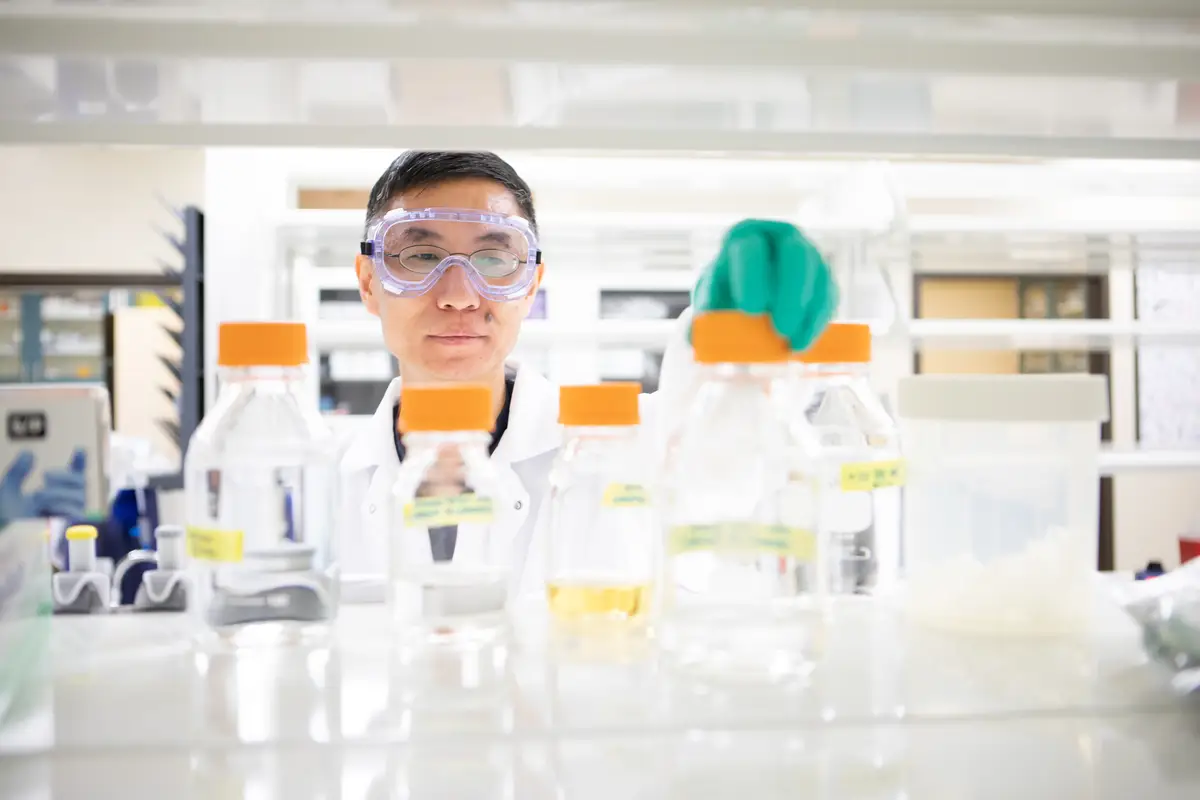
Fangwei Si was part of a team of researchers that found that bacteria can learn from past experiences.
June 5, 2026
By:
Caroline Sheedy
Researchers at Carnegie Mellon University have shown that bacteria can learn from past experiences, store memories across generations and adapt their behavior to changing environments all without a brain or nervous system.
Fangwei Si was part of a team of researchers that found that bacteria can learn from past experiences.
June 5, 2026
By:
Caroline Sheedy
Are Memories Transferable — or Edible? | Quanta Magazine

Are Memories Transferable — or Edible? - Longreads

Newfound 'Switchboard' Helps the Brain Form New Memories Without Forgetting Older Ones
MIT scientists identify hidden brain cells that could boost memory far beyond current theories and explain why it has no known upper limit
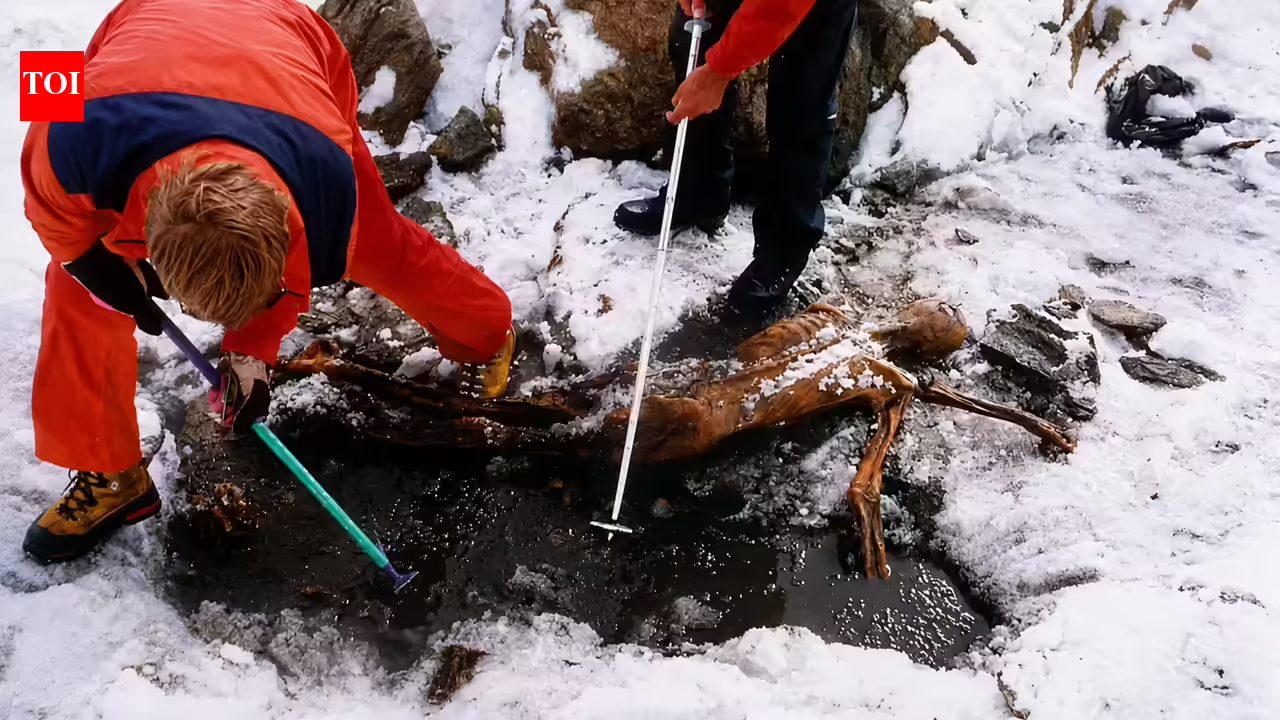
Scientists baked sourdough using 5,300-year-old yeast from a frozen mummy and it actually fermented
Scientists discover gut bacteria that may help protect against autism and ADHD
A small but enthusiastic group of neuroscientists is exhuming overlooked experiments and performing new ones to explore whether…
In the 1960s, worm-training experiments and their strange implications captivated the nation. Columnist Claire L. Evans follows…
"In the 1960s, worm-training experiments and their strange implications captivated the nation."
Scientists studying microorganisms trapped in one of Europe’s oldest underground glaciers have discovered a bacterium with…
In a giant feat of genetic engineering, scientists have created bacteria that make proteins in a radically different way than all…
Newfound 'Switchboard' Helps the Brain Form New Memories Without Forgetting Older Ones