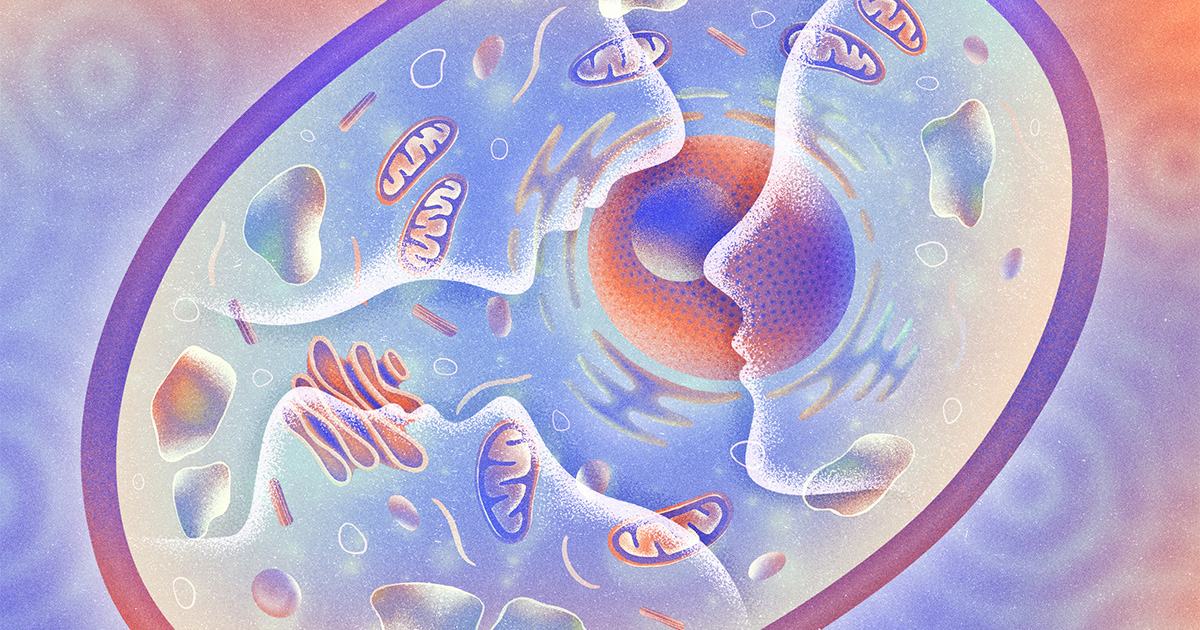
A small but enthusiastic group of neuroscientists is exhuming overlooked experiments and performing new ones to explore whether cells record past experiences — fundamentally challenging what memory is.
New research investigates whether single cells can learn and remember.
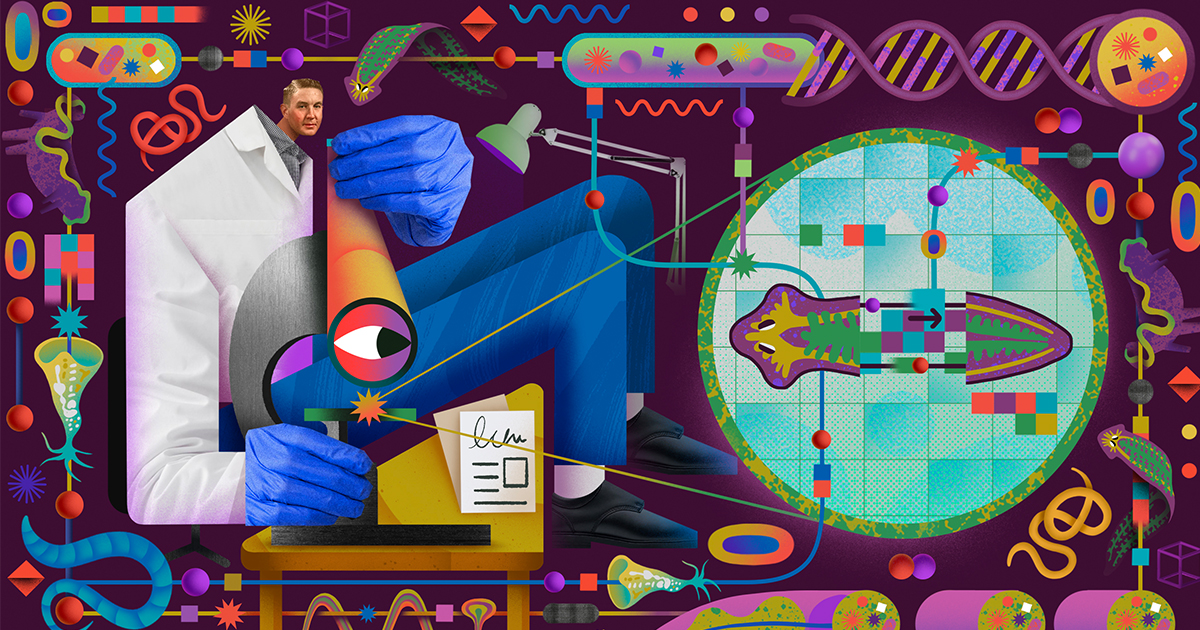
Kristina Armitage/Quanta Magazine
In 1983, the octogenarian geneticist Barbara McClintock stood at the lectern of the Karolinska Institute in Stockholm. She was famously publicity averse — nearly a hermit — but it’s customary for people to speak when they’re awarded a Nobel Prize, so she delivered a halting account of the experiments that had led to her discovery, in the early 1950s, of how DNA sequences can relocate across the genome. Near the end of the speech, blinking through wire-framed glasses, she changed the subject, asking: “What does a cell know of itself?”
McClintock had a reputation for eccentricity. Still, her question seemed more likely to come from a philosopher than a plant geneticist. She went on to describe lab experiments in which she had seen plant cells respond in a “thoughtful manner.” Faced with unexpected stress, they seemed to adjust in ways that were “beyond our present ability to fathom.” What does a cell know of itself? It would be the work of future biologists, she said, to find out.