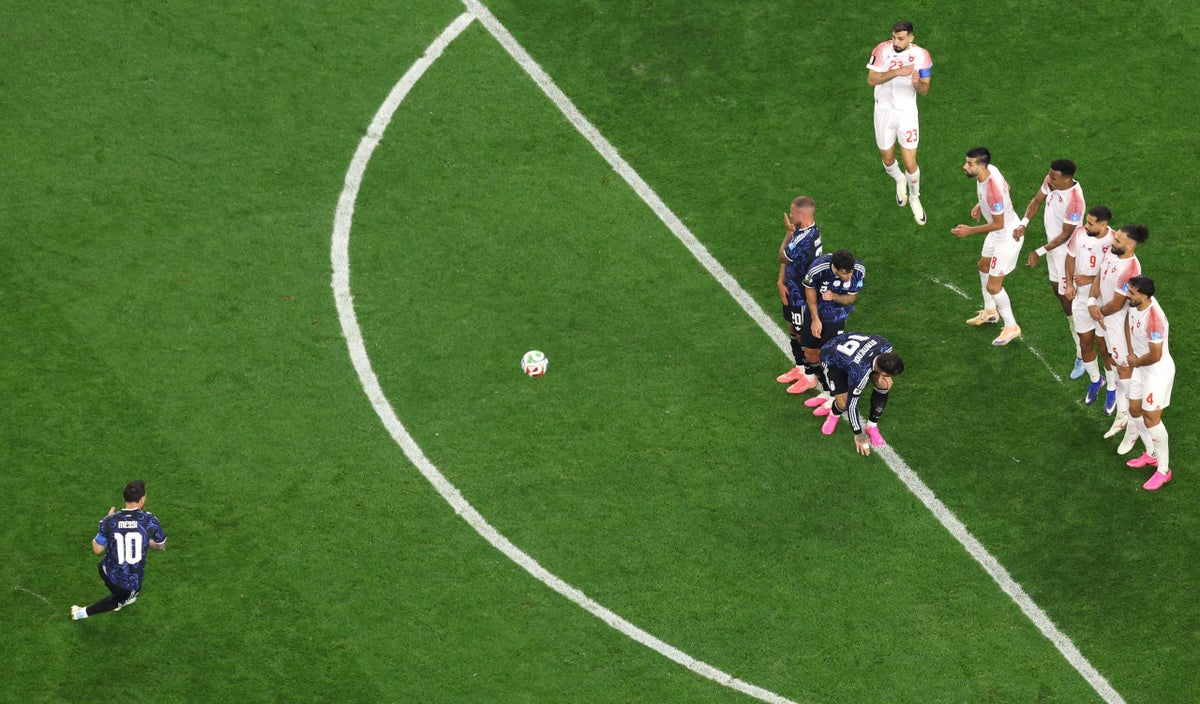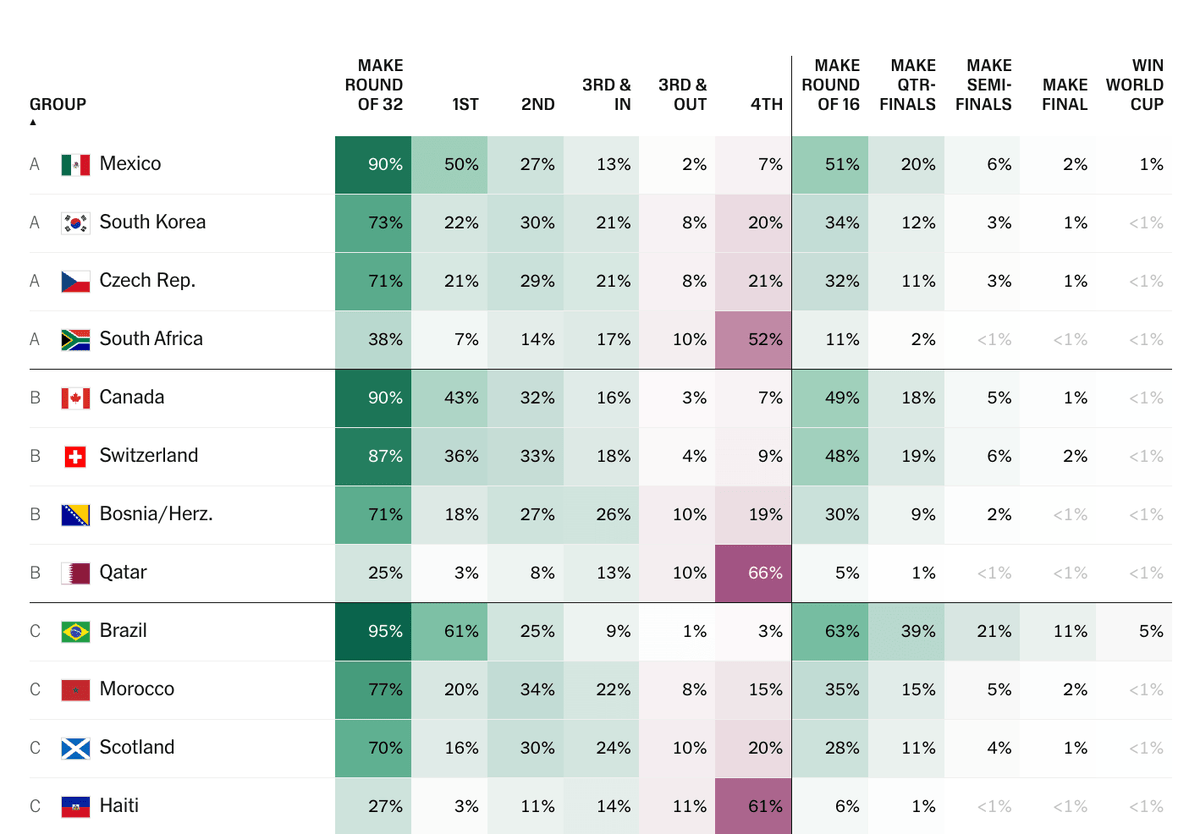
The Athletic launched our World Cup Tracker this week, a page we highly encourage you to check out. There, you can find a forecast projecting the likelihood that each team will progress through each stage of the tournament, along with a bracket projecting the most likely round of 32 matchups, current standings, and a bunch of other neat forecasts and scenarios.The point of this article is to explain how we generate the team strengths that power this simulation, a rating system we call Expected Goal Contribution, or xGC. We call this a “system” instead of a model, because it’s a series of models that work together to quantify the sport, starting at the atomic level (an individual pass or dribble) and building up to evaluating players and teams.This model is for everyone who wants to know both what is likely to happen in an upcoming soccer match, but also why.Who from the USMNT should I be keeping an eye on? Who is expected to generate the most value for their team, and in a given game, who is under- or overperforming that expectation?The goal was to build a system that sheds light on how teams are good, not just which ones are good.Who will follow Argentina as World Cup champions? We will find out over the next few weeks (Clive Brunskill/Getty Images)So how does this model work?Expected Goal Contribution relies simply on two core theories of the game of soccer:
Explained: The Athletic World Cup Simulator Model
Breaking down the expected goal contribution model that is powering our World Cup predictions this summer
1,754 words~8 min read