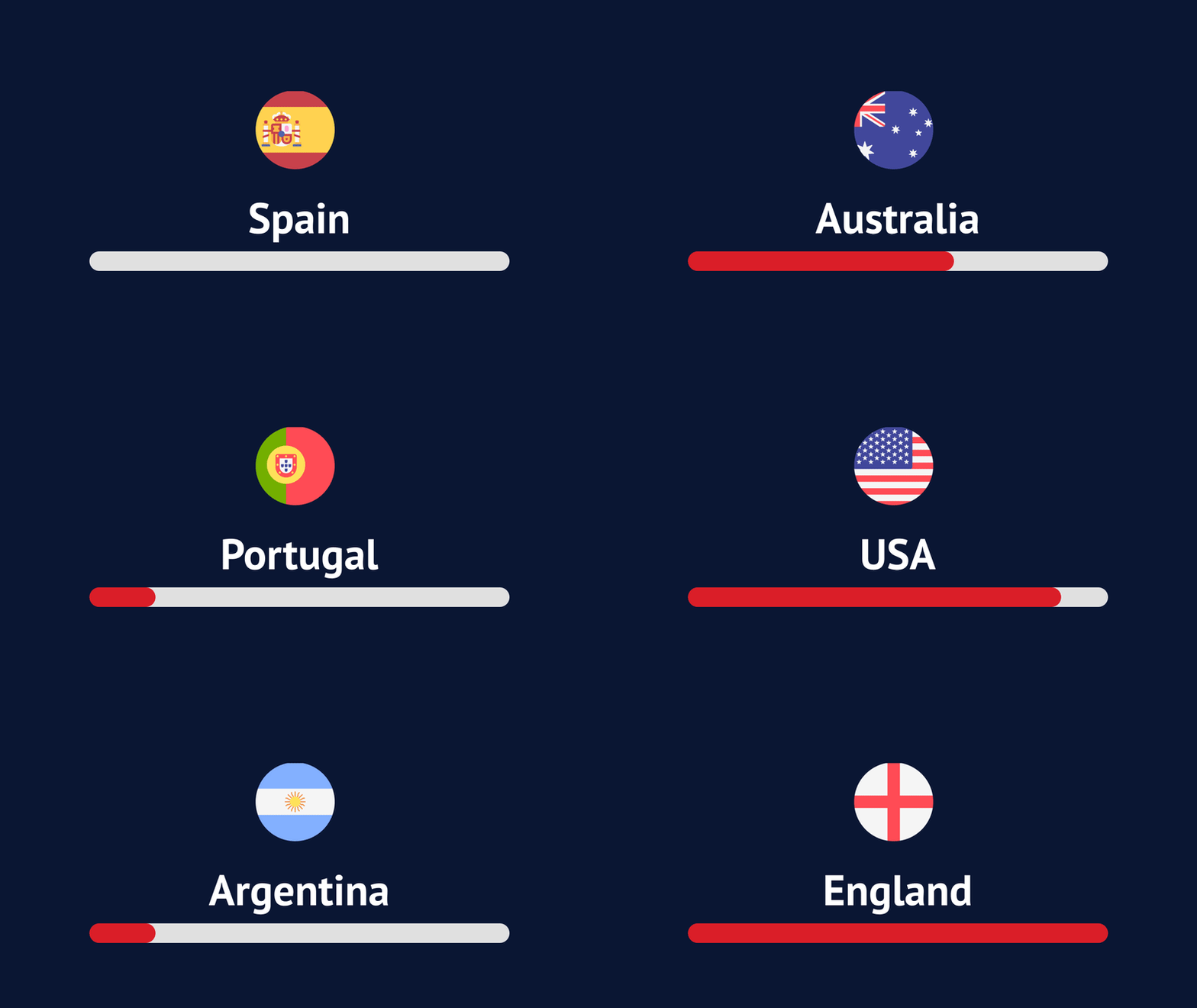
Spoiler: It doesn't end well for Team Register
The team behind the AI Octopus Euro 2024 predictor has updated its simulator for the 2026 FIFA World Cup, this time allowing users to throw natural-language scenarios at the model and see how the tournament might shake out."Sensible questions work – a red card, a key injury, a heat wave, a squad switching base camp – but so do the daft ones, e.g. 'What if the tournament were played with rugby rules?'" said Luzmo CTO and co-founder Haroen Vermylen.The system is simple: enter a scenario in a prompt box, and the predictor spits out how the results might go. The raw data includes squad quality based on player information, heat and altitude factors, injury data, and so on. A Monte Carlo simulation of the tournament is used to generate win/lose/draw probabilities, and the score line is derived from 5,000 match runs.
The engine behind the Euro 2024 AI Octopus was written in TypeScript. This time around, the team used Rust. "We moved to Rust to also be able to run things more quickly, as now there is a real-time component to this," Vermylen told The Register.
"Before it could run for five minutes or so. Now we want the predictions to actually come out within two to three seconds of actual simulation time."OpenAI models parse the request and generate summaries, and an agent is used to create or transform scenarios, call the calculation engine, answer questions, and so on. A user doesn't need to be a data scientist to ask questions and understand the answers.It's certainly rapid, recalculating the results based on suggested scenarios (even one in which we pondered the effect of politically dubious emissions from a certain world leader). Not that all scenarios will work. Vermylen told us that filtering was in place to ignore profanities and "to avoid scenarios that would just be harmful to certain groups."